Bottom line: the honest answer to how much cash to bring to Korea in 2026 is “less than you think, but never zero” — cards cover almost everything, yet topping up a physical T-money card is still cash only, in ₩1,000 units.
🇰🇷 Quick Korea Travel Guide
👉 Getting in: Check K-ETA requirements and the e-Arrival Card before you fly.
👉 Stay in Touch (eSIM): Grab a Korea eSIM on Airalo before you land — no airport counter queue.
👉 Download New Apps: See our Naver Map in English guide before you need directions.
👉 Where to Book Activities: GetYourGuide Seoul for tours and KKday for KTX and Korea-only passes.
👉 Getting Around: T-money vs Climate Card, the Seoul Climate Card rules, and Incheon Airport to Seoul.
👉 More planning: all our Korea Travel guides.
Disclosure: some links above are affiliate links; we may earn a small commission at no extra cost to you.
Quick answer: how much cash to bring to Korea
- Korea runs on cards: the tourism board says “all you need is a credit card”, bar a few small family-run businesses.
- A physical T-money top-up is cash only: ₩1,000 units, ₩1,000–₩90,000 each, ₩500,000 ceiling.
- Since 17 March 2026, 440 machines at 273 stations take overseas cards, for single tickets and Climate Cards only, at a 3.7% average fee.
- You cannot tap your own foreign card at a gate yet: 2027 for buses and Lines 1–8, 2030 for everything.
- Use bank or foreign-card ATMs and read the on-screen fee: fees are not standardised.
- Always choose won, never your home currency: a Korean issuer puts that markup at about 3–8%.
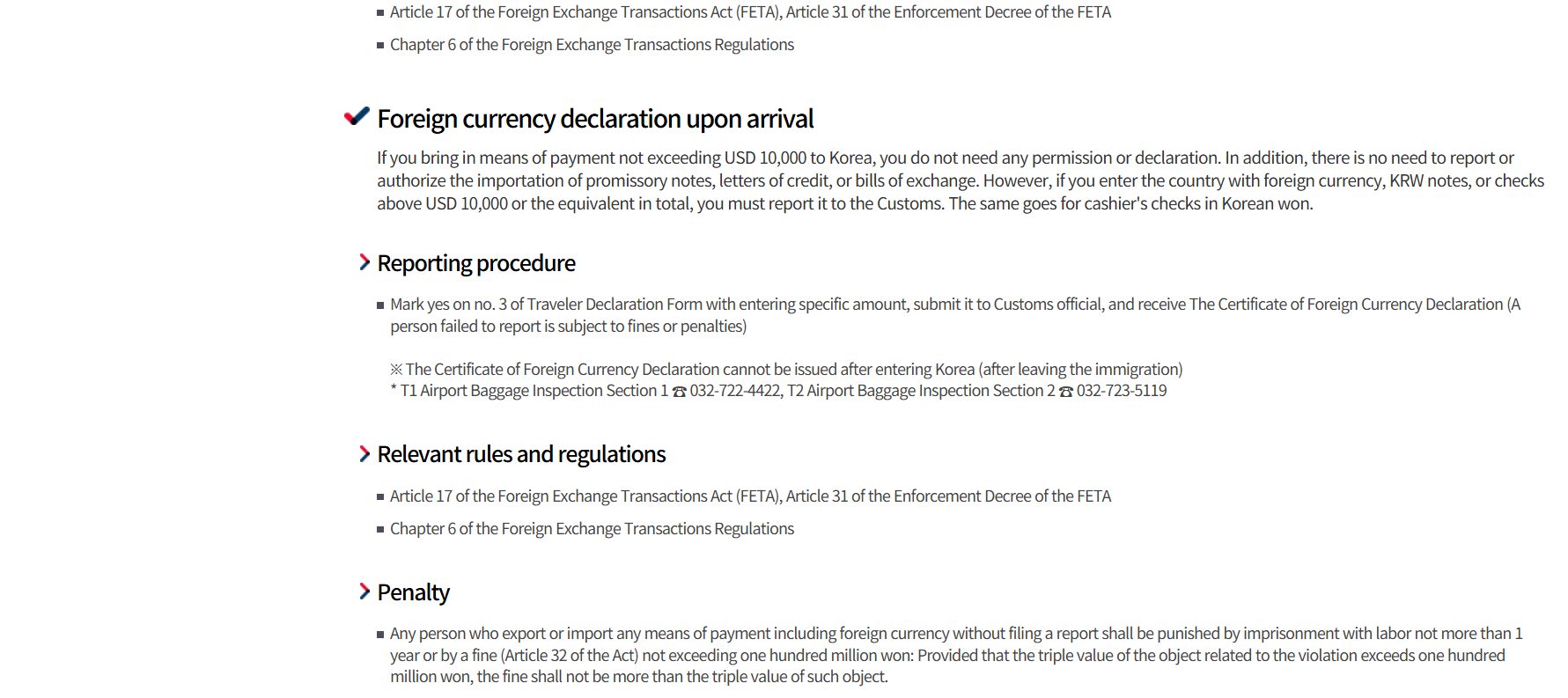
- Declare means of payment above US$10,000 to Korea Customs.
- Our estimate: ₩120,000–₩250,000 for five days, ₩170,000–₩350,000 for a week.
Prepaid card with T-money function · via KKday
WOWPASS: Prepaid Card for Cashless Payment in Korea
⭐ 4.7/5 from 1,569 KKday reviews · top up in 16 currencies at self-service machines · works as a T-money card · voucher from KRW 6,000 · non-refundable after purchase (as of Oct 2026)
What this guide covers
Do you actually need cash in Korea?
I live in Seoul and go whole weeks without opening my wallet. That is the context for how much cash to bring to Korea: cash is a fallback for a short list of situations, not the default.
The Korea Tourism Organization says most businesses “widely use and accept payment by credit cards” — naming Visa, Mastercard and American Express, with the caveat that some stores may not.

1. Where cards work in 2026 and where they still fail
Hotels, convenience stores, cafés, chain restaurants, department stores, taxis and attractions take cards without drama, which is why how much cash to bring to Korea is mostly an exercise in subtraction.
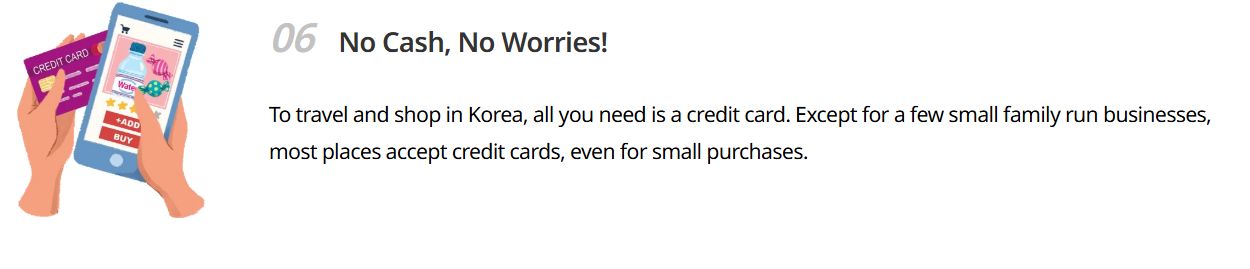
Two official voices sit in tension. The tourism board says “all you need is a credit card. Except for a few small family run businesses, most places accept credit cards, even for small purchases.” Korean business media reported in November 2025 that Gwangjang Market vendors were still refusing cards, despite terminals and multilingual QR menus being installed.
Neither is wrong: the board describes the rule, the press the exception. Market stalls and street carts are where your won actually goes — see our Gwangjang Market guide.

Note what Seoul concedes: visitors reloading transit cards with cash is the problem the city is trying to fix. It is the single biggest reason how much cash to bring to Korea is not simply “none”.
2. The one place you really need cash: T-money and transit
If you remember one rule about how much cash to bring to Korea, make it this one. Tmoney’s foreigner guide says you present your card and cash in Korean won. Top-ups are in ₩1,000 units, ₩1,000–₩90,000 per transaction, and the balance may not exceed ₩500,000.

Top-up points are everywhere — GS25, CU, 7-Eleven, Emart24, subway machines, Tmoney Town — but none change the method. The workaround is a WOWPASS prepaid card: you load it with foreign currency at its kiosks, it works as a T-money card, and leftover balance can be withdrawn as cash.
What changed on 17 March 2026. Seoul put 440 new ticket machines into 273 stations on Lines 1–8 accepting overseas Visa and Mastercard credit and debit cards, Kakao Pay and Naver Pay, at an average 3.7% fee. It covers single-journey tickets and Climate Card purchase or short-term recharge (1, 2, 3, 5, 7-day). The 30-day pass was deferred.
Most blogs get this wrong: these machines do not top up an ordinary T-money card. On stored value you still feed won into a machine.
And you cannot tap your own card at the gate. Seoul’s roadmap is staged: EMV modules on bus terminals in 2025–2026, the Lines 1–8 terminals in 2027, town buses and private rail through 2028–2030. Tmoney agreed with Visa, Mastercard, UnionPay, JCB and Hana Card on 17 September 2026 to bring city buses online in 2027. Do not confuse that with the ticket machines.
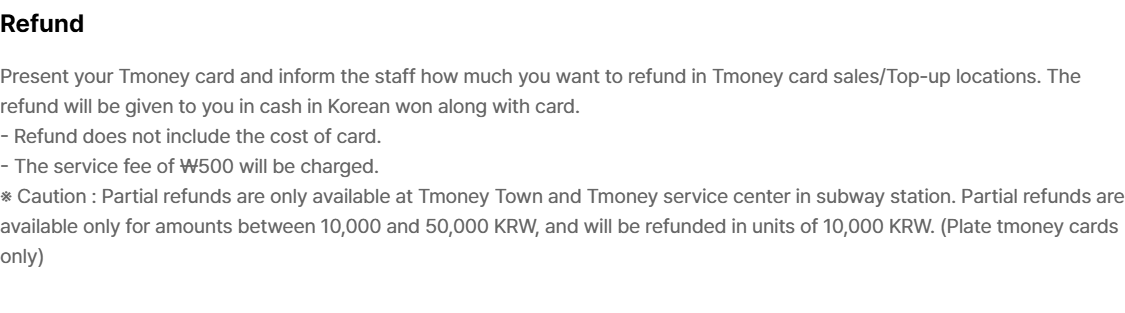
The exit matters when you decide how much cash to bring to Korea. Tmoney refunds the balance in cash minus ₩500; the card price is never refunded. Partial refunds happen only at Tmoney Town or a station service centre, between ₩10,000 and ₩50,000, in ₩10,000 units.
Full comparison: T-money vs Climate Card and Seoul Climate Card.
3. ATMs, exchange and the DCC trap
The second half of how much cash to bring to Korea is how you get it: withdraw won from an ATM, or exchange notes.
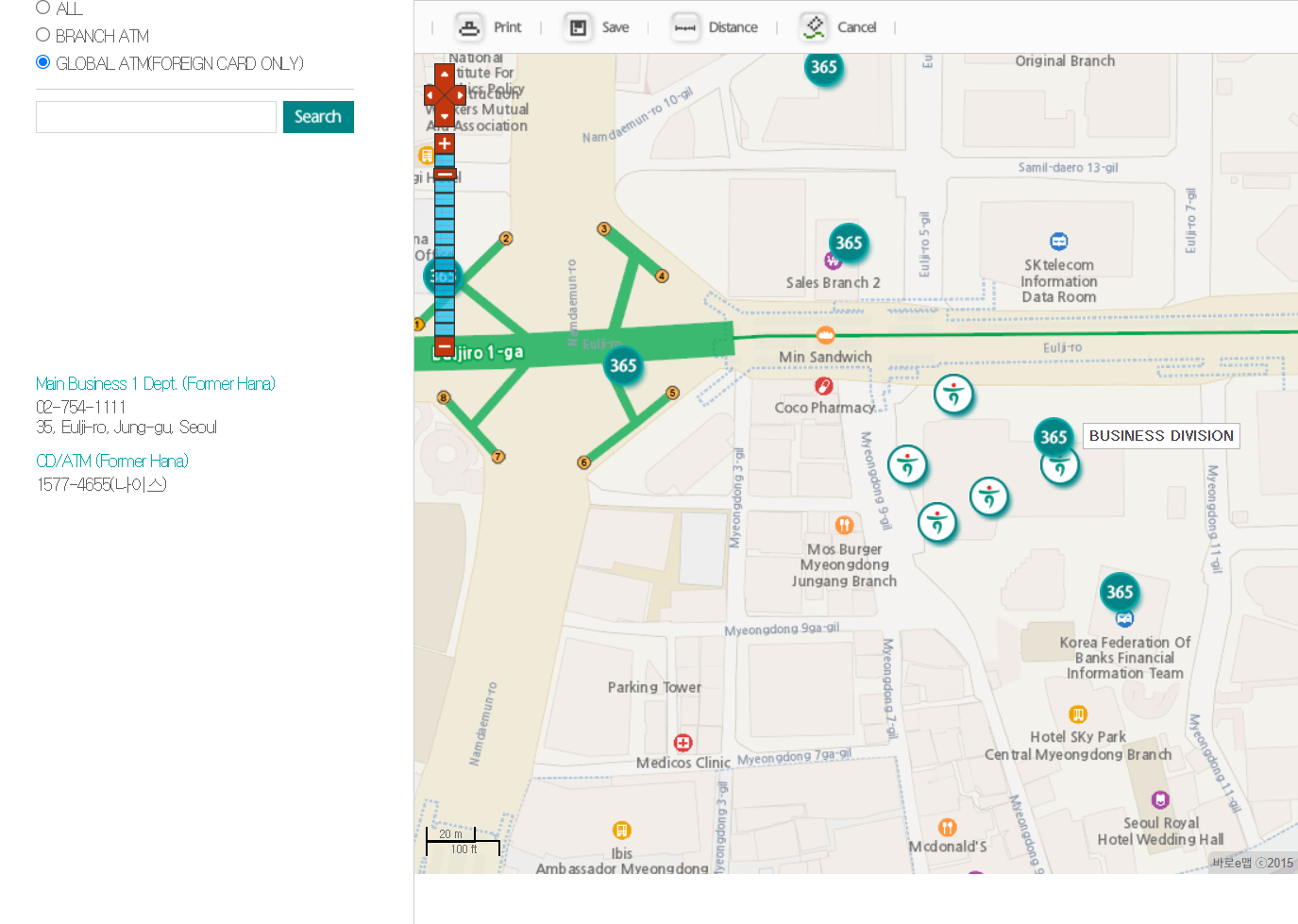
ATMs. This is where the practical side of how much cash to bring to Korea gets decided, and not every machine takes a foreign card. Hana Bank’s English locator has a “GLOBAL ATM (FOREIGN CARD ONLY)” filter, the fastest way to find one. Withdrawal fees and limits vary by bank and machine, so read the fee on screen before confirming.

Exchange. The tourism board points you to a bank or an authorised exchange centre; banks generally open 09:00–16:00 on weekdays and old notes may be refused. Rates differ by booth and by day, so compare the posted rate with your bank’s rate before you hand over notes.

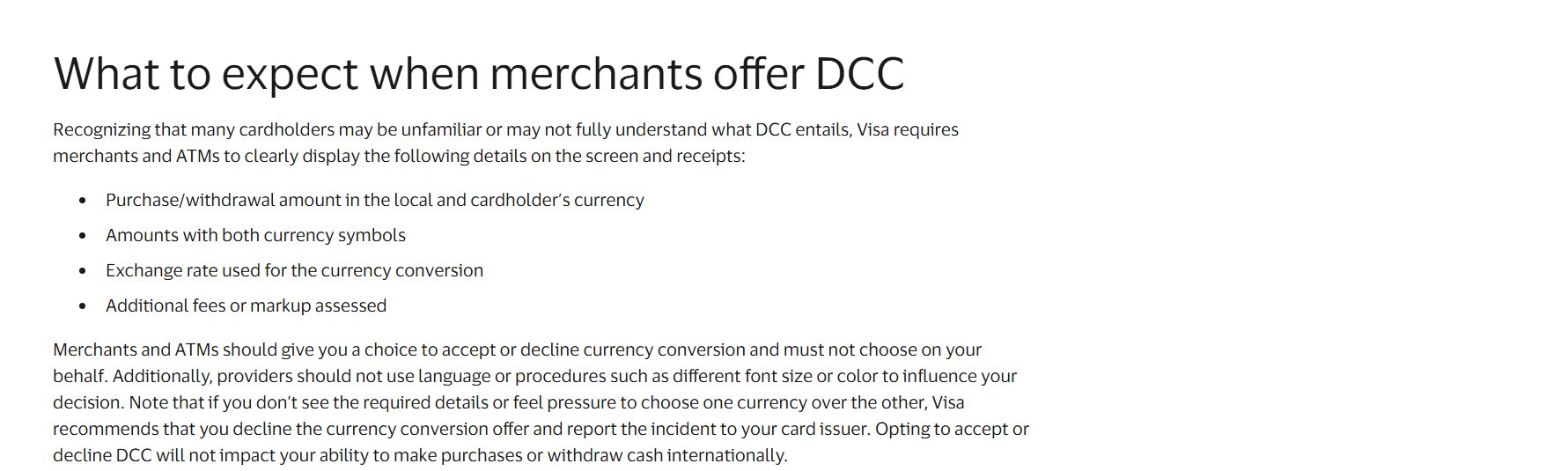
The DCC trap. When a terminal offers to charge you in your home currency, that is Dynamic Currency Conversion. Visa requires both currencies, the rate and any markup to be shown, and says you must be allowed to choose — decline if that disclosure is missing.
The clearest cost figure from a Korean issuer is KB Kookmin Card’s notice: merchants may add roughly 3–8%. That notice addresses Korean cardholders abroad, but the mechanism is the same for a visitor in Seoul, so read 3–8% as the scale of the problem.

The key rules at a glance
| Situation | What works in 2026 | Cash? |
|---|---|---|
| Hotels, shops, cafés, restaurants, department stores | Visa, Mastercard, Amex widely accepted (KTO) | No |
| Single subway ticket, or Climate Card purchase / short-term recharge, Lines 1–8 | 440 machines, 273 stations: overseas Visa/Mastercard, Kakao Pay, Naver Pay, 3.7% average fee | No |
| Topping up a physical T-money card | Cash in won only: ₩1,000 units, ₩1,000–₩90,000, ₩500,000 ceiling | Yes |
| Tapping your own foreign card at a reader | Not yet: buses and Lines 1–8 in 2027, full conversion by 2030 | n/a |
| Refunding leftover T-money | Cash minus ₩500; card price never refunded; partial refunds ₩10,000–₩50,000 in ₩10,000 units only | n/a |
| Market stalls and street carts | KTO: cards work “except for a few small family run businesses”; refusals reported at Gwangjang, Nov 2025 | Sometimes |
| ATM withdrawal | Bank machines or Hana’s “Global ATM (foreign card only)” filter; read the fee | — |
| Terminal offering your home currency | Choose won; a Korean issuer puts the markup at about 3–8% | — |
| Bringing money in | Declare means of payment over US$10,000 | — |
| Tax refund at Incheon | 24-hour kiosks; large refunds can go to your card | — |
How much cash to bring to Korea for 5, 7 and 14 days
Any answer to how much cash to bring to Korea is an estimate, not an official figure. Here is a working one, with the arithmetic in the open.
Anchor (official). The Bank of Korea reported that foreign visitors in 2025 spent an average of US$177.8 per person per day, average stay 6.5 days. That is total spending, not cash spending.
Assumption 1. At roughly ₩1,390 to the US dollar, US$177.8 is about ₩247,000 a day. Re-run it with the rate on your travel date.
Assumption 2. We assume 10–20% of that needs to be cash. This share is a planning assumption, not an official figure.
Multiplied out, that gives our working answer to how much cash to bring to Korea:
- 5 days: ₩247,000 × 5 = ₩1,235,000 → 10–20% = ₩124,000–₩247,000 (about US$90–180)
- 7 days: ₩247,000 × 7 = ₩1,729,000 → 10–20% = ₩173,000–₩346,000 (about US$125–250)
- 14 days: ₩247,000 × 14 = ₩3,458,000 → 10–20% = ₩346,000–₩692,000 (about US$250–500)
Two sanity checks. You need not land with the whole amount — refill at an ATM. And this is a floor, not a ceiling: mostly you need small notes for T-money machines.
Travel eSIM · via Airalo
South Korea eSIM (unlimited data)
Unlimited data from US$12 for 3 days · US$29 for 7 days · US$49 for 15 days · install before you fly (as of Oct 2026)
The one hard legal line is customs: means of payment over US$10,000 must be declared on arrival. Below that, no report.
One source of won people forget: your VAT refund. Incheon’s kiosks run 24 hours inside the duty-free zone, and a large refund can go to your card instead. Details in our Korea tax refund guide.

Mistakes to Avoid
Most bad advice about how much cash to bring to Korea comes from one of these.
- Assuming the new ticket machines top up T-money. They do not: Seoul limited the overseas-card function to single tickets and Climate Cards.
- Planning to tap your own Visa at the gate. Not in 2026: Lines 1–8 and city buses are scheduled for 2027, full conversion 2030.
- Over-loading T-money on day one. The card price is never refunded, a refund costs ₩500, and partial refunds cap at ₩50,000.
- Tapping “pay in my own currency”. That is DCC. Visa says you must get a real choice; a Korean issuer puts the markup at about 3–8%.
- Using the first ATM without reading the fee. Fees are not standardised and many non-bank machines refuse foreign cards.
- Carrying over US$10,000 without declaring it. That is a customs offence, not a formality.
Frequently Asked Questions
Do I need cash in South Korea in 2026?
Yes, but only a little. The Korea Tourism Organization says a credit card is enough almost everywhere, except a few small family-run businesses. The exception is topping up a physical T-money card, which takes cash in won.
How much cash should I bring to Korea for a week?
As a working estimate, how much cash to bring to Korea for seven days is about ₩173,000–₩346,000, from the Bank of Korea average of US$177.8 per visitor per day, a rate near ₩1,390 and an assumed 10–20% cash share.
Can I buy a Seoul subway ticket with a foreign credit card?
Yes. Since 17 March 2026, 440 machines at 273 stations on Lines 1–8 take overseas Visa and Mastercard credit and debit cards, plus Kakao Pay and Naver Pay, at an average 3.7% fee.
Can I top up T-money with a credit card?
No. Tmoney’s foreigner guide says you top up with cash in Korean won. The new overseas-card machines cover single tickets and Climate Cards, not ordinary T-money top-ups.
How much can I load onto a T-money card?
Top-ups are in ₩1,000 units, from ₩1,000 to ₩90,000 per transaction, and the stored balance may not exceed ₩500,000.
Can I tap my Visa at the subway gate?
Not yet. Seoul’s roadmap replaces the Lines 1–8 terminals in 2027, brings city buses online the same year, and completes the conversion by 2030.
Should I pay in won or in my home currency?
Pay in won. Visa requires merchants and ATMs to disclose the rate and markup and to let you decline, and KB Kookmin Card warns the conversion can add roughly 3–8%.
How much cash do I have to declare at Korean customs?
You must report means of payment over US$10,000 in total. Below that, no declaration is required.
What should you sort out before your first subway ride?
Once how much cash to bring to Korea is settled, two questions follow: which transport card to buy, and how you reach the city. Start with T-money vs Climate Card, then Incheon Airport to Seoul for your first fare.
Sources (official pages checked)
- Tmoney, Foreigner Guide — pay.tmoney.co.kr
- Seoul Metropolitan Government, ticket machines, 16 March 2026 — news.seoul.go.kr
- Seoul Metropolitan Government, open-loop payments — english.seoul.go.kr
- Korea Tourism Organization, Currency & Exchange — english.visitkorea.or.kr
- Korea Tourism Organization, Tourist-Friendly Korea — english.visitkorea.or.kr
- Korea Customs Service, Foreign Currency Declaration — customs.go.kr
- Incheon Airport, Domestic Tax Refund — airport.kr
- Hana Bank, ATM locator — openhanafn.ttmap.co.kr
- Visa, Dynamic Currency Conversion — visa.com
- KB Kookmin Card, 해외원화결제(DCC) 유의사항 — m.kbcard.com
Book the basics for your Korea trip
Affiliate links: we may earn a small commission at no extra cost to you.
Related Guides
- Korea Travel Toolkit: what to book before you fly
- T-money vs Climate Card
- Seoul Climate Card
- Incheon Airport to Seoul
- Korea tax refund
- K-ETA 2027 exempt countries
- e-Arrival Card Korea
- Naver Map in English
- Korea eSIM vs SIM vs pocket WiFi
- Gwangjang Market, Seoul
Last checked September 2026 against Tmoney, Seoul Metropolitan Government, the Korea Tourism Organization and the Korea Customs Service.