Bottom line: vegan Korean food is possible almost everywhere, but almost no Korean dish is vegan by default: kimchi, broths, stews and even vegetable kimbap can hide fish sauce, anchovy stock, egg or ham, so you need the right dishes, a few phrases and a short list of vegan restaurants.
Quick Korea Travel Guide
Getting in: File the free e-Arrival Card unless you hold a valid K-ETA, and check the 2027 K-ETA change.
Stay in touch: Get a Korea eSIM from Airalo before you fly, so a translation app and Naver Map work when you order.
Where to book: vegan cooking class with a market tour and Gwangjang Market vegan food tour on GetYourGuide.
Eat: The restaurant list is in Vegan Restaurants Seoul. Getting around: Naver Map in English and Incheon Airport to Itaewon.
Disclosure: Some links above are affiliate links. If you book through them I may earn a commission at no extra cost to you.
Most guides to vegan Korean food say “just ask for no meat”. The Korea Tourism Organization (KTO) is more careful: Korean food is often prepared with meat and fish broth, and many restaurants have no separate menu for vegetarians. This guide goes dish by dish, using KTO, the Ministry of Food and Drug Safety (MFDS) and our own dish guides, and it separates official information from practical advice.
Sources: Korea Tourism Organization, MFDS and MICHELIN Guide. Last checked 15 October 2026.
Quick answer
- Korea is vegan friendly in cities, not by default. KTO says many restaurants have no vegetarian menu, so state your diet before you order.
- Kimchi is usually not vegan. KTO says its seasoning most often contains salted seafood, fish sauce or meat broth.
- Closest to vegan: kongguksu (cold soybean noodles), plain vegetable kimbap, vegetable jeon, acorn jelly salad and plain tofu, each with an egg or ham catch.
- Never vegan by default: bibimbap (meat and egg), jajangmyeon (pork), jjamppong (seafood), tteokbokki (fish cake) and most stews (meat or fish broth).
- Temple food uses no meat at all, per KTO, and Michelin describes it as free of fish, garlic and pungent alliums.
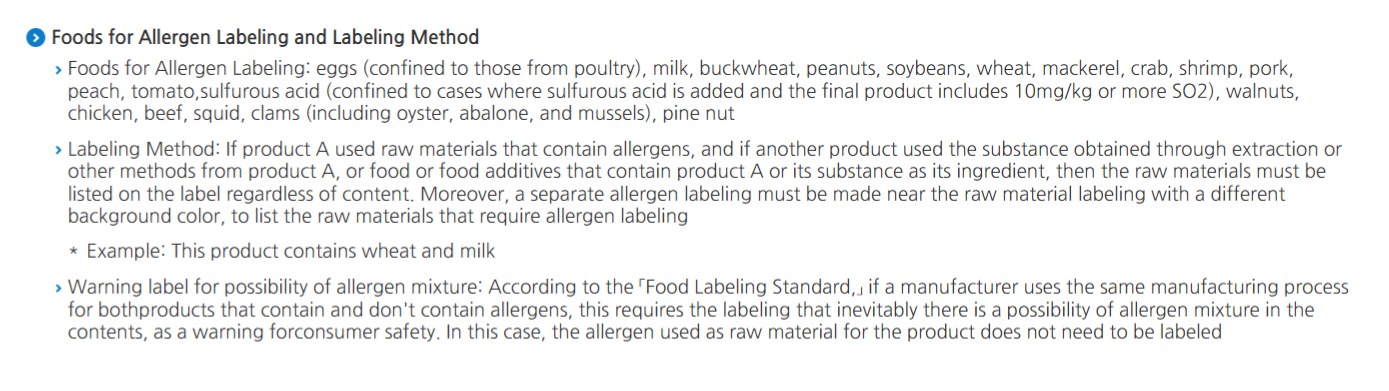
- Labels: the allergen box lists pork, chicken, beef, shrimp, crab, squid, clams, mackerel, egg and milk, but not anchovy or most other fish.
- Vegan classes exist on GetYourGuide, but read the menu: one vegan kimchi class serves bossam at lunch, and one cooking class makes meat dishes by default.
Vegan cooking class pick · local home · via GetYourGuide
Seoul: Korean Vegan Cooking Class and Market Tour in a Local Home
⭐ 5.0/5 from 14 GetYourGuide reviews · 3 hours · small group of up to 5 · market visit, then cook 4 vegan dishes with a professional chef · vegetarian, halal, gluten-free and low-sugar options · free cancellation up to 24 hours before (as of Oct 2026)
What this guide covers
Is Korea Vegan Friendly? What Vegan Korean Food Really Means
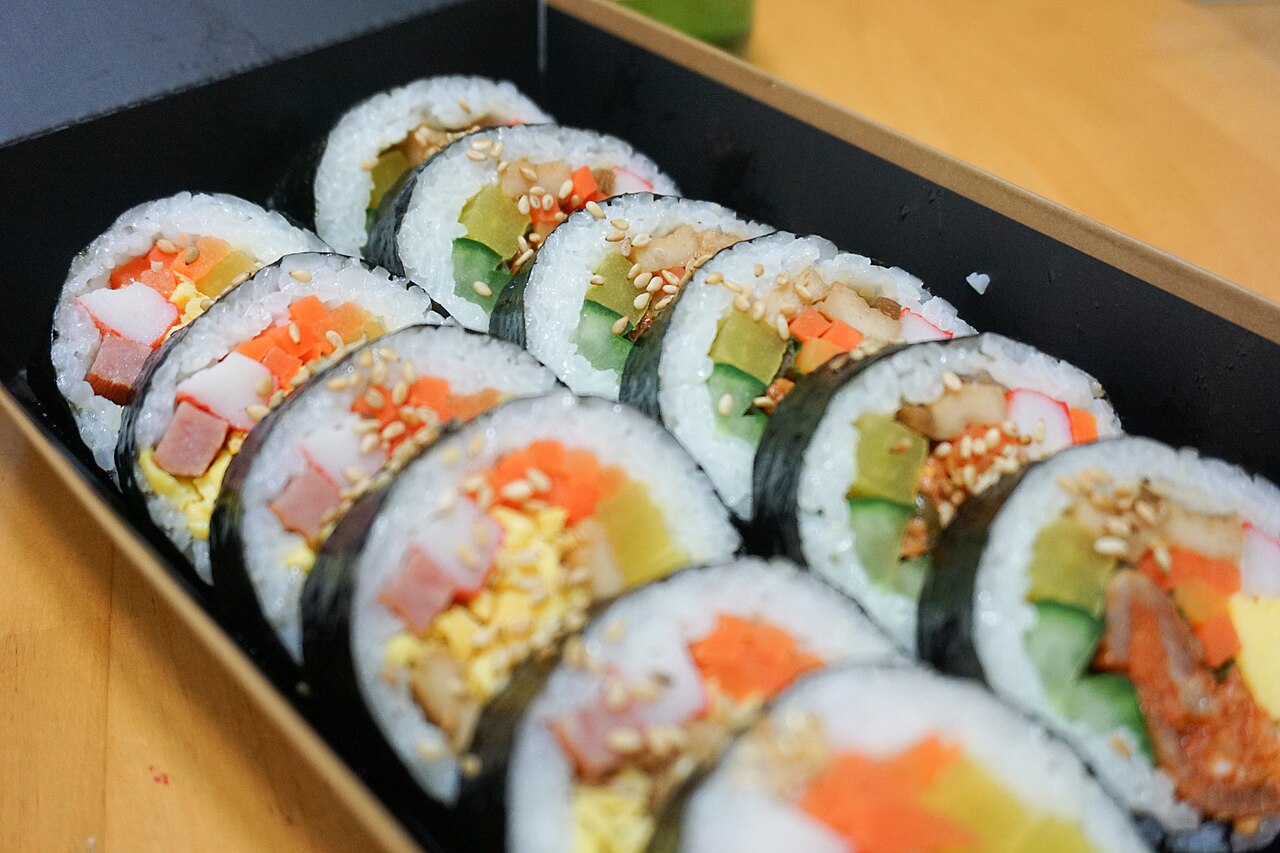
KTO notes that the number of vegetarians in Korea grows every year and that restaurants, bakeries and dessert cafes for them are increasing, but it also says language barriers can get in the way, so you should explain exactly which ingredients to exclude. The safest vegan Korean food is therefore one of two things: temple food, which KTO says contains no meat at all, or a restaurant that Visit Seoul or the MICHELIN Guide lists as vegan. Everything else is a negotiation, and even plain vegetable gimbap (the header photo, by cutekirin via Wikimedia Commons, CC0) can contain ham, egg or crab-flavoured meat.
The key rules at a glance
| Dish | Vegan by default? | What can hide in it (source) | Ask for | Guide |
|---|---|---|---|---|
| Bibimbap | No | Meat and egg toppings (KTO) | No meat, no egg | Bibimbap |
| Vegetable kimbap | Close | Ham, egg, crab-flavoured meat in some shops (KTO) | Yachae gimbap, check fillings | Kimbap |
| Kimchi | No | Salted seafood, fish sauce, meat broth (KTO) | Vegan kimchi or skip | Kimchi |
| Tteokbokki | No | Fish cake and broth (our guide) | Usually skip | Tteokbokki |
| Hotteok | Unclear | No vegan label (see our guide) | Ask about dough and filling | Hotteok |
| Bingsu | Rarely | Milk ice is the default (our guide) | Oat or soy milk version | Bingsu |
| Kongguksu | Usually | Egg garnish (KTO) | No egg on top | – |
| Vegetable jeon | Often | Egg in the batter (KTO) | Ask about egg | – |
| Soft tofu stew | No | Salted shrimp, meat or fish broth (KTO) | Plain water, no shrimp | – |
| Jajangmyeon | No | Pork in the sauce (KTO) | Vegetables only, if offered | Jajangmyeon |
1. Dishes That Work for Vegan Korean Food, and Their Catch
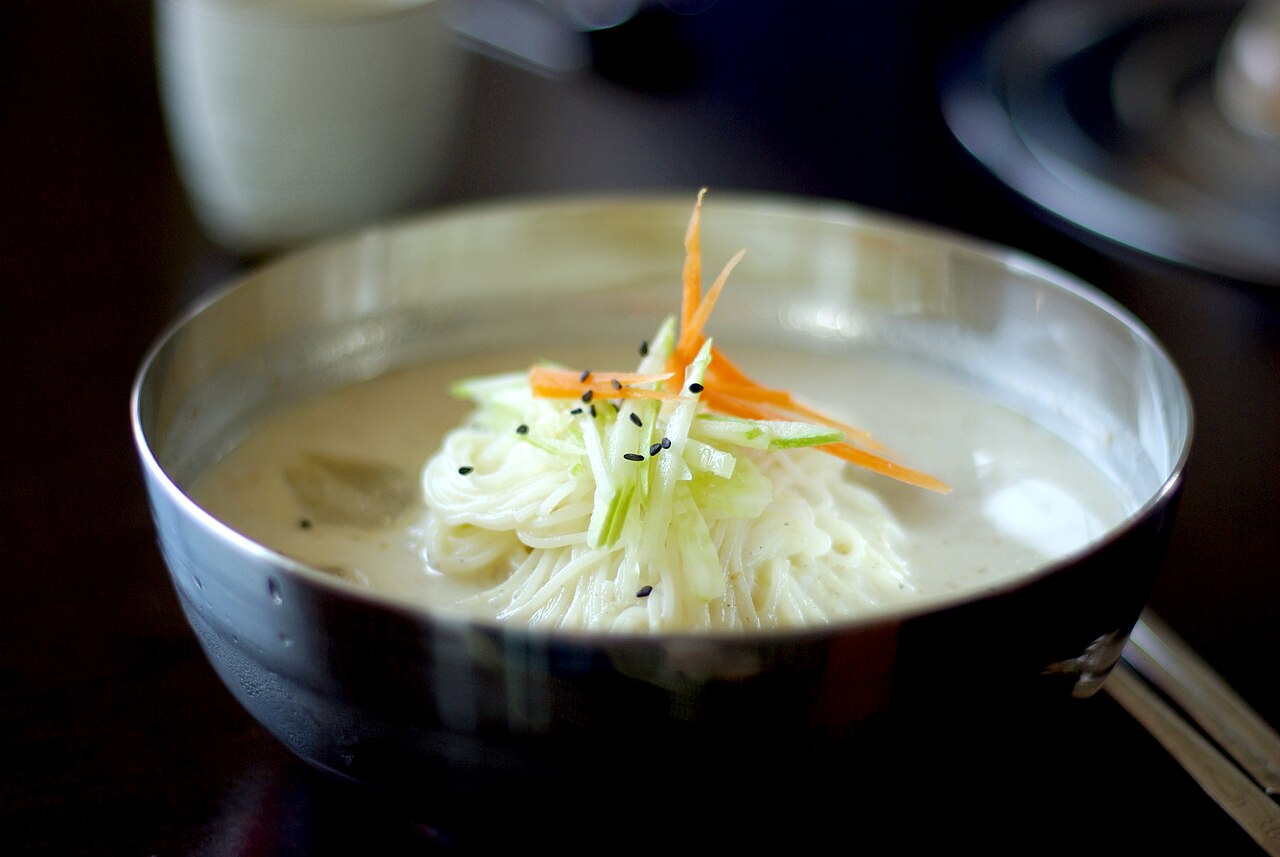
KTO’s own list is the best starting point for vegan Korean food, and each entry comes with a warning. Kongguksu, noodles in cold soybean broth, is a popular summer dish suited to vegetarians, but eggs may be placed on top. Chaeso jeon (vegetable pancake), gamja jeon (potato), pajeon (green onion) and beoseot jeon (mushroom) are available, but some recipes add egg to the batter. Muk, a jelly made from acorn, buckwheat or mung bean starch, is usually served as a dotori muk muchim salad with vegetables and soy sauce. Plain soft tofu with soy sauce or pan-fried tofu slices is KTO’s recommendation for tofu.
Bibimbap is the vegan Korean food trap that looks safe. KTO says most bibimbap menus include meat and eggs, so ask to exclude both; a vegetarian version is served at temple food restaurants such as Sanchon, where Visit Seoul lists bibimbap at ₩15,000 (see our bibimbap guide). Kimbap raises the same vegan Korean food question: KTO recommends basic vegetable kimbap, yachae gimbap, which mostly holds carrot, burdock root, spinach and seasoned radish, but warns that even that can contain ham, egg and crab-flavoured meat depending on the restaurant. Our kimbap guide explains the naming rule: a special filling is always in the name.


2. Hidden Animal Ingredients and How to Read Labels
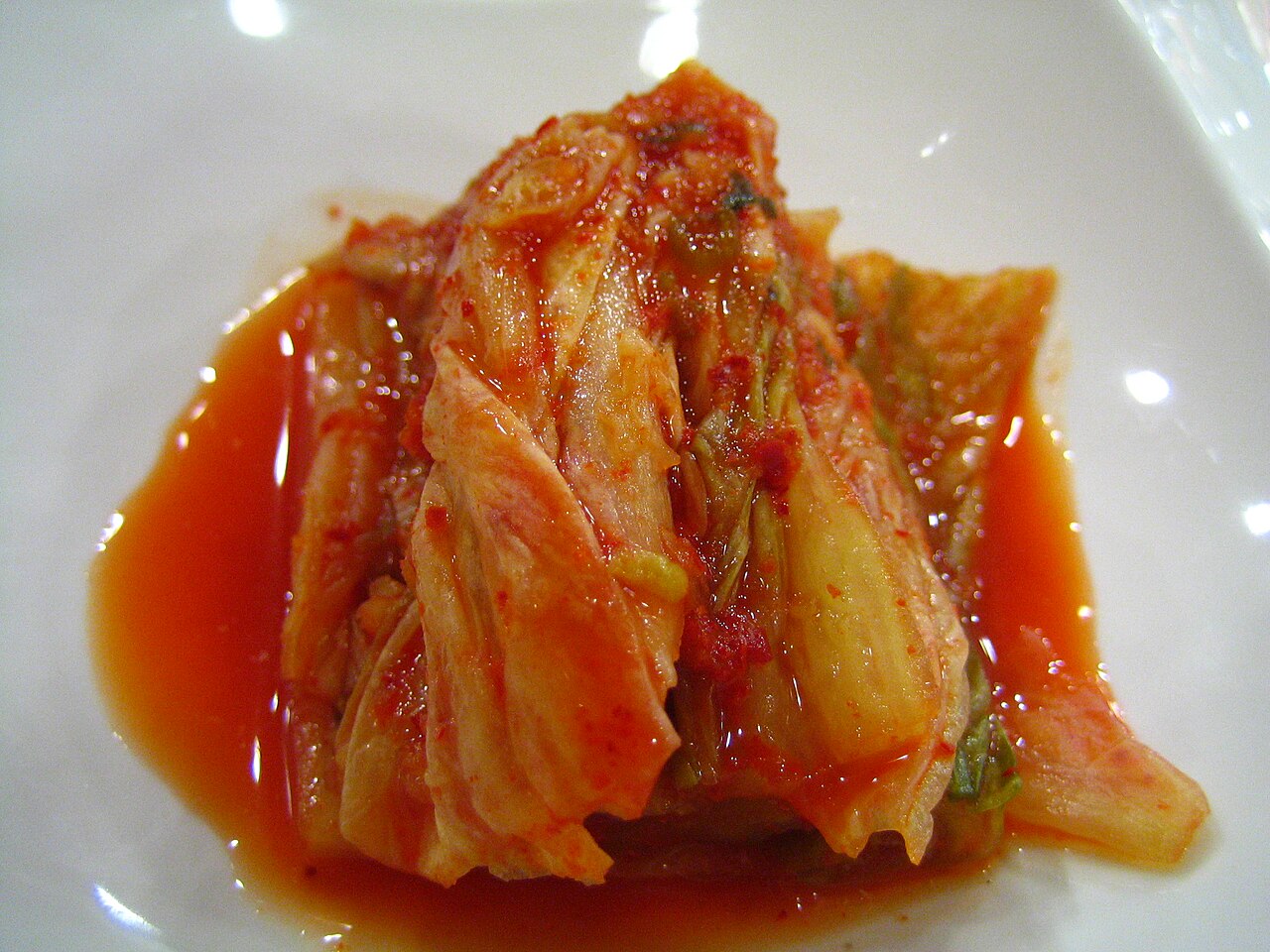
The ingredient that catches most travellers eating vegan Korean food is invisible. KTO says kimchi seasoning most often contains salted seafood, fish sauce or meat broth, and some regional recipes use abalone, cutlass fish or pork. That makes the free kimchi at every table a risk for vegan Korean food, not a side dish; our kimchi guide covers the types. Traditional stews are made from meat or fish broth, and KTO’s advice is to request your order prepared with plain water. Soft tofu jjigae and dubu jorim mostly add salted shrimp.
For packaged food, MFDS requires an allergen box for a fixed list of items including eggs, milk, pork, chicken, beef, shrimp, crab, squid, clams (oyster, abalone, mussel) and mackerel. Note that anchovy, tuna and other fish are not on the list, so a label can omit them from the box; scan the ingredient line for 멸치 (anchovy), 액젓 (fish sauce) and 젓갈 (salted seafood). Packages can also show a certified vegan logo, which KTO says is the easiest check, from bodies such as the Korea Agency of Vegan Certification and Services, Vegan Society, V-Label International and EVE Vegan. MFDS also published a guideline on vegan labelling and advertising on 8 March 2023.

KTO suggests showing 저는 채식주의자입니다 (I am a vegetarian) and 육류, 달걀, 해산물 등을 먹지 못합니다 (I cannot eat meat, eggs and seafood). My own additions, not from an official source: 고기 육수도 빼 주세요 (leave out meat broth too), 멸치 육수 빼 주세요 (no anchovy broth) and 젓갈이나 액젓 안 들어가요? (no salted seafood or fish sauce?). Show them on your phone and let staff correct you. See the convenience store guide for reading shelves at CU and GS25.

3. Where to Eat Vegan Korean Food
Fully vegan restaurants take the guesswork out of vegan Korean food. Our list in Vegan Restaurants Seoul covers temple food at Balwoo Gongyang and Sanchon, the one-star vegan restaurant Légume and budget noodles at ALT.a, all from Visit Seoul or Michelin listings. For the rest of the country, HappyCow showed 763 vegan-friendly options for Seoul alone on 15 October 2026, but our bingsu guide found a listing HappyCow itself reported closed, so verify recent reviews. Markets are harder: there is no vegan stall list for Gwangjang Market, so a guided vegan tour is the realistic route there. Tell BBQ restaurants early; Korean BBQ is built around meat and a vegan table is difficult.
4. Temple Food, Temple Stay and Vegan Classes
Temple food is where vegan Korean food is a tradition rather than an adaptation. The official Templestay site lists a monastic meal (balwoo gongyang) among its programmes, and Michelin says the cuisine is free from meat, fish, garlic and pungent alliums. Temple menus vary, so tell the temple about your diet when you book. For cooking classes, these GetYourGuide listings were checked on 15 October 2026:
| Class or tour | Price at check | Rating | What to know |
|---|---|---|---|
| Local Home Korean Vegan Cooking Class and Market Tour | From ₩180,000 (₩162,000 shown) | 5.0 from 14 reviews | 3 hours, max 5 people; cook 4 vegan dishes; host is a vegan chef; halal and gluten-free options |
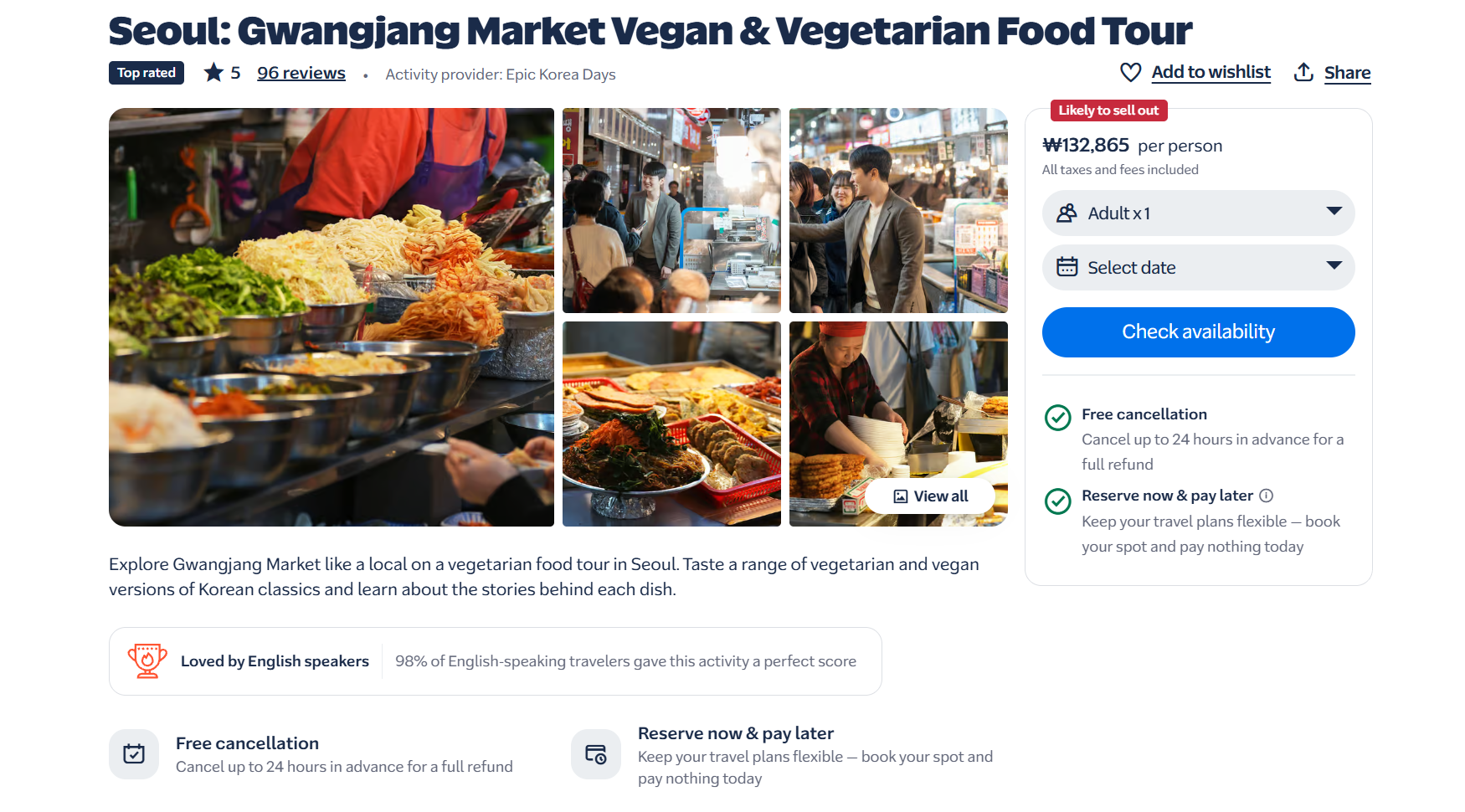
| Gwangjang Market Vegan and Vegetarian Food Tour | From ₩132,814 | 5.0 from 95 reviews | 2 hours, max 9; a recent review calls the food fully vegan |
| Korean Temple Food Cooking Class in Itaewon | From ₩150,000 | New, no rating | 2.5 hours, max 4; plant-based temple dishes; chef trained under a Buddhist monk |
| Cook K-Food 5 Dishes and Market Tour (vegan available) | From ₩100,000 | 4.8 from 17 reviews | 2 hours; default dishes use meat, so choose the vegan recipe option |
| Kimchi-Making and Gift Wrapping with Lunch | From ₩110,000 | New, no rating | Vegan kimchi, but lunch includes bossam (normally boiled pork): ask the provider for a vegan lunch first |

These are the vegan Korean food products that match this guide.
Vegan food tour · Gwangjang Market · via GetYourGuide
Seoul: Gwangjang Market Vegan and Vegetarian Food Tour
⭐ 5.0/5 from 96 GetYourGuide reviews · 2 hours · English guide · vegan and vegetarian versions of Korean market classics · starts near Jongno 5-ga Station · free cancellation up to 24 hours before (as of Oct 2026)
Temple food class · Itaewon · via GetYourGuide
Seoul: Korean Temple Food Cooking Class in Itaewon
⭐ New listing, no ratings yet · 2.5 hours · choose a 2 or 3 dish temple-food menu in advance · fermented sauces and tea included · free cancellation up to 24 hours before (as of Oct 2026)
Cooking class · vegan option · via GetYourGuide
Seoul: Cook K-Food 5 Dishes (Vegan Available) with Korean Market Tour
⭐ 4.7/5 from 18 GetYourGuide reviews · 2 hours · cook kimbap, mandu, japchae, tteokbokki and a dessert after a market and supermarket tour · vegan option · free cancellation up to 24 hours before (as of Oct 2026)
Mistakes to Avoid
- Eating the free kimchi. KTO says most kimchi contains fish sauce, salted seafood or meat broth.
- Ordering bibimbap and removing only the meat. KTO says it nearly always comes with an egg too.
- Trusting plain vegetable kimbap. Ham, egg and crab-flavoured meat can still be inside.
- Believing vegetarian restaurants are vegan. Ask about egg, dairy and honey separately.
- Assuming the allergen box lists everything. Anchovy and most fish are not on the MFDS list.
- Booking a vegan class without reading the lunch. One kimchi class lists bossam, and one cooking class defaults to meat dishes.
- Relying on one old blog for vegan Korean food. Even Visit Seoul says its vegan article may contain outdated details.
Frequently Asked Questions
Is Korea vegan friendly?
In big cities, yes, with planning, and vegan Korean food is easiest at dedicated restaurants. KTO says vegetarians are increasing and so are vegetarian restaurants and cafes, but many restaurants have no separate menu and Korean food is often made with meat and fish broth.
Is kimchi vegan?
Usually not. KTO says kimchi seasoning most often contains salted seafood, fish sauce or meat broth. Some regional recipes use abalone, cutlass fish or pork. A vegan kimchi class or a certified vegan label is the reliable route.
Is bibimbap vegan?
Not by default. KTO says most bibimbap menus include meat and eggs, so ask to exclude both. Temple food restaurants such as Sanchon serve a vegetarian version.
Is kimbap vegan?
Plain yachae gimbap is the best bet, with carrot, burdock, spinach and radish, but KTO warns that ham, egg and crab-flavoured meat may be added, so check with the shop.
Is temple food vegan?
KTO says temple food uses no meat at all, and Michelin describes it as free from meat, fish, garlic and pungent alliums. Egg and dairy use varies by restaurant, so ask.
Can I find vegan food at convenience stores?
Convenience stores do not publish a vegan list. Read the label: the allergen box covers egg, milk, pork, chicken, beef, shrimp, crab, squid, clams and mackerel but not anchovy, and a vegan logo is the clearest sign.
Are there vegan cooking classes in Seoul?
Yes, for vegan Korean food. GetYourGuide lists a vegan cooking class with a market tour from 180,000 won, rated 5.0 from 14 reviews, and a temple food class in Itaewon from 150,000 won. Read the menu before booking.
How do I say I am vegan in Korean?
KTO suggests 저는 채식주의자입니다 (I am a vegetarian) and 육류, 달걀, 해산물 등을 먹지 못합니다 (I cannot eat meat, eggs and seafood). Add 멸치 육수 빼 주세요 for no anchovy broth, and check it in a translation app.
Halal, Pork-Free or Vegan: Can One Table Do It All?
If your group mixes vegan Korean food with other diets, the logic is the same: ask for the certificate or the ingredient list, not the label on the door. Our halal food in Seoul guide shows how Korea’s halal tiers work, and the Korea guide for Muslim travellers covers the wider trip. For your first meals, start with the vegan restaurants Seoul list in our restaurant guide.
Sources (official pages checked)
- Korea Tourism Organization: Tips for Vegetarians (October 2023)
- Korea Tourism Organization: Tips for Vegetarians, restaurants (November 2022)
- MFDS: food labeling system and allergen list
- MFDS: vegan labelling and advertising guideline notice (2023-03-08)
- MICHELIN Guide: vegetable-forward dishes (January 2026)
- Visit Seoul: Vegan Life In Seoul
- Templestay (official programme site)
- HappyCow: Seoul listings
Book the basics for your Korea trip
Affiliate links: we may earn a small commission at no extra cost to you.
Related Guides
- Korea Travel Toolkit: what to book before you fly
- Vegan Restaurants Seoul – where to eat, with hours and prices
- Halal Korean Food in Seoul – another diet, same rules
- Korea for Muslim Travellers
- Bibimbap Seoul – the meat and egg question
- Kimbap Seoul – plain vegetable rolls
- Kimchi Korea – fish sauce and vegan kimchi class
- Tteokbokki Seoul – fish cake and broth
- Hotteok Seoul
- Bingsu Seoul – dairy and vegan options
- Korea Convenience Store Guide
- Gwangjang Market Seoul
Vegan Korean food facts last checked 15 October 2026 against KTO, MFDS, MICHELIN Guide and GetYourGuide pages. Prices, menus and labelling rules change; confirm with the provider or restaurant.