Bottom line: A Korea motel is a legally registered lodging business, not a downgrade or a scam – the booking trap is that Korean law reserves “hotel” ratings for registered tourist hotels while the Korea Tourism Organization itself warns that “some motels have the word ‘hotel’ in their names”.
🇰🇷 Quick Korea Travel Guide
👉 Getting in: Check K-ETA requirements and the e-Arrival Card before you fly.
👉 Stay in Touch (eSIM): Grab a Korea eSIM on Airalo before you land – no airport counter queue.
👉 Download New Apps: See our Naver Map in English guide to check an address before you book.
👉 Where to Book Activities: GetYourGuide for tours and day trips; KKday for rail passes and Korea-only tickets.
👉 Getting Around: Read our T-money vs Climate Card guide – tourists use the Climate Card short-term pass, not the residents-only Climate Pass.
👉 For more in-depth planning: Browse all our Korea Travel guides.
Disclosure: the Airalo, GetYourGuide and KKday links above are affiliate links. We may earn a commission at no extra cost to you.
The quick answer
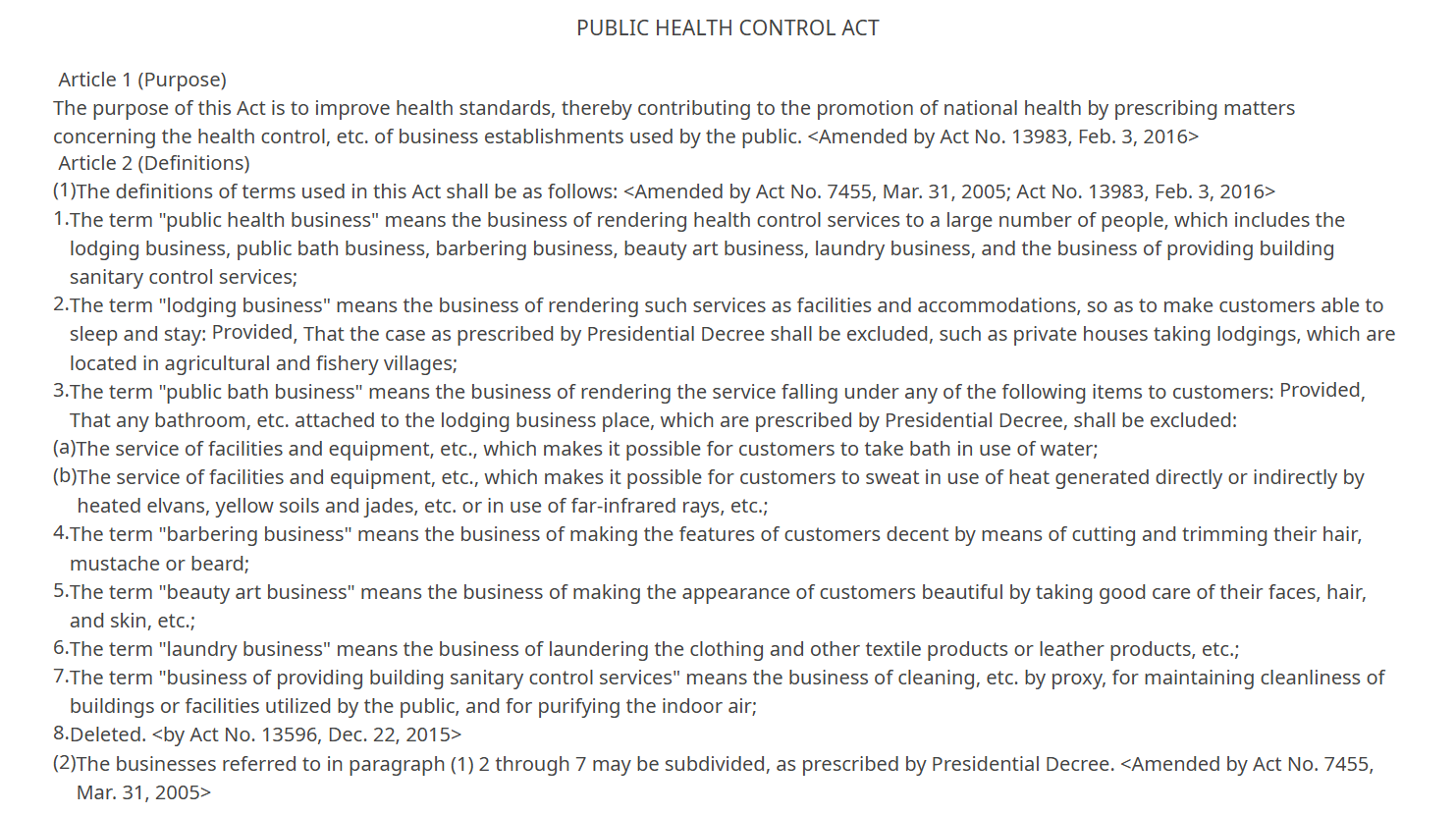
- A Korea motel is a lodging business under the Public Health Control Act – legally defined as a business providing facilities and accommodation “so as to make customers able to sleep and stay”.
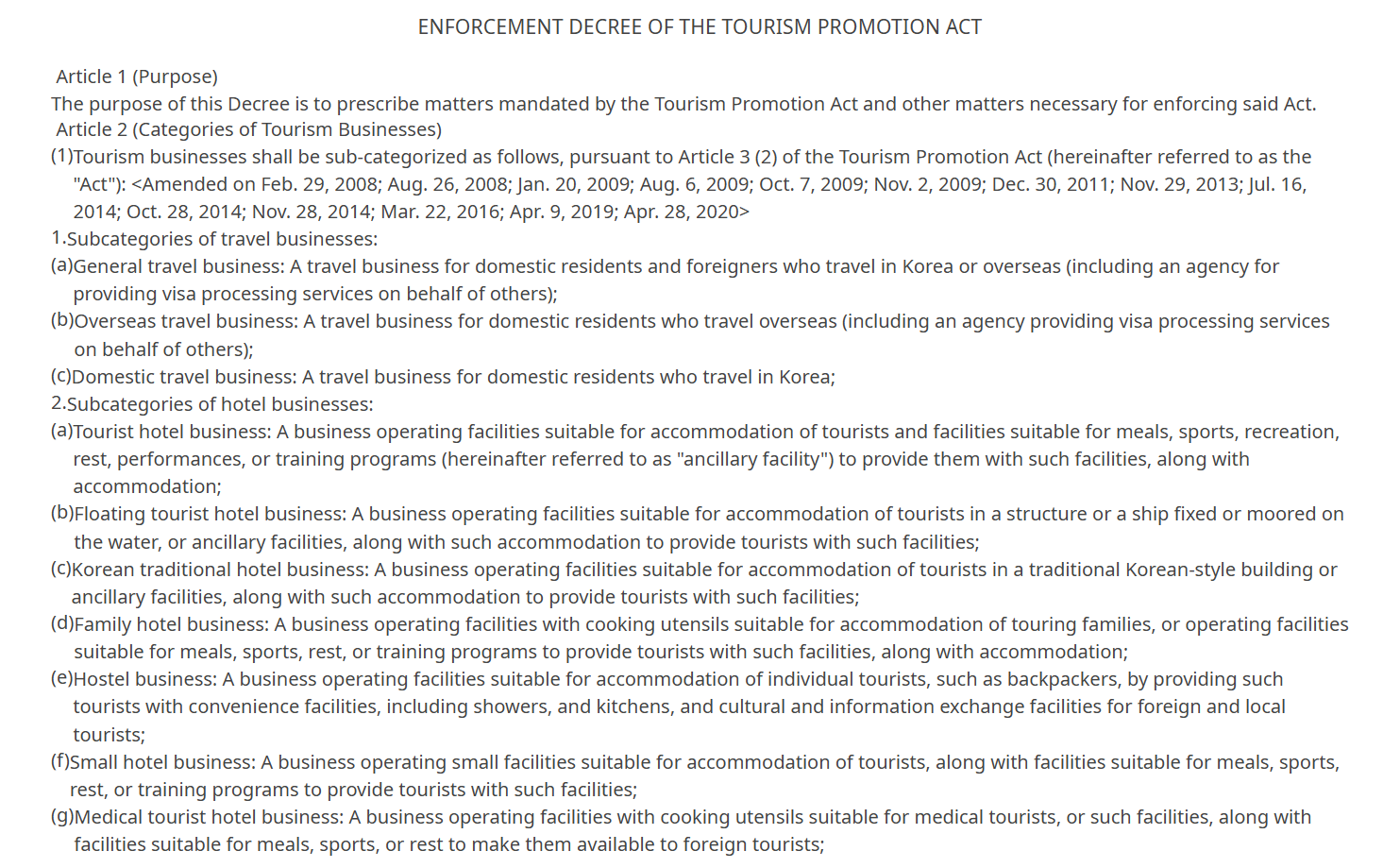
- A “hotel” in the legal sense is a registered hotel business under the Tourism Promotion Act: tourist hotel, floating tourist hotel, Korea traditional hotel, family hotel, hostel, small hotel or medical tourism hotel.
- Star ratings are assigned by the Minister of Culture, Sports and Tourism and apply only to those registered hotel categories – so a motel has no official Korean star rating.
- The Korea Tourism Organization’s own accommodation page says outright: “Take note that some motels have the word ‘hotel’ in their names.”
- The KTO calls motels “the ultimate cost-effective accommodations”, notes many are downtown, and says newer ones have hotel-grade bedding and whirlpool bathtubs.
- Want an official quality signal instead of guesswork? Look for the Korea Quality mark, a KTO certification covering tourist hotels, guesthouses, hanok stays and youth hostels.
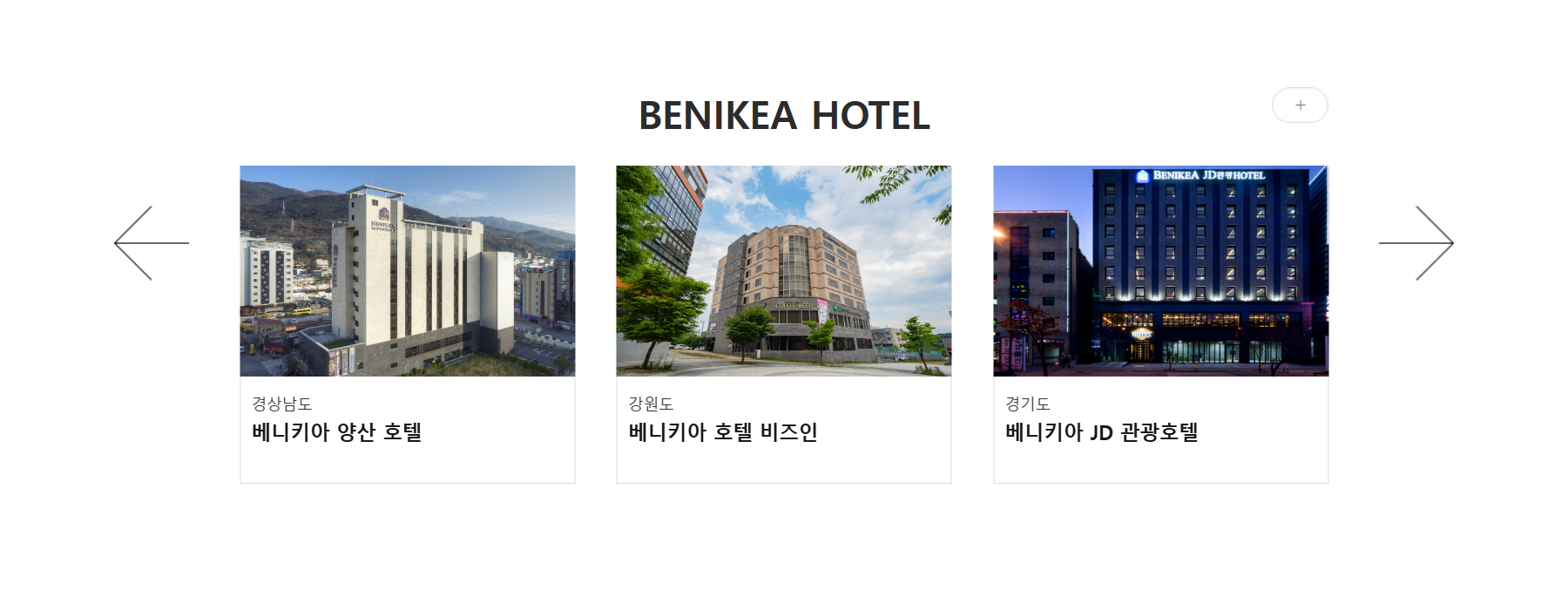
- Benikea is the KTO’s own business hotel chain brand (“Best Night in Korea”); the KTO page listed 22 branches nationwide at its October 2025 update.
- Nothing in the law makes a motel unsafe for tourists. Do the normal checks: exact address, recent reviews, cancellation terms, and whether breakfast or a lift exists.
What this guide covers
What the Korea motel booking trap actually is
Here is the situation this guide exists for. You book something on an international booking site that calls itself a hotel, at a price that looks too good for a central Seoul location. You arrive and the building, the entrance and the reception desk do not match the word “hotel” as you use it at home. Nothing has gone wrong and nobody has lied to you – you have booked a Korea motel, which is a different legal category of accommodation with a different naming convention.
That mismatch is the entire trap, and the fix is information rather than cancellation. This guide sets out what Korean statute actually says about the two categories, what the Korea Tourism Organization publishes about motels, and which official certifications exist if you would rather book something with a government-checked quality mark on it.
1. How Korean law classifies a Korea motel
Korea runs two parallel regimes, and this is the part almost no English travel article explains. Under the Public Health Control Act, Article 2, a “lodging business” is defined as “the business of rendering such services as facilities and accommodations, so as to make customers able to sleep and stay”, and it sits in the same list of public health businesses as bath houses, barbers and laundries. That is the bucket an ordinary motel or inn falls into, and it is supervised by the local Si/Gun/Gu office on hygiene and facility standards.
Under the Tourism Promotion Act and its Enforcement Decree, a separate “hotel business” is registered as a tourism business, with named subcategories: tourist hotel business, floating tourist hotel business, Korea traditional hotel business, family hotel business, hostel business, small hotel business and medical tourism hotel business. The Act also gives the Minister of Culture, Sports and Tourism the power to determine ratings for tourist accommodation businesses, and the Enforcement Decree limits compulsory rating applications to those registered hotel categories.
Two practical consequences follow. First, a Korea motel that is only registered as a lodging business is legal, inspected and perfectly normal – it is simply not a registered tourist hotel. Second, a genuine Korean star rating can only exist for the tourist-hotel categories, so any “3-star” label you see attached to a motel on a booking site is the platform’s own classification, not a Korean government rating.
2. Why “hotel” on the listing does not mean hotel
The naming issue is not a rumour from a forum. The Korea Tourism Organization’s own “Accommodations in Korea” page, in the section on motels, ends with this sentence: “Take note that some motels have the word ‘hotel’ in their names.” That is an official body telling international visitors, in English, that the label on the sign is not a reliable guide to the category.
So when a booking site shows you “○○ Hotel” in Jongno or Seomyeon at a price well under the local business-hotel range, the name alone proves nothing. What does help: check the street-view frontage in Naver Map, look for whether the listing mentions a registered tourist-hotel category or a certification mark, and read the most recent reviews rather than the aggregate score. If the property is a motel, that is fine – just know it before you arrive rather than after.
One design detail worth knowing, because it is written into law rather than folklore: the Enforcement Decree of the Tourism Promotion Act, in a provision added on 22 March 2016, requires operators of certain tourist accommodation facilities to make public spaces – “the entrance through which its guests can enter the relevant facilities by car or on foot, parking lot, and lobby” – open structures visible from the outside. Korea has actively legislated on accommodation visibility; entrance layouts vary by category and by when a building was approved.
3. What the official description of a Korea motel says
The KTO’s description is short and worth quoting in full, because it is more positive than most English-language coverage: “In Korea, motels are the ultimate cost-effective accommodations. Some of the newly built motels offer bedding and whirlpool bathtubs comparable to those of a hotel. There are others equipped with high-performance computers rivaling those found in PC cafés. There are many motels located downtown, making it convenient for travelers.”
Read that against the same page’s other categories and the picture is clear. Hotels run from five-star international chains to business hotels. Guesthouses are the cheap option, with dormitories or one-to-two person rooms, sometimes shared bathrooms, and often no parking. Hanok accommodation is the traditional-house experience. A Korea motel sits between guesthouse and business hotel on price, with private rooms and bathrooms, and frequently a better location than either.
Many motels post separate daytime and overnight rates, so you may see two prices. Confirm which rate you are being quoted before you pay.

The key rules at a glance
| Question | What the official source says | Source |
|---|---|---|
| Legal category of a motel | “Lodging business” – a public health business providing facilities and accommodation for customers to sleep and stay | Public Health Control Act, Art. 2 |
| Legal category of a hotel | Registered “hotel business”: tourist, floating tourist, Korea traditional, family, hostel, small, medical tourism | Enforcement Decree of the Tourism Promotion Act |
| Who sets star ratings | The Minister of Culture, Sports and Tourism, for registered tourist accommodation businesses | Tourism Promotion Act, Art. 19 |
| Naming | “Some motels have the word ‘hotel’ in their names” | Korea Tourism Organization |
| Motel positioning | “The ultimate cost-effective accommodations”; many are downtown; newer ones have hotel-grade bedding and whirlpool baths | Korea Tourism Organization |
| Official quality mark | Korea Quality – a KTO certification for tourist hotels, guesthouses, hanok stays and youth hostels | Korea Tourism Organization |
| KTO’s own hotel chain | Benikea (“Best Night in Korea”); 22 branches nationwide at the October 2025 page update | Korea Tourism Organization / benikea.com |
| Guesthouse alternative | Cheapest category; dormitories or 1-2 person rooms; bathrooms may be shared; often no parking | Korea Tourism Organization |
4. Officially certified alternatives: Korea Quality and Benikea
If you simply do not want the uncertainty, Korea gives you two official shortcuts. Korea Quality is, in the KTO’s words, “a certified designation system to help tourists select high quality facilities and services”, certified by the Korea Tourism Organization. Its accommodation scope includes tourist hotels, guesthouses, hanok accommodation and youth hostels. The KTO adds its own caveat, which we will pass on: certified accommodations are subject to change or may move into a different programme, so check before you book.
Benikea is the other one – a Korean business hotel chain brand operated by the Korea Tourism Organization, with the name standing for “Best Night in Korea”. The KTO’s page, last updated in October 2025, describes an average of about 100,000 won a night and 22 branches nationwide. The chain’s own booking site is live and lists properties across Seoul, the provinces and Jeju, plus two in Japan, so treat the KTO’s branch count as a snapshot and the operator site as current.
Neither mark makes a Korea motel a bad choice. They give you a government-checked floor for facilities and service, which is exactly what most travellers are actually looking for when they panic about a motel booking. If the certification matters to you, search the Korea Quality list first and book from it, rather than trying to reverse-engineer a property’s category from its photos.

5. Should you cancel? A practical checklist
Almost always, no. A Korea motel is a registered lodging business subject to hygiene and facility supervision, and the category is mainstream enough that the national tourism body promotes it. What is worth doing is the same due diligence you would apply anywhere: confirm the exact street address and neighbourhood, read reviews from the last few months rather than the headline score, check the cancellation deadline, and confirm what is actually included.
Three Korea-specific checks are worth adding. Ask whether the property has a lift if you have heavy luggage, because many older buildings do not. Confirm whether the rate you booked is the overnight rate rather than a shorter daytime rate if you booked in Korean or by phone. And sort out payment before you arrive – our cash guide covers why a physical T-money card is cash-only to top up and why you cannot tap a foreign card at a subway gate until the 2027 open-loop rollout.
If you do decide a motel is not for you, the substitutions are easy: a Korea Quality-certified guesthouse, a Benikea business hotel, or a hanok stay if you want the traditional-house version. All three are officially recognised categories with published descriptions, which is more than most booking-site filters give you.
If you would rather book a clearly registered business hotel, Toyoko Inn Seoul Dongdaemun 2, Holiday Inn Express Seoul Hongdae and N285 Hotel Insadong are well-reviewed examples on Agoda (ratings as of Oct 2026).
Registered business hotel · Dongdaemun · via Agoda
Toyoko Inn Seoul Dongdaemun 2
⭐ 8.8/10 from 8,606 Agoda reviews · 171 m from Dongdaemun History & Culture Park Station · airport bus stop nearby (as of Oct 2026)

Registered business hotel · Hongdae · via Agoda
Holiday Inn Express Seoul Hongdae by IHG
⭐ 8.9/10 from 16,847 Agoda reviews · 311 m from Hongik Univ. Station · breakfast available (as of Oct 2026)

Hotel pick · Insadong · via Agoda
N285 Hotel Insadong
⭐ 8.7/10 from 7,218 Agoda reviews · about 300 m from Insadong · 448 m from Jonggak Station · walk to Bukchon Hanok Village (726 m) (as of Oct 2026)
Prefer to compare more places with clear hotel categories? Browse Seoul stays on Agoda and check the property type and recent reviews before you book.
Mistakes to Avoid
- Trusting the word “hotel” in the property name. The Korea Tourism Organization explicitly warns that some motels use it.
- Treating a booking-site star count as a Korean rating. Official ratings come from the Minister of Culture, Sports and Tourism and only cover registered hotel-business categories.
- Cancelling in a panic. A Korea motel is a registered lodging business under the Public Health Control Act, not an unregulated rental.
- Assuming every motel offers the same pricing structure. Many motels post separate daytime and overnight rates – confirm which rate you have.
- Ignoring the lift question. Older buildings in central districts frequently have stairs only, which matters more than decor if you arrive with a large case.
- Skipping the certification search. Korea Quality and Benikea are real, searchable KTO programmes, not marketing badges invented by hotels.
- Booking on aggregate score alone. Recent reviews tell you about the building as it is now; a two-year-old average does not.
- Turning up with no cash. Small properties are the most likely to prefer cash, and T-money top-ups are cash-only in any case.
Frequently Asked Questions
What is a motel in Korea?
A Korea motel is a lodging business – the Public Health Control Act defines that as a business providing facilities and accommodation so customers can sleep and stay, supervised locally on hygiene and facility standards. The Korea Tourism Organization describes motels as “the ultimate cost-effective accommodations”, often downtown, with newer ones offering bedding and whirlpool bathtubs comparable to a hotel.
Is it safe to stay in a Korean motel as a tourist?
There is nothing in Korean law that makes a motel unsuitable for visitors: it is a registered lodging business subject to facility and hygiene supervision, and the national tourism body promotes the category. Apply the same checks you would anywhere – exact address, recent reviews, cancellation terms – and ask about a lift if you have heavy luggage.
What is the difference between a Korean motel and a hotel?
They are registered under different statutes. A motel is a lodging business under the Public Health Control Act. A hotel is a registered hotel business under the Tourism Promotion Act, which names seven subcategories: tourist hotel, floating tourist hotel, Korea traditional hotel, family hotel, hostel, small hotel and medical tourism hotel. Only those categories can carry an official Korean rating.
Why do some Korean motels have hotel in their name?
Because nothing stops them. The Korea Tourism Organization’s accommodation guide tells international visitors directly: “Take note that some motels have the word ‘hotel’ in their names.” The name is a brand, not a legal classification, so check the property itself rather than the signage.
Do Korean motels have hourly rates?
Many Korean motels post a shorter daytime rate alongside an overnight rate, so you may see two prices at reception. Confirm which rate applies before you pay, and if you book in Korean or by phone, confirm you are being quoted the overnight rate.
What is Korea Quality certification?
Korea Quality is a certified designation system run by the Korea Tourism Organization to help tourists pick high-quality facilities and services. For accommodation it covers tourist hotels, guesthouses, hanok stays and youth hostels. The KTO notes that certified properties can change or move to another programme, so check the current list before booking.
What is Benikea?
Benikea is a Korean business hotel chain brand operated by the Korea Tourism Organization; the name stands for “Best Night in Korea”. The KTO page, last updated in October 2025, cites an average of around 100,000 won a night and 22 branches nationwide, and the chain’s own site lists properties across Korea plus two in Japan.
Should I book a guesthouse or hanok stay instead of a motel?
Both are officially recognised alternatives. The Korea Tourism Organization describes guesthouses as the cheapest category, with dormitories or one-to-two person rooms, sometimes shared bathrooms and often no parking. Hanok accommodation is a traditional Korean house stay, usually more expensive than a motel. Many of both are Korea Quality-certified, which is the signal to search for.
What else should you sort before you book?
Pick the neighbourhood before the property: our Myeongdong is not Seoul guide explains which districts are worth basing yourself near, Insadong and Gwangjang Market cover the old-city side, and our Busan vs Seoul guide helps if you are splitting a week between two cities.
Sources (official pages checked)
- Korea Tourism Organization, “Accommodations in Korea” – english.visitkorea.or.kr
- Korea Tourism Organization, “KTO Certified Accommodations” (Korea Quality, Benikea) – english.visitkorea.or.kr
- Korea Tourism Organization, “Korea Quality” certification – english.visitkorea.or.kr
- Public Health Control Act, Article 2 (definition of lodging business), official English translation – elaw.klri.re.kr
- Enforcement Decree of the Tourism Promotion Act (hotel business subcategories, ratings, visibility of public spaces) – elaw.klri.re.kr
- Benikea, official booking site – benikea.com
- Korea Tourism Organization, “Guesthouses” – english.visitkorea.or.kr
Book the basics for your Korea trip
Affiliate links: we may earn a small commission at no extra cost to you.
Related Guides
- Korea Travel Toolkit: what to book before you fly
- Myeongdong Is Not Seoul: The Neighbourhoods Tourists Skip
- How Much Cash to Bring to Korea
- Busan vs Seoul: How to Split 7-10 Days
- Seoul Nightlife: Itaewon vs Hongdae vs Gangnam
- Korea Emergency Numbers You Should Save
- Jjimjilbang Etiquette for First-Timers
- Korea Convenience Store Guide
- Naver Map in English: The App Korea Actually Runs On
Last checked September 2026 against the Korea Tourism Organization (english.visitkorea.or.kr), the Korea Legislation Research Institute’s English translations of the Public Health Control Act and the Tourism Promotion Act (elaw.klri.re.kr), and Benikea (benikea.com).