Bottom line: A templestay is a one-day or overnight program at a working Korean Buddhist temple, and in Seoul it costs about ₩80,000 to ₩120,000 per night for an adult, or ₩30,000 to ₩50,000 for a one-day session, booked on the official site templestay.com (prices as of October 2026).
Quick Korea Travel Guide
Getting in: Landing at Incheon? See Incheon Airport to Seoul for every option and current fares.
Stay in touch: Get a Korea eSIM from Airalo so Naver Map works on the walk up to the temple.
Download first: Naver Map for temple entrances and bus stops.
Where to book: Templestay programs are booked on the official templestay.com reservation page; for other plans see Seoul tours and activities on GetYourGuide.
Getting around: T-money vs Climate Card covers subway fares.
For more planning: Korea Travel Toolkit.
Disclosure: Some links are affiliate links. If you book through them I may earn a commission at no extra cost to you.
A templestay lets you follow a Korean Buddhist temple’s daily timetable for a few hours or a night: bows, chanting, silent meals, meditation and tea with a monk. This guide uses the official templestay.com pages to explain the program types, current prices in Seoul and the regions, how a foreigner books, what a typical schedule looks like, the rules and what to bring (all checked in October 2026).
Quick answer
- What it is: a cultural program at Korean Buddhist temples, run through the Korean Buddhist Cultural Business Group and booked on templestay.com.
- Three types: one-day (about two to three hours), experience-oriented (usually one overnight) and rest-oriented.
- Seoul prices (adult, October 2026): ₩30,000 to ₩50,000 for one-day programs, ₩80,000 to ₩120,000 for an overnight stay; some tea sessions at the Templestay Information Center are free.
- Outside Seoul: Bulguksa in Gyeongju, Golgulsa and Naksansa list ₩120,000 for a two-day, one-night adult program.
- Booking: choose a program, pick an open date (usually opened about a month ahead), then reserve as a member or guest; payment rules differ by temple.
- Day starts early: wake-up is around 04:00 at the Seoul temples listed, and lights out falls between about 19:00 and 21:00.
- Rules: no alcohol or smoking, modest clothes, socks in the halls, and shared rooms separated by gender.
What this guide covers
1. What Is a Templestay in Korea?
The official site describes a templestay as a cultural experience program for understanding Korean traditional culture and Korean Buddhism, with chanting, meditation, tea and Buddhist meals. A page for Bongeunsa in Seoul says the program began in 2002 and was first launched during the 2002 FIFA World Cup. It is run through the Templestay Center in Jongno, under the Korean Buddhist Cultural Business Group.
You are a guest in a living temple, not a hotel customer. You change into a temple uniform (usually a vest and pants), follow the group timetable and share a room. The official FAQ explains that temple life is communal, and that you can skip a session and rest if you feel unwell or too tired; tell the staff.
Eating is part of the practice too. The official site describes balwoogongyang (also written balwoo gongyang) as the traditional way monks and nuns eat from bowls of rice and vegetables, based on equality, cleanliness and thrift, with no waste. If the food is your main interest, our guides to vegan restaurants in Seoul and vegan Korean food list temple food restaurants you can visit without staying.
2. Templestay Types: One-Day, Experience and Rest Programs
The official site sorts every program into three types, and the reservation page has a filter for them:
- One-day templestay: usually two or three hours, with a temple tour, meditation and a tea ceremony. It suits visitors short on time.
- Experience-oriented templestay: typically one overnight, often on weekends, with morning chanting, 108 prostrations, a Buddhist meal with traditional bowls and meditation, plus crafts such as a lotus lantern or prayer beads.
- Rest-oriented templestay: a quiet stay for relaxing, with meditation and Buddhist ceremonies available. Each program page says which sessions are included.
Templestay prices at a glance
The table lists adult prices from individual program pages on 29 October 2026. Teenager and child prices are often lower, and some temples add a fee for a single room, so open the program page before you book.
| Temple (area) | Program | Adult price | Format |
|---|---|---|---|
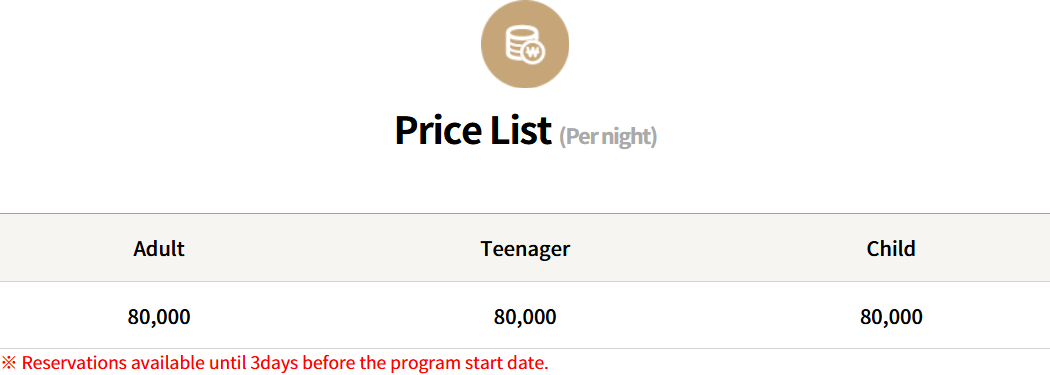
| Jogyesa (Jongno, Seoul) | Regular Templestay | ₩80,000 per night | Overnight, 2 days |
| Myogaksa (Seoul) | Where is your mind? | ₩95,000 | Overnight, 2 days 1 night |
| Hwagyesa (Gangbuk, Seoul) | Only Don’t Know (experience program) | ₩90,000 | Overnight, 1 night 2 days |
| Bongeunsa (Gangnam, Seoul) | Regular Templestay (Sat–Sun) | ₩120,000 | Overnight, weekend |
| Myogaksa, International Seon Center, Bongeunsa (Seoul) | One-day programs | ₩30,000 to ₩50,000 | One-day, 2 to 3 hours |
| Templestay Information Center (Seoul) | Tea meditation (Saturday, 10:20) | Free | About 50 minutes, small groups |
| Bulguksa (Gyeongju) | Journey into Mind | ₩120,000 | Overnight, 2 days 1 night |
| Golgulsa (Gyeongju) | Moving Seon, Seonmudo | ₩120,000 | Overnight, 2 days 1 night |
| Naksansa (Yangyang, Gangwon) | Wave in the Wind | ₩120,000 | Overnight, 2 days 1 night |
3. How to Book a Templestay as a Foreigner
Booking runs through the English version of the official site. Some program pages note language support: Myogaksa’s says the program is in English or translated into English, and Bulguksa names a manager for English-speaking participants.
- Open templestay.com/en, Reservation, Reservations and filter by area, temple, program type, number of people and dates.
- Open a program and read the price list, schedule, what to bring, refund policy and rules. These differ from temple to temple.
- Pick an open date on the calendar. Bongeunsa and Myogaksa say reservations usually open one month before the date, and Bulguksa says only clickable dates can be booked.
- Press Reservation, then sign in or continue as a guest. Keep the email and password you register, because the site’s Confirm Reservation page asks for them.
- Pay the way the program page says. Jogyesa recommends paying by card during online booking and says card payment on the spot is not available. Bulguksa and Golgulsa accept cash or card on arrival, and Myogaksa accepts cash at the temple or a bank deposit.
- Keep the confirmation email; the FAQ says you do not need to print it.
Changes and refunds: The FAQ says to contact the temple you booked, or email support@templestay.com. Refund windows differ widely. Bongeunsa lists a full refund 14 days before and 70% at 7 days, Jogyesa a full refund 7 days before and none after that, and Myogaksa a full refund 3 days before. Bongeunsa also restricts future participation after a no-show.
Help in person: The Templestay Information Center is on the first floor of the Templestay Center at 56 Ujeongguk-ro, across from Jogyesa. It is open daily 09:00 to 18:00 and closed on New Year’s Day, Lunar New Year and Chuseok holidays; the phone number is 02-2031-2000. Myogaksa’s English page is for foreign visitors and the Korean friends who accompany them.
4. What a Typical Templestay Schedule Looks Like
Schedules vary by temple, season and group size, but the overnight programs share one rhythm: early to bed, up before dawn. The Myogaksa page below is a representative example.
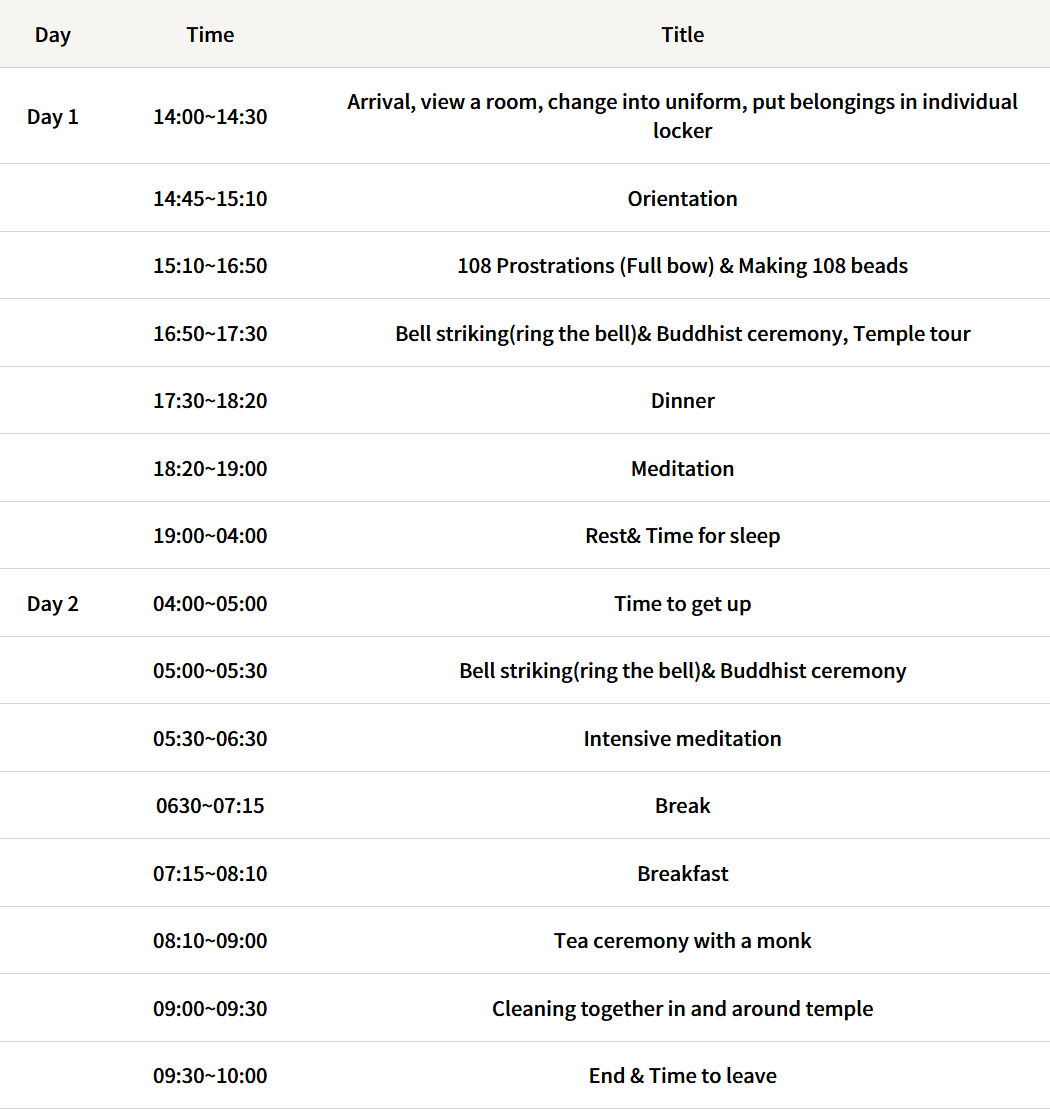
Arrival and orientation (about 14:00). You check in, see your room, change into the uniform and store your belongings in a locker. Bongeunsa and Jogyesa add a lesson in temple etiquette.
108 prostrations. The official site lists 108 bows in the experience program. At Myogaksa they run in the afternoon together with making 108 prayer beads. At Jogyesa they are optional in the evening, and at Bongeunsa they come at 05:00 the next morning.
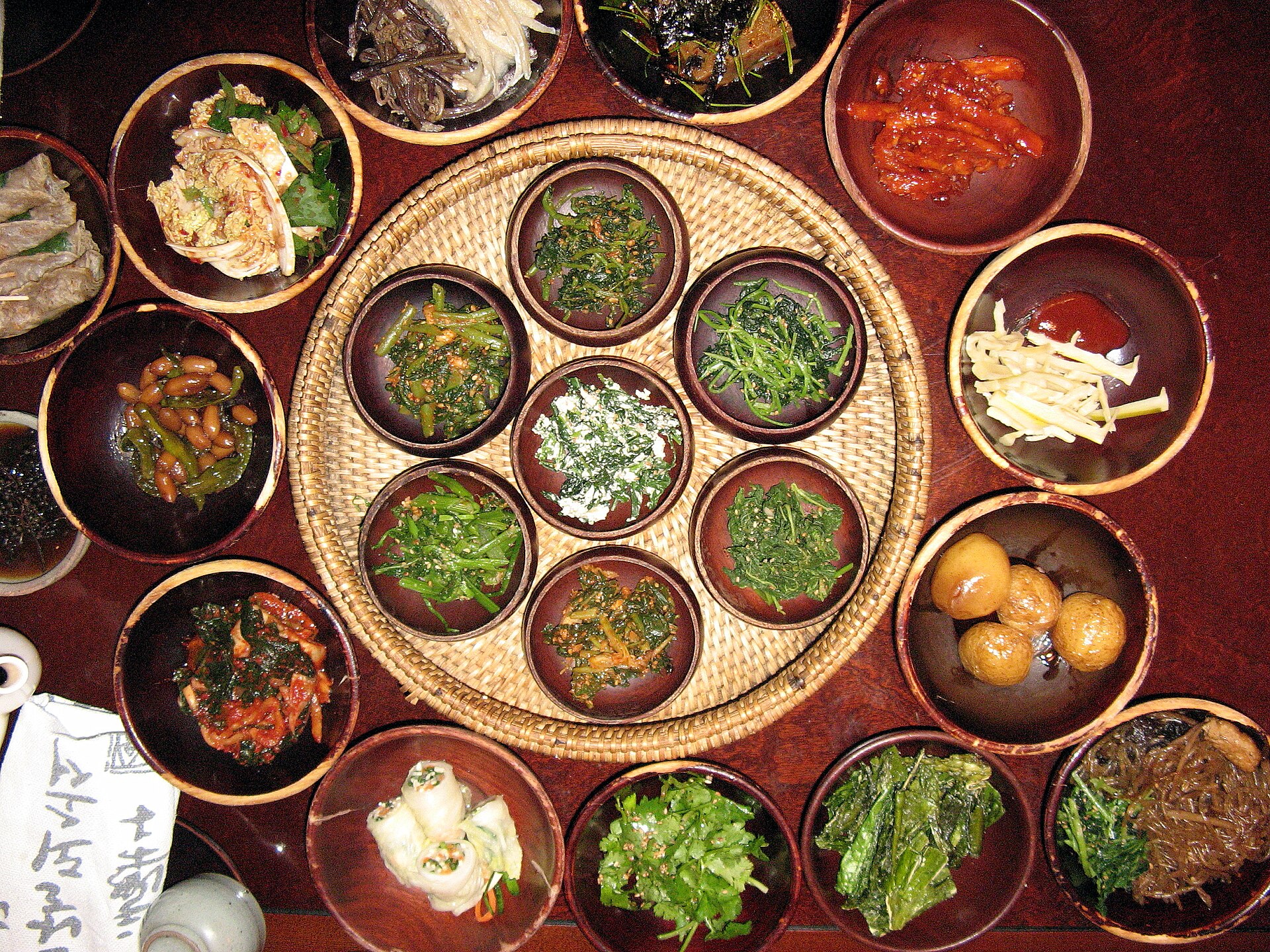
Temple meals. Meals follow balwoogongyang manners. Bongeunsa’s guidelines say to eat silently, avoid commenting on the food and take only what you can finish. The Korea Tourism Organization says temple food uses no meat at all, as quoted in our vegan Korean food guide.
Dawn chanting. Wake-up is about 04:00 at Myogaksa, Bongeunsa and Jogyesa. The official site calls the morning ceremony Yebool: a service of respect to the Buddha, Bodhisattvas and disciples, with chanting. Bongeunsa’s guide asks you to follow the signals of the moktak, a wooden percussion instrument. The service runs about 04:20 to 05:00 there and starts at 05:00 at Myogaksa.
Meditation. Seon meditation (Korean Zen) is the core of many programs. Myogaksa schedules intensive meditation from 05:30 to 06:30, and Jogyesa and Bulguksa include walking meditation.
Tea with a monk. The official site describes Da-Seon, tea ceremony as meditation. Myogaksa schedules tea with a monk from 08:10 and Bongeunsa from 09:00. At Jogyesa a conversation over tea runs when five or more people have booked; with fewer people a copying session called Writing Down Buddha’s Teaching runs instead.
Checkout (about 10:00). You tidy the room, return the uniform and fill in a short survey.
5. Templestay Rules: Dress, Phones, Alcohol and Silence
Rules are posted on each program page, and they are consistent across the temples checked. Break them and the temple may ask you to leave; Naksansa says so explicitly.
- Dress: wear modest, clean clothes. Jogyesa does not recommend sleeveless shirts or flip-flops, Bulguksa asks you to avoid revealing and low-cut tops, and Bongeunsa asks you to avoid heavy makeup and strong scents.
- Socks: bare feet are not accepted in the halls at Bongeunsa, and Bulguksa and Myogaksa also tell participants to bring socks.
- Alcohol and smoking: Bongeunsa, Jogyesa and Golgulsa prohibit both, Bulguksa asks participants to refrain from smoking and drinking, and Naksansa prohibits smoking and snacking. Golgulsa also asks you not to bring outside food.
- Phones and noise: Bulguksa asks participants to put phones on vibrate in the temple. Keep yours silent in any hall and follow the program page.
- Silence and manners: greet monks with palms together and a half-bow, walk calmly with hands folded, stay quiet near the prayer halls and arrive on time.
- Rooms: rooms are shared and separated by gender. The official FAQ says men and women cannot share a room, and Jogyesa assigns couples separate rooms even if they are family (parents with minor children are the exception). Some temples offer a private room for two to four people at an extra per-person fee.
- Leaving the grounds: Naksansa does not allow participants to leave the compound after check-in, so confirm the rule before you plan an evening out.
6. Best Templestay Temples Near Seoul
The official FAQ lists seven temples in Seoul reachable by bus or subway: Bongeunsa, Geumsunsa, Hwagyesa, Jinkwansa, Jogyesa, Myogaksa and the International Seon Center. Several others appear on the reservation list. For a first stay, these five are the easiest to reach:
| Temple | Area | Programs and adult prices (Oct 2026) | Getting there (per the temple page) |
|---|---|---|---|
| Jogyesa | Jongno | Regular overnight ₩80,000; tea ceremony overnight ₩100,000; one-day ₩50,000 | Jonggak Station (Line 1) Exit 2, or Anguk Station (Line 3) Exit 6 |
| Bongeunsa | Gangnam | Weekend overnight ₩120,000; Thursday tea and tour ₩30,000; Tuesday BONG-PASS ₩5,000 | Bongeunsa Station (Line 9) |
| Myogaksa | Dongmyo, Jongno | Overnight ₩95,000; one-day ₩50,000 | Dongmyo Station (Lines 1 and 6) Exit 2 |
| International Seon Center | Mokdong, Yangcheon | Overnight ₩90,000; daily one-day ₩30,000 | Omokgyo Station (Line 5) Exit 8, 8 to 10 minutes on foot |
| Hwagyesa | Gangbuk | Overnight ₩90,000 | Bus 151, 121 or 1165 to the Hanshin University stop, then walk about 5 minutes |
Jogyesa is the most convenient base for sightseeing. Check-in is at 13:30 at the information office to the left of the main entrance, rooms hold three or six people, and Insadong, Gyeongbokgung and Bukchon Hanok Village are nearby. Jogyesa answers booking questions by email on weekdays and Saturdays.
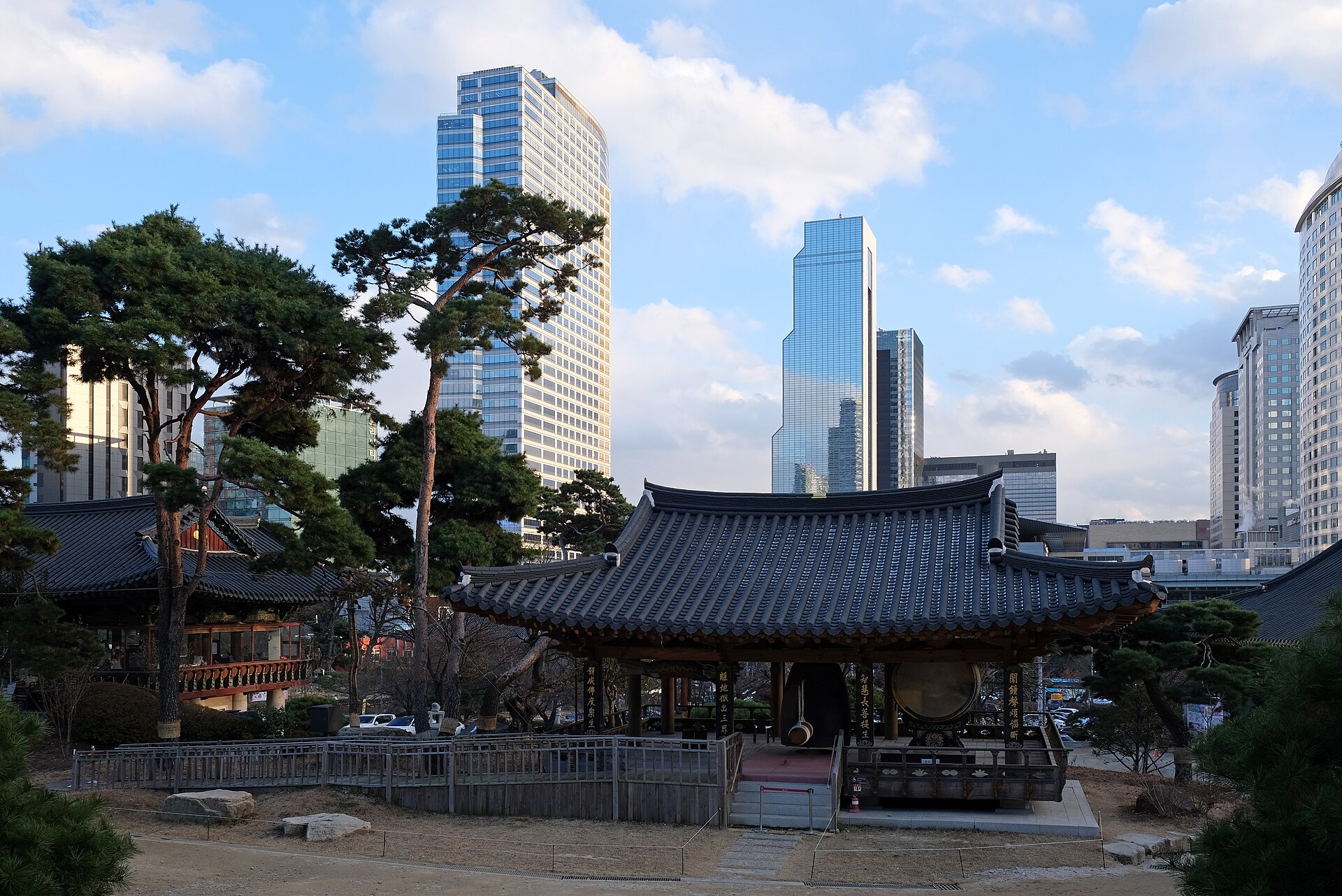
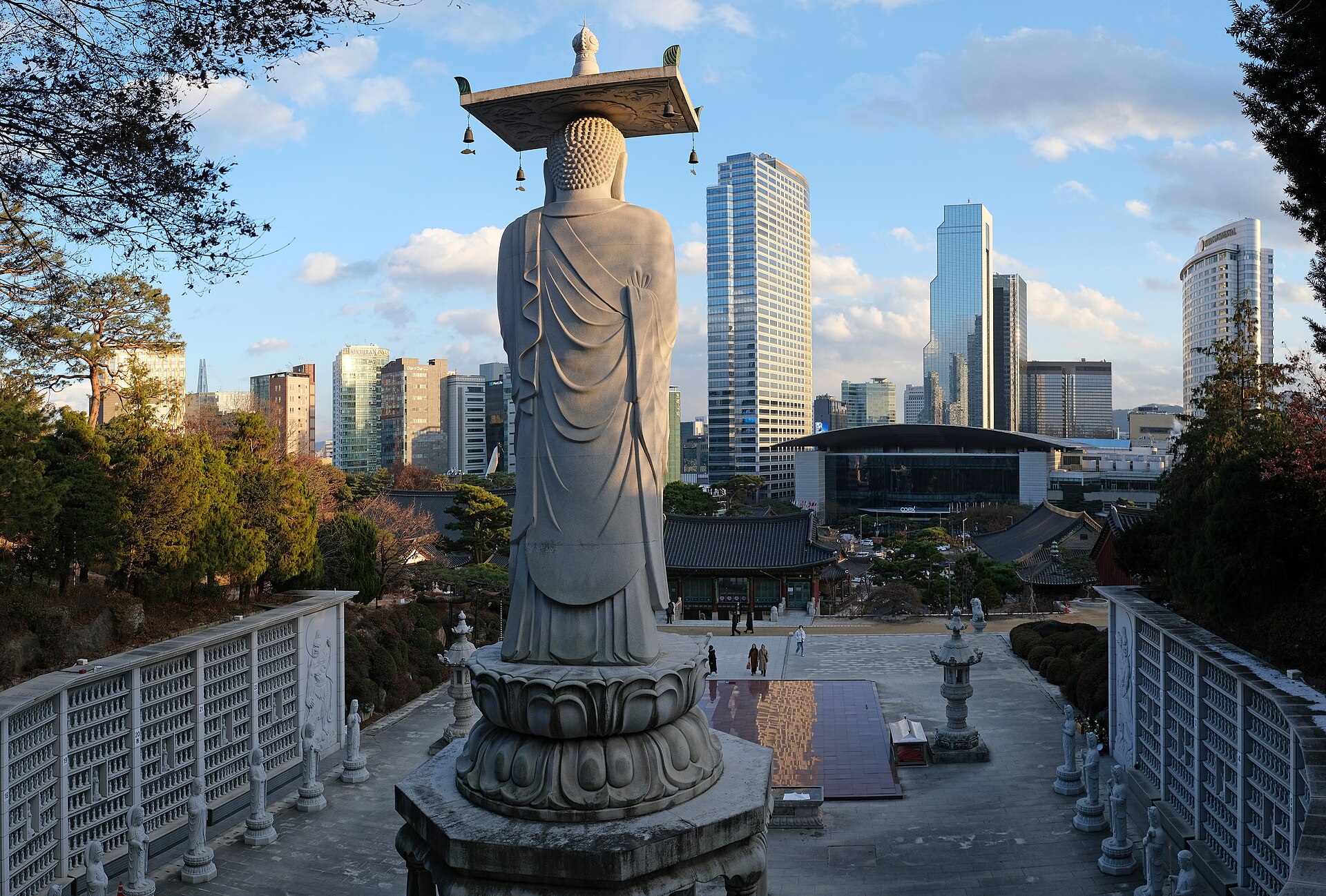
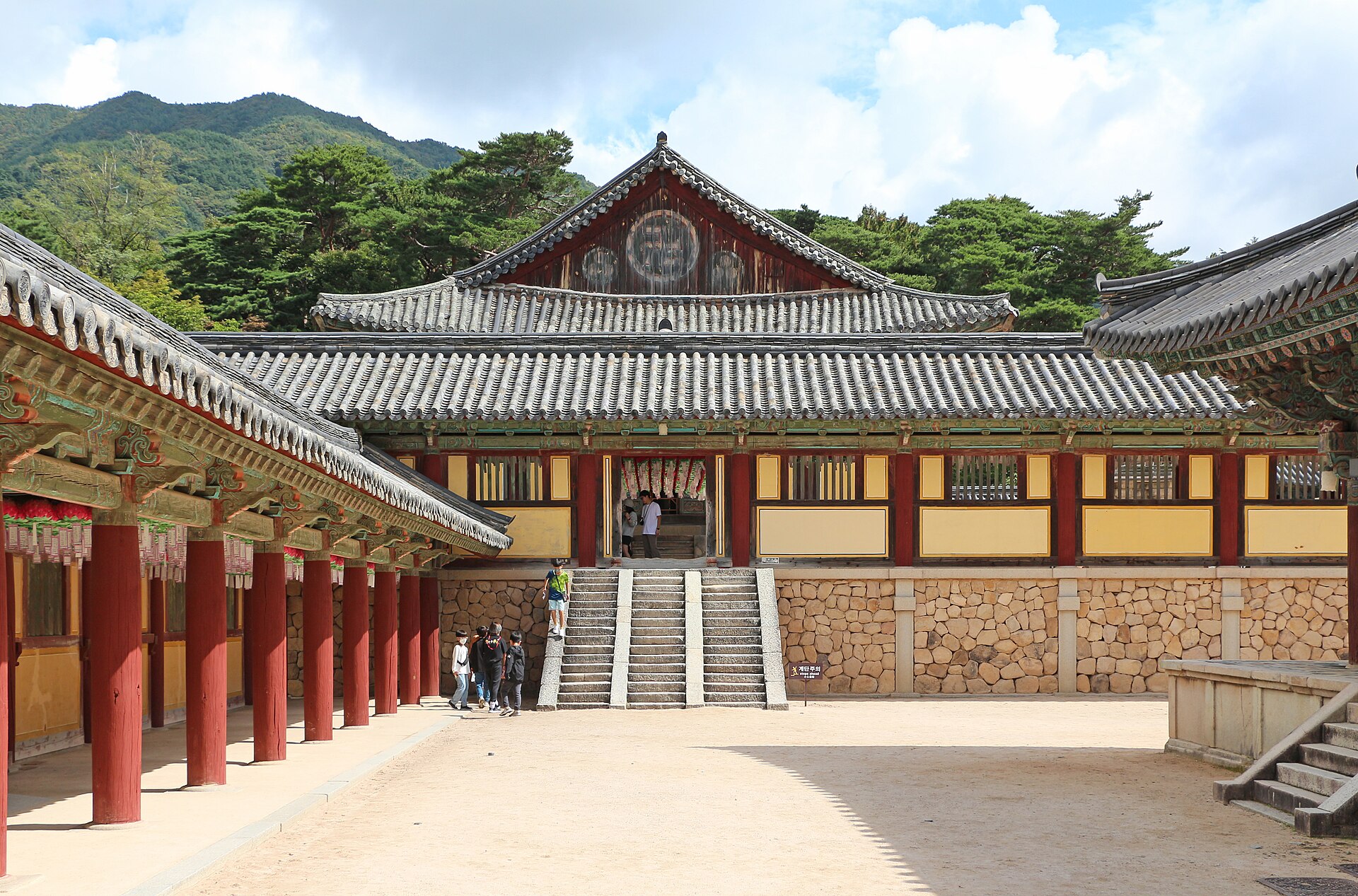
Bongeunsa sits among Gangnam’s office towers and has more than 1,200 years of history, according to its program page.
The Templestay Information Center runs free tea sessions, including a Saturday 10:20 tea meditation limited to four people per session, and its building holds the Balwoo Gongyang temple food restaurant on the fifth floor (see our vegan restaurants in Seoul guide).
7. Templestay Outside Seoul: Gyeongju, Gangwon and Busan
Outside Seoul the stay is longer and more scenic, and the travel takes a half day. Prices are adult prices on the program pages (October 2026).
- Bulguksa, Gyeongju: the page describes a UNESCO World Heritage temple. Journey into Mind is two days and one night at ₩120,000, with a manager assigned to English-speaking participants who answers by email and WhatsApp. Check-in is at a separate templestay house, about five minutes by car from the temple.
- Golgulsa, Gyeongju: built around Seonmudo, a Buddhist martial art, and 108 prostrations. A two-day, one-night stay is ₩120,000 and a daytime visit ₩80,000. The page says demonstrations do not run on Mondays and Tuesdays.
- Naksansa, Yangyang: on the Gangwon coast near Sokcho. A two-day, one-night program is ₩120,000 and a one-day program ₩50,000. See our Seoraksan day trip guide for the nearby mountain.
- Beomeosa, Busan: weekend experiential stays at ₩100,000 per night and relaxation stays at ₩70,000 per night. Pair it with our Busan itinerary.
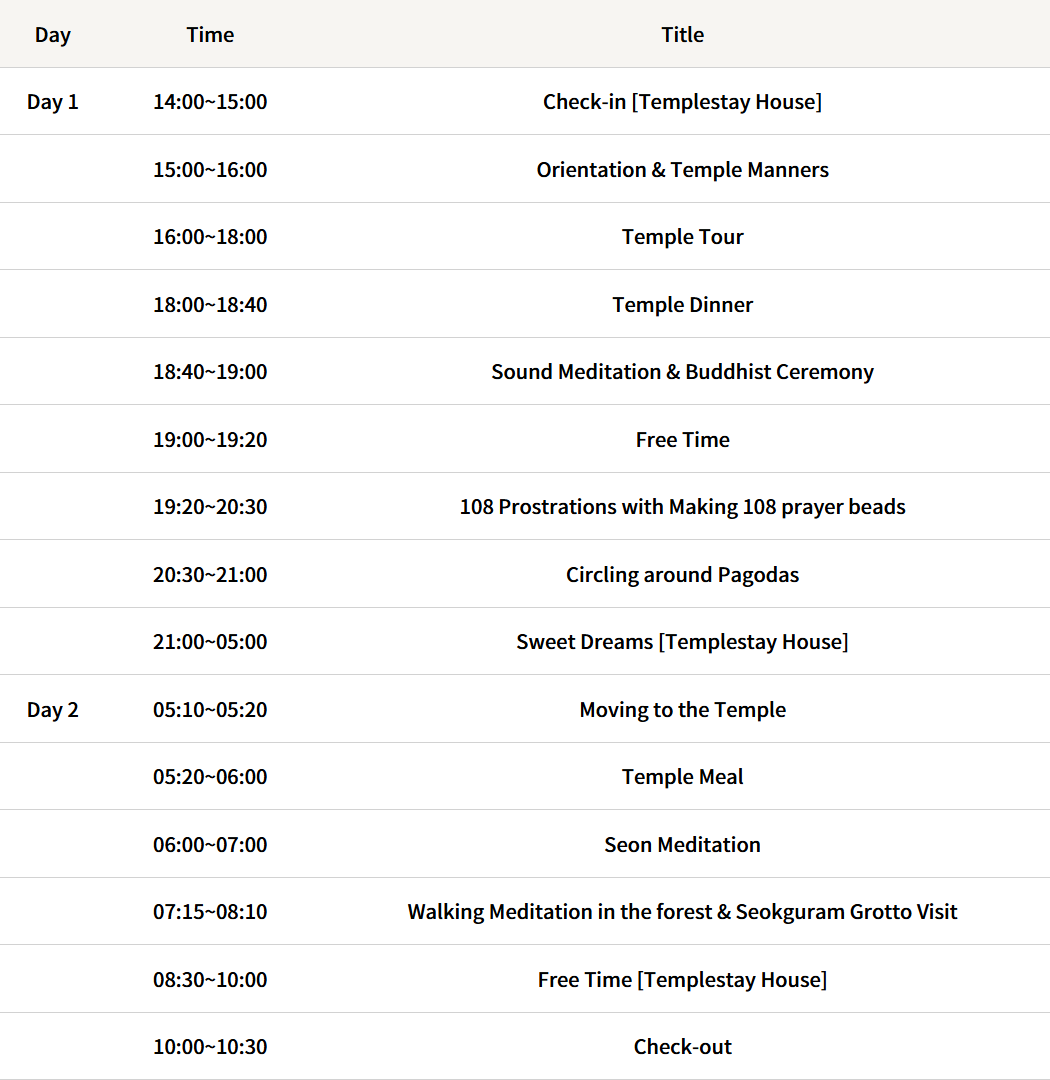
Bulguksa lists its schedule for spring. The page says start times are 30 minutes earlier from September and one hour earlier from October and in winter, so recheck the times for your date.
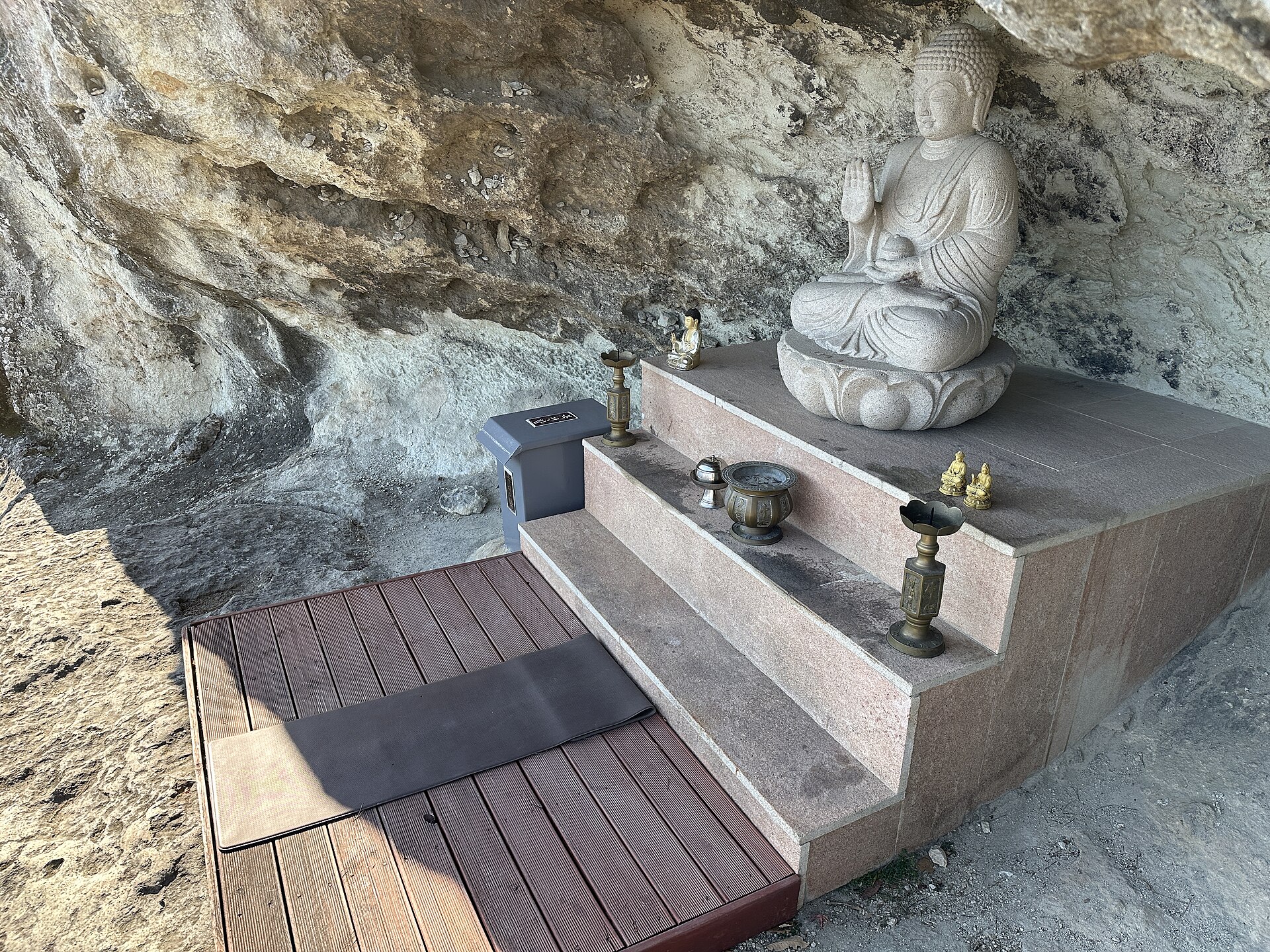
The FAQ names Baekyangsa, Jinkwansa and Bongsunsa as known for temple food and Seoraksan Sinheungsa and Geumsansa for hiking; check the reservation list for what they run now. See Korea autumn foliage 2026 to time a mountain temple for fall color.
8. Getting to Your Templestay
Seoul temples are easy by subway, but several sit on slopes or lanes you should not try to find from memory. Save the temple in Naver Map and read how to use the Seoul subway for fares and transfers; a T-money or Climate Card covers the buses that serve Hwagyesa.
For Gyeongju, the Golgulsa page puts the trip from Seoul at about two hours by KTX or about four and a half hours by express bus, so check current times and fares with the operators. Bulguksa’s page says not to go straight to the temple: go first to the templestay house at 13-7 Gatgeorang-gil, reachable by bus 700 or 711 from Gyeongju’s KTX station, and arrive by the 14:00 check-in.
9. Who a Templestay Suits and What to Bring
A templestay suits travelers who want a quiet, structured night and an inside look at Korean Buddhist practice. A one-day program works for a first try. It is a poor fit if you need privacy (rooms are shared), a late bedtime, or an evening out. Couples sleep in separate rooms.
Temples usually provide only soap, toothpaste and the uniform, according to the FAQ, so pack the rest. Bongeunsa lists socks, a tumbler, toiletries, extra clothes, an umbrella and personal medicine. Add a short-sleeved shirt to wear under the vest (Naksansa asks for this), easy slip-on shoes for the halls, a towel at temples that do not supply one, and warm layers in winter, since mountain temples can be much colder than expected. Our Korea packing list has the rest.
Mistakes to Avoid
- Assuming every temple costs the same. Adult prices on the pages checked run from free to ₩120,000 and above.
- Arriving late. Check-in is around 13:30 to 14:30 and Bulguksa warns that late arrival is not its responsibility.
- Expecting a private or couple’s room. Rooms are shared and separated by gender unless the program offers a single-room option.
- Planning to pay by card on arrival everywhere. Jogyesa says card payment on the spot is not available; pay online or follow the page.
- Not showing up. Bongeunsa restricts participation after a no-show; cancel inside the refund window instead.
Frequently Asked Questions
What is a templestay in Korea?
A cultural program at a Korean Buddhist temple where you follow the monastic timetable for a few hours or a night, with chanting, meditation, tea and temple meals. The official site is templestay.com.
How much does a templestay cost?
In October 2026 the Seoul programs checked list ₩30,000 to ₩50,000 for one-day sessions and ₩80,000 to ₩120,000 for an adult overnight stay. Bulguksa, Golgulsa and Naksansa list ₩120,000 for two days and one night. Prices vary by temple, so check the program page.
How do I book a templestay as a foreigner?
Use the English site templestay.com/en, open Reservation, filter by area and type, choose an open date and reserve as a member or guest. Payment rules and refund windows are set by each temple.
Can couples share a room at a templestay?
No. The official FAQ says men and women are not allowed to stay in the same room, and Jogyesa assigns couples separate rooms. Some temples offer a private room for two to four people for an extra fee.
Which templestay is best near Seoul?
Jogyesa is the most central for sightseeing, Bongeunsa suits Gangnam and weekends, and Myogaksa and the International Seon Center offer both overnight and one-day options. The reservation page shows what is open for your dates.
Can I try a templestay without staying overnight?
Yes. One-day programs usually take two to three hours and include a temple tour, meditation and a tea ceremony. The Templestay Information Center also runs free tea sessions in small groups.
What Should You Plan Next?
Pair your stay with Insadong, the Changdeokgung Palace guide or a temple food lunch, and check the best time to visit Korea or Korea in November before you pick a date.
Sources (official pages checked)
- Templestay.com: What is Templestay (types and activities)
- Templestay.com: FAQ
- Templestay.com: Reservations
- Templestay.com: Information Center
- Templestay.com: How to get there
- Templestay.com: Confirm Reservation (guest)
- Templestay.com: Jogyesa regular templestay
- Templestay.com: Bongeunsa regular templestay
- Templestay.com: Myogaksa two-day program
- Templestay.com: Bulguksa Journey into Mind
- Templestay.com: Golgulsa Seonmudo program
- Templestay.com: Naksansa program
- Templestay.com: International Seon Center 1N2D
- Templestay.com: Information Center tea meditation
Book the basics for your Korea trip
Affiliate links: we may earn a small commission at no extra cost to you.
Related Guides
- Korea Travel Toolkit
- Vegan restaurants in Seoul
- Vegan Korean food guide
- Insadong guide
- Bukchon Hanok Village guide
- Changdeokgung Palace guide
- Where to stay in Seoul
- Seoul subway guide
- T-money vs Climate Card
- Naver Map in English
- Incheon Airport to Seoul
- Korea packing list
- Korea travel apps
- Day trips from Seoul
- Seoraksan day trip
- Busan itinerary
- Korea autumn foliage 2026
- Best time to visit Korea
Last checked 29 October 2026 against the templestay.com program pages. Prices, schedules and open dates change, so confirm on the program page before you book.