Bottom line: a Jeju Island rental car needs three originals at the counter, your passport, your home licence and a genuine International Driving Permit, plus a driver aged 21 to 79 and a card in the renter’s name, and Jeju is the one place a major Korean operator drops the young-driver surcharge.
🇰🇷 Quick Korea Travel Guide
👉 Getting in: Check K-ETA requirements and the e-Arrival Card before you fly.
👉 Stay in Touch (eSIM): Grab a Korea eSIM on Airalo before you land, or compare it with a physical SIM in our eSIM vs SIM vs pocket WiFi guide.
👉 Download New Apps: See our Naver Map in English guide before you need directions.
👉 Where to Book Activities: GetYourGuide for tours and tickets; KKday for KTX rail and Korea-only passes.
👉 Getting Around: Jeju has no subway and Seoul transport passes do not apply there, so plan on buses, taxis or a car. Our T-money vs Climate Card guide explains which card still works.
👉 For more in-depth planning: Browse all our Korea Travel guides.
Disclosure: the Airalo, GetYourGuide and KKday links above are affiliate links. If you book through them we may earn a commission at no extra cost to you. The official sources cited at the end of this guide are not affiliate links.
The short answer on a Jeju Island rental car
- You need three originals: passport, home driving licence and a real International Driving Permit. Photocopies, PDFs and phone photos are refused.
- Korea accepts IDPs issued under the 1949 Geneva Convention and, since 1 January 2002, the 1968 Vienna Convention.
- Your IDP is valid for one year from your date of entry into Korea, not from the date on the permit.
- Privately sold “International Driving License” cards have no legal effect in Korea.
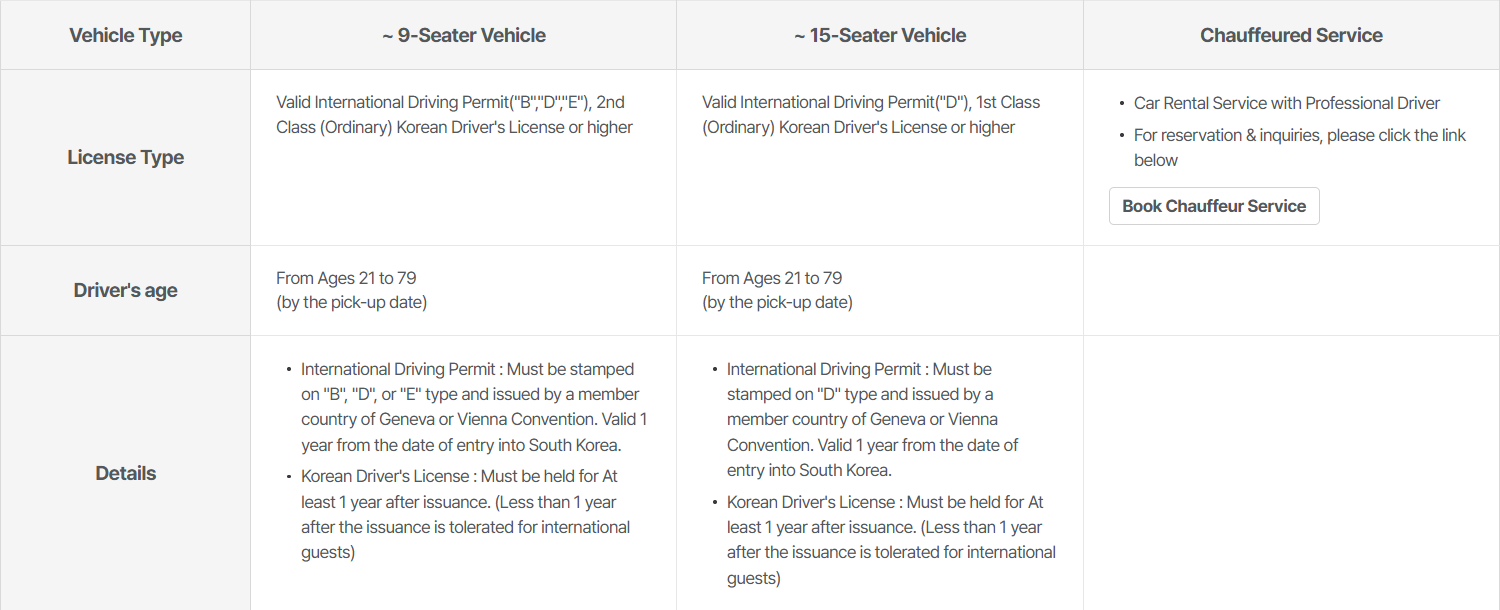
- Lotte Rent-a-Car requires drivers aged 21 to 79 on the pick-up date, and payment by card in the renter, driver or companion name; cash is not accepted.
- On Jeju there is no age-based surcharge at Lotte; on the mainland under-30s pay a daily supplement.
- Included cover: unlimited third-party liability, property damage to ₩20,000,000 per accident, injury to ₩15,000,000 per person, named drivers only.
- Without a car: colour-coded buses, three airport limousine routes, tourist shuttles 810 and 820 with a ₩3,000 day pass, and published airport taxi estimates.
What this guide covers
Do you need a Jeju Island rental car at all?
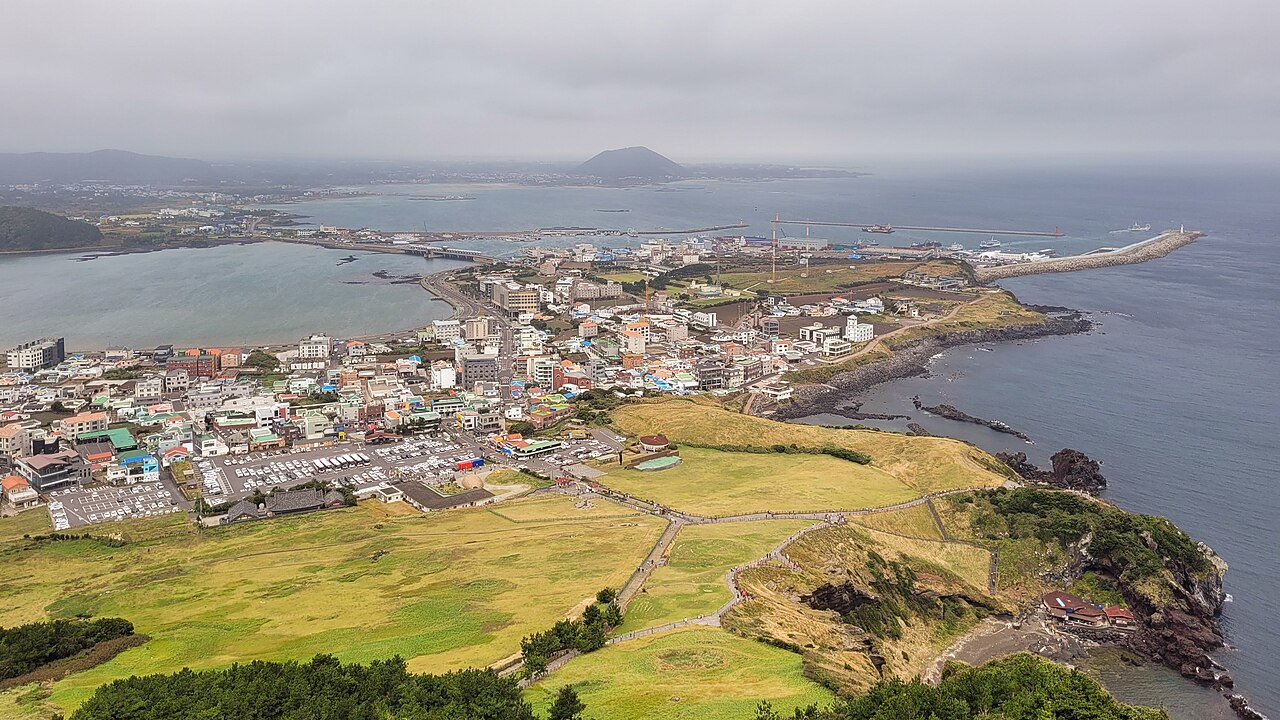
Jeju has no railway and no subway. The island runs on buses, taxis and cars, and Jeju Tourism Organization is candid that the bus network is best suited to a slower pace of travel. Where a Jeju Island rental car earns its price is the inland half of the island: Hallasan trailheads, the oreum volcanic cones, the small beaches and the cafes that sit on single-lane roads between them.
If your plan is one coastal base plus a handful of headline sights, you can skip the car and not feel it. If you want the interior, or you are travelling with more than two people and luggage, the car wins on both time and cost.
1. What you legally need to rent and drive
The legal basis is Article 96 of the Road Traffic Act, and KoROAD, the Korea Road Traffic Authority, sets out what it means in practice. Korea is a party to the 1949 Geneva Convention, so an IDP issued by a Geneva country lets you drive here for one year from your date of entry. Since 1 January 2002 Korea has also allowed IDPs issued by 1968 Vienna Convention countries, on the same one-year-from-entry basis. The government’s own legal guidance adds bilateral IDP recognition agreements and mutually recognised foreign licences as further routes.
Two traps come straight from the official text. First, only a document actually titled “International Driving Permit” and issued by an official authority counts; KoROAD explicitly names look-alike cards labelled INTERNATIONAL DRIVING LICENSE, such as those sold by the US IAA, as unusable in Korea. Second, if the romanised name on your IDP does not match the name in your passport, the permit is not recognised. Check the spelling before you fly.
Mainland China is not a party to either convention, so neither a Chinese licence nor a Chinese-issued permit works in Korea. IDPs issued in Hong Kong and Macau are recognised.
At the counter, Lotte Rent-a-Car asks for your passport, the original IDP (no photocopies, PDFs or photos, and it may ask for your passport or ticket to check the entry date), a local Korean address and contact number, and a debit or credit card in the name of the renter, driver or companion. Cash is not accepted. The IDP must also carry the right class stamp: B, D or E for vehicles up to nine seats, D for larger vans. US citizens can use an AAA or AATA permit; the operator warns that an “EU international driving licence” is not valid here and that EU citizens need a Geneva or Vienna IDP.
The key rules at a glance
| Item | Rule | Source |
|---|---|---|
| Accepted permits | IDP under the 1949 Geneva Convention; since 1 Jan 2002 also 1968 Vienna Convention | KoROAD (safedriving.or.kr) |
| Validity in Korea | 1 year from your date of entry | KoROAD |
| Name mismatch | IDP not recognised if the romanised name differs from the passport | KoROAD |
| Fake permits | Privately issued “International Driving License” cards not usable | KoROAD |
| China, Hong Kong, Macau | Mainland China not a convention party; Hong Kong and Macau IDPs recognised | KoROAD |
| Documents at the counter | Passport, original IDP, home licence, Korean address and phone, card in renter name | Lotte Rent-a-Car (English) |
| Cash | Not accepted as the rental payment method | Lotte Rent-a-Car |
| Driver age | 21 to 79 as of the pick-up date | Lotte Rent-a-Car |
| IDP class | B, D or E up to 9 seats; D up to 12 seats | Lotte Rent-a-Car |
| Under-30 surcharge | Mainland only; no age surcharge on Jeju | Lotte Rent-a-Car |
| Third-party liability | Unlimited | Lotte Rent-a-Car |
| Property damage cover | Up to ₩20,000,000 per accident | Lotte Rent-a-Car |
| Personal injury cover | Up to ₩15,000,000 per person, named drivers only | Lotte Rent-a-Car |
| CDW deductible on Jeju | Zero excess for Korean and foreign brands | Lotte Rent-a-Car |
| Fuel policy | Returned full, unlimited mileage | Lotte Rent-a-Car |
| School zone speed | Restricted to within 30 km/h | Rules on Child, Elderly and Disabled Protection Zones, Art. 9 |
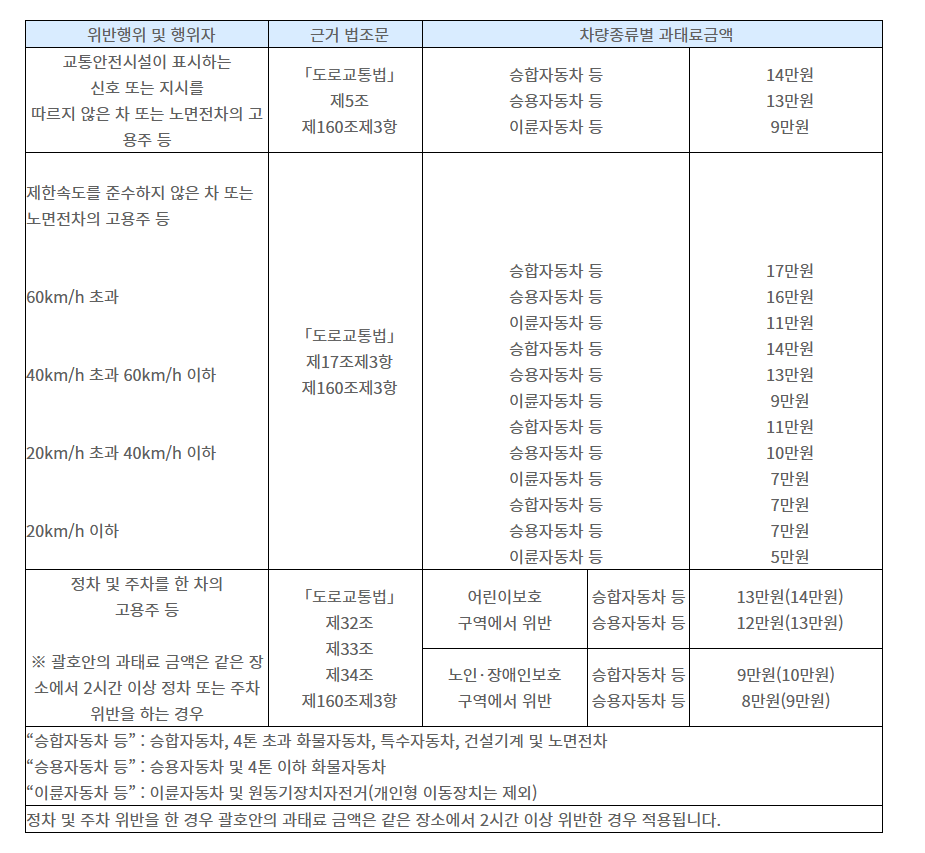
| School zone speeding fine, car, 08:00-20:00 | ₩70,000 up to 20 km/h over, rising to ₩160,000 over 60 km/h | Road Traffic Act Enforcement Decree, Annex 7 |
| Jeju airport limousine and express bus | From ₩2,000 adult by card, to a ₩3,000 maximum | Jeju Tourism Organization |
| Jeju tourist shuttle 810 / 820 | Day pass ₩3,000 | Jeju Tourism Organization |
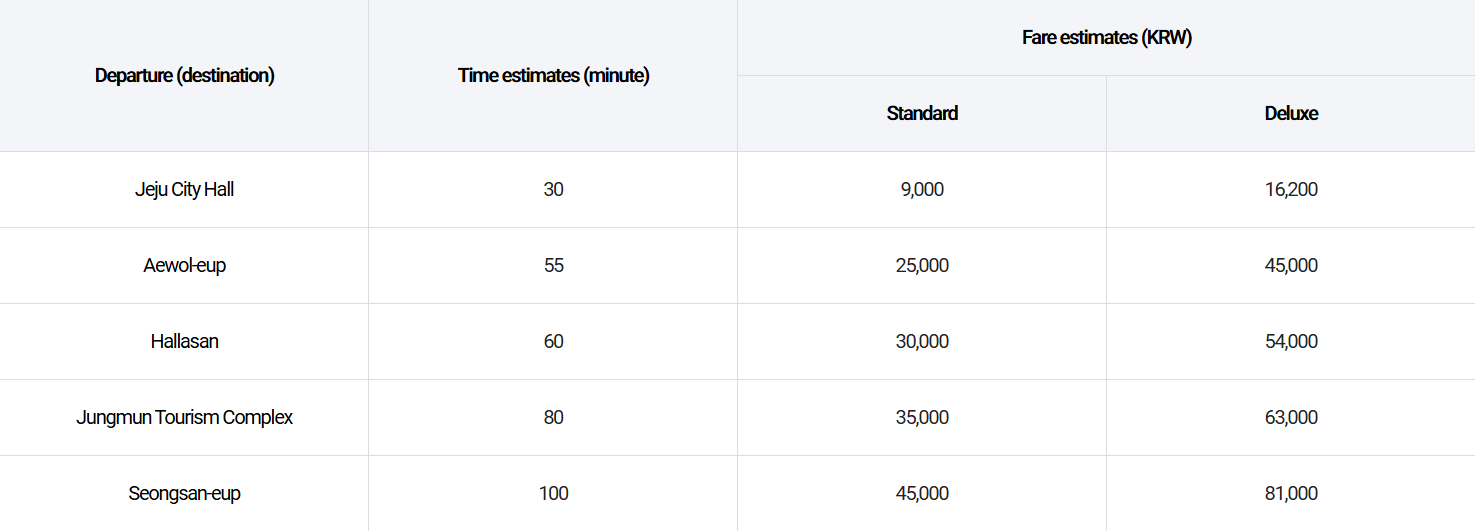
| Airport taxi to Jungmun | About ₩35,000 standard, ₩63,000 deluxe, about 80 minutes | Jeju International Airport |
2. Age, driving experience and the surcharges
Lotte Rent-a-Car, the largest operator on the island, sets the driver age at 21 to 79 as of the pick-up date, for both its up-to-nine-seat and up-to-fifteen-seat categories. A Korean licence normally has to have been held for at least a year, but the company notes that this is tolerated for international guests and waived entirely for foreign nationals who exchanged a foreign licence for a Korean one. Holders of a USFK Motor Vehicle Operator’s Permit can rent the classes shown on the permit.
The young-driver money is where Jeju differs from the rest of Korea. On the mainland, drivers under 26 pay a daily surcharge from ₩30,000 a day on a one to two day rental down to ₩10,000 a day on a 15-day rental, and drivers under 30 pay ₩7,000 down to ₩3,000. On Jeju Island, Lotte states that no age-based surcharge applies; the insurance charge depends only on the deductible option you pick. If you are 23 and choosing between a mainland road trip and Jeju, that is a real difference.
3. Insurance and the CDW deductible
The comprehensive policy that comes with the car covers unlimited third-party liability, property damage up to ₩20,000,000 per accident and personal injury up to ₩15,000,000 per person. The critical limitation: only drivers explicitly named in the rental agreement are covered. An unnamed friend behind the wheel voids the cover, which is the single most expensive mistake on this page.
Damage to the rental car itself is the renter’s responsibility unless you take the Collision Damage Waiver, which Lotte describes as a mandatory service. The deductible is either zero or ₩300,000 depending on the programme, and on Jeju both Korean and foreign-brand cars are offered at zero excess. If repairs cost less than the deductible you pay the actual repair cost; above it, you pay the deductible and CDW covers the rest.
There is also a loss-of-use charge if you damage the car: the repair days multiplied by 50% of the standard daily rate. At Jeju branches that fee is waived for domestic vehicles if you took CDW with zero excess, with the Hyundai Solati excluded. Fuel is full-to-full with unlimited mileage, and traffic fines incurred during the rental are billed to your card after you drop off.
4. Korean road rules that catch visitors out
Korea drives on the right with the wheel on the left. The rule that costs visitors money is the child protection zone, the Korean school zone. Police can restrict the speed in these zones to within 30 km/h, and between 08:00 and 20:00 the fines are set at an elevated level: for a passenger car, ₩70,000 for up to 20 km/h over, ₩100,000 for 20 to 40 over, ₩130,000 for 40 to 60 over and ₩160,000 above 60. Stopping or parking in a school zone is ₩120,000, or ₩130,000 if you leave the car for two hours or more.
Take the criminal side seriously too. Injuring a child in a school zone can be prosecuted even if you settle with the family, and under the Act on Aggravated Punishment a driver who kills a child under 13 in a protection zone faces three years to life, while causing injury carries one to fifteen years or a fine of ₩5,000,000 to ₩30,000,000. Police were reported in 2026 to be considering relaxing the 24-hour limit to school-commuting hours only, but nothing had been enacted as of September 2026, so treat the 30 km/h sign as live at any hour.
Two practical notes. Speed cameras are fixed and signposted, and your navigation app will warn you; the rental company simply forwards any ticket to your card. And parking on Jeju is mostly free at attractions but paid in Jeju City centre, so keep small change or a card for the machines.
If you are given an electric car, ask at the counter which charging card or app the vehicle uses before you leave the lot, and find your chargers on the government EV charger map rather than assuming a hotel has one. The fleet mix differs by company, so just ask what you are actually being given.
5. The no-car version: buses, taxis and shuttles
Jeju Tourism Organization documents the alternative properly. Buses are colour coded: red express routes in the 100s linking the four corners of the island, blue intercity and city buses in the 200s, 300s and 500s, and green village branch buses in the 400s, 600s and 700s, which run less often. Three airport limousines serve Seogwipo: the 600 via Jungmun Tourist Complex, about 50 minutes to Jungmun and 80 minutes to the Seogwipo KAL Hotel, plus the 800 (about 70 minutes to Seogwipo Bus Terminal) and 800-1 (about 80 minutes to Jungang Rotary).
Where you sleep decides how much you need the car. The Shilla Jeju in the Jungmun resort area lists free parking, while Grand Hyatt Jeju in Jeju City is 2.9 km from the airport (Agoda ratings as of Oct 2026).

Jeju resort hotel · Jungmun · via Agoda
The Shilla Jeju
⭐ 9.2/10 from 14,670 Agoda reviews · Jungmun resort area · 230 m to Jungmun Saekdal Beach · free parking (as of Oct 2026)

Jeju city hotel · near the airport · via Agoda
Grand Hyatt Jeju
⭐ 8.9/10 from 11,954 Agoda reviews · Noyeon-ro, Jeju City · 2.9 km from Jeju International Airport (as of Oct 2026)
Also on Expedia: Grand Hyatt Jeju · Trip.com
Compare more Jeju hotels on Agoda and look for free parking if you are renting a car.
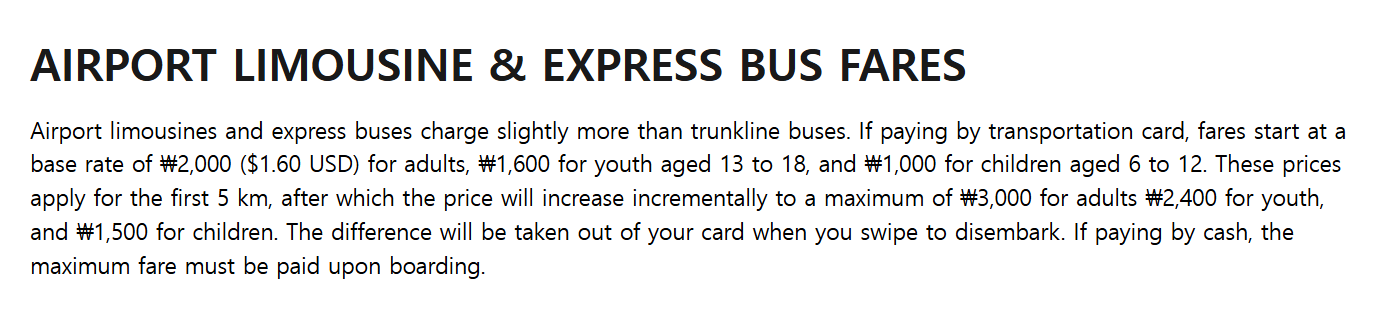
Fares on limousines and express buses start at ₩2,000 for adults, ₩1,600 for youths aged 13 to 18 and ₩1,000 for children aged 6 to 12 with a transport card, covering the first 5 km, then rise incrementally to a maximum of ₩3,000, ₩2,400 and ₩1,500. Pay cash and you are charged the maximum on boarding. A transport card also gives up to two free transfers within 40 minutes, provided you tap off and do not reboard the same route.
For the inland sights there are two tourist shuttles: 810 around the eastern oreum country from Daecheon Transit Center and 820 around the museum-heavy west from Donggwang Transit Center, each running clockwise and anticlockwise, with a ₩3,000 full-day pass sold at the connecting transit centre. That is the closest thing to a car substitute for the interior.
Taxis fill the gaps, and Jeju International Airport publishes estimates: about ₩9,000 standard to Jeju City Hall (30 minutes), ₩25,000 to Aewol-eup (55 minutes), ₩30,000 to Hallasan (60 minutes), ₩35,000 to Jungmun Tourist Complex (80 minutes) and ₩45,000 to Seongsan-eup (100 minutes). Deluxe taxis run roughly 1.8 times those figures.
Do the arithmetic before you book. Two airport taxi runs to Jungmun and back is already ₩70,000, which on a multi-day trip closes much of the gap to a small rental with zero-excess CDW.
Mistakes to Avoid
- Buying an “International Driving License” online. KoROAD names these as unusable in Korea, and rental desks refuse them. Only an official IDP works.
- Bringing a scan instead of the booklet. Lotte will not accept photocopies, PDFs or phone photos of an IDP.
- Assuming the printed expiry date is what counts. In Korea an IDP is good for one year from your date of entry, whatever the document says.
- A name that does not match your passport. KoROAD states the permit is not recognised if the romanised spelling differs.
- Letting an unnamed friend drive. Only drivers written into the rental agreement are insured. Add every driver at the counter.
- Skipping the CDW to save money. Without it, all damage to the car is yours; on Jeju the zero-excess option is available on both Korean and foreign brands.
- Turning up with cash only. The rental must be paid by a card in the renter, driver or companion name.
- Treating a school zone as advisory. Between 08:00 and 20:00 a passenger car pays ₩70,000 for even a minor overspeed, and injuring a child there is a criminal matter regardless of any settlement.
- Relying on a blog statistic about electric rentals. No official figure supports the “more than half the fleet” claim; ask the counter what car you are getting and how it charges.
Frequently Asked Questions
Do I need an International Driving Permit to rent a car on Jeju?
Yes. KoROAD, the Korea Road Traffic Authority, states that a valid IDP from a 1949 Geneva Convention country lets you drive in Korea for one year from your date of entry, and that since 1 January 2002 IDPs from 1968 Vienna Convention countries are accepted on the same terms. You must carry the IDP, your original home licence and your passport together.
Is an online International Driving Licence accepted in Korea?
No. KoROAD specifically warns that look-alike documents labelled INTERNATIONAL DRIVING LICENSE, issued by bodies such as the US IAA rather than an official authority, cannot be used in Korea. Lotte Rent-a-Car also refuses photocopies, PDFs and phone photos of a genuine IDP.
How long is my IDP valid in Korea?
One year from the date you entered Korea, not from the date printed on the permit. Rental desks may ask for your passport or flight ticket to check the entry date.
What is the minimum age for a Jeju Island rental car?
Lotte Rent-a-Car sets the driver age at 21 to 79 as of the pick-up date for both its up-to-9-seat and up-to-15-seat categories. A Korean licence normally has to have been held for a year, though that requirement is waived for foreign nationals who exchanged a foreign licence.
Is there a young-driver surcharge on Jeju?
On the mainland Lotte charges a daily surcharge for drivers under 30, from 30,000 won a day for under-26s on a one to two day rental down to 10,000 won a day on 15-day rentals. On Jeju Island the operator states that no age-based surcharge applies; the insurance fee depends only on the CDW option you choose.
What insurance comes with a Korean rental car?
Lotte lists unlimited third-party liability, property damage up to 20 million won per accident and personal injury up to 15 million won per person, and only drivers named in the rental agreement are covered. Damage to the car itself is yours unless you take the Collision Damage Waiver.
Which side of the road does Korea drive on?
The right, with the steering wheel on the left, the opposite of the UK, Japan and Australia. Speed and red-light cameras are common, and a rental company will pass any fine on to the card you paid with.
Can I explore Jeju without a rental car?
Partly. Jeju Tourism Organization documents a colour-coded bus network, three airport limousine routes to Seogwipo and tourist shuttle buses 810 and 820 with a 3,000 won day pass, and Jeju airport publishes taxi estimates such as about 35,000 won to Jungmun. It works for a coastal, town-based trip; inland trailheads and small beaches are where it falls apart.
What else should you sort before you land?
Before the driving, the paperwork. Start with our K-ETA 2027 guide and e-Arrival Card guide, then Incheon Airport to Seoul if you are connecting through Seoul, and how much cash to bring to Korea, because a rental deposit has to go on a card but tolls and parking machines often do not.
For the rest of the trip: the Kakao T taxi guide for the no-car days, Busan vs Seoul if Jeju is one leg of a bigger route, best time to visit Korea for the wind and rain months, and Korea emergency numbers to have on the phone before you drive anywhere.
Sources (official pages checked)
- KoROAD (Korea Road Traffic Authority), International Driving Permit guidance – Geneva 1949 and, from 1 Jan 2002, Vienna 1968 permits; one year from entry; fake “International Driving License” warning; name must match the passport; China, Hong Kong and Macau
- Ministry of Government Legislation, Using a Foreign Driver’s License (English) – the four recognition routes under Road Traffic Act Article 96(1)
- Lotte Rent-a-Car, Rental Information (English) – ages 21 to 79, IDP classes, required documents, card-only payment, insurance limits, CDW deductibles, Jeju age-surcharge exemption, fuel policy
- Ministry of Government Legislation, restrictions in child protection zones – 30 km/h restriction and the 08:00-20:00 fine schedule from the Road Traffic Act Enforcement Decree
- Jeju Tourism Organization, Public Transportation in Jeju – bus colours and numbering, airport limousines 600 / 800 / 800-1, fares and transfers, tourist shuttles 810 and 820
- Jeju International Airport, public transport and taxi estimates – taxi fare and time estimates by destination
- Korea Environment Corporation, EV charging information portal – official charger locations if your rental is electric
Book the basics for your Korea trip
Affiliate links: we may earn a small commission at no extra cost to you.
Related Guides
- Korea Travel Toolkit: what to book before you fly
- Kakao T taxi guide for foreigners
- Busan vs Seoul: which to add to your trip
- Best time to visit Korea, month by month
- T-money vs Climate Card
- How much cash to bring to Korea
- Korea emergency numbers
- Han River parks guide
- Nami Island and Petite France day trip
- Jeju Itinerary: Best 3-Day and 4-Day Plans for 2026
- Where to Stay in Jeju: 6 Best Areas and Hotels (2026)
Last checked September 2026 against KoROAD (safedriving.or.kr), the Ministry of Government Legislation legal guidance, Lotte Rent-a-Car’s English rental information, visitjeju.net and Jeju International Airport.