Bottom line: Korean street food is cheap, quick and best planned by area: budget roughly ₩10,000 to ₩20,000 per person for a snack crawl at Myeongdong, Gwangjang Market or Namdaemun, carry small cash notes, ask the price before you order, and mention fish, meat or nut allergies, because fish stock sits behind many dishes.
Quick Korea Travel Guide
Getting in: File the free e-Arrival Card unless you hold a valid K-ETA, and check the K-ETA exemption dates.
Stay in touch: Get a Korea eSIM from Airalo so Naver Map and translation work at the stall.
Where to book: GetYourGuide Seoul Street Food Market Tour, Klook Seoul Night Market Food Tour or the KKday Gwangjang Market tour.
Getting around: Read how to use the Seoul subway and T-money vs Climate Card.
Plan more: Seoul food tours compared, the 7-day itinerary and the Korea Travel Toolkit.
Disclosure: Some links above are affiliate links. If you book through them I may earn a commission at no extra cost to you.
Most pages on this topic list ten snacks and stop. This hub sorts the food by season and area, then covers what lists skip: rough prices, card use, etiquette and what to ask if you avoid fish, meat or wheat. Facts come from the Korea Tourism Organization (KTO), Visit Seoul, Visit Busan and district offices (as of 24 October 2026).
Quick answer
- What it is: KTO says most Korean street food is bunsik, “food made of flour”: tteokbokki, fried foods, sundae, gimbap and fish cakes.
- Where to start: Myeongdong for density, Gwangjang Market for classics, Namdaemun for old-school stalls, Busan’s Bupyeong Kkangtong for a night market.
- Budget: roughly ₩10,000 to ₩20,000 per person for a snack crawl in 2026 guides. Ask the price first.
- Paying: carry cash. Card use at stalls is mixed, and T-money is for transit and convenience stores.
- Season: hotteok, bungeoppang, gyeran-bbang and fish cake soup are winter snacks (KTO).
- Diet: fish cake is boiled in anchovy and radish broth, so stall food is not vegetarian by default.
- Rule of thumb: walk the lane once, ask the price, pay cash, eat beside the stall.
Guided tour · Gwangjang · via GetYourGuide
Seoul Street Food Market Tour
⭐ 4.9/5 from 1,609 GetYourGuide reviews · 2 hours · up to 10 market tastings · meets at Jongno 5-ga Station Exit 7 · not suitable for vegans · free cancellation up to 24 hours before (as of 24 Oct 2026)
What this guide covers
What Is Korean Street Food? A Quick Guide to Bunsik
Bunsik means “food made of flour”, though KTO uses it for any cheap, simple meal. Tteokbokki, fried foods (twigim), sundae, gimbap and fish cakes all count, and low prices make it easy to order several dishes. Stalls sell it to eat on the spot; bunsik restaurants serve it at a table. Each dish and market below links to a deeper guide.
1. What to Eat: Korean Street Food by Season
Year-round street food classics
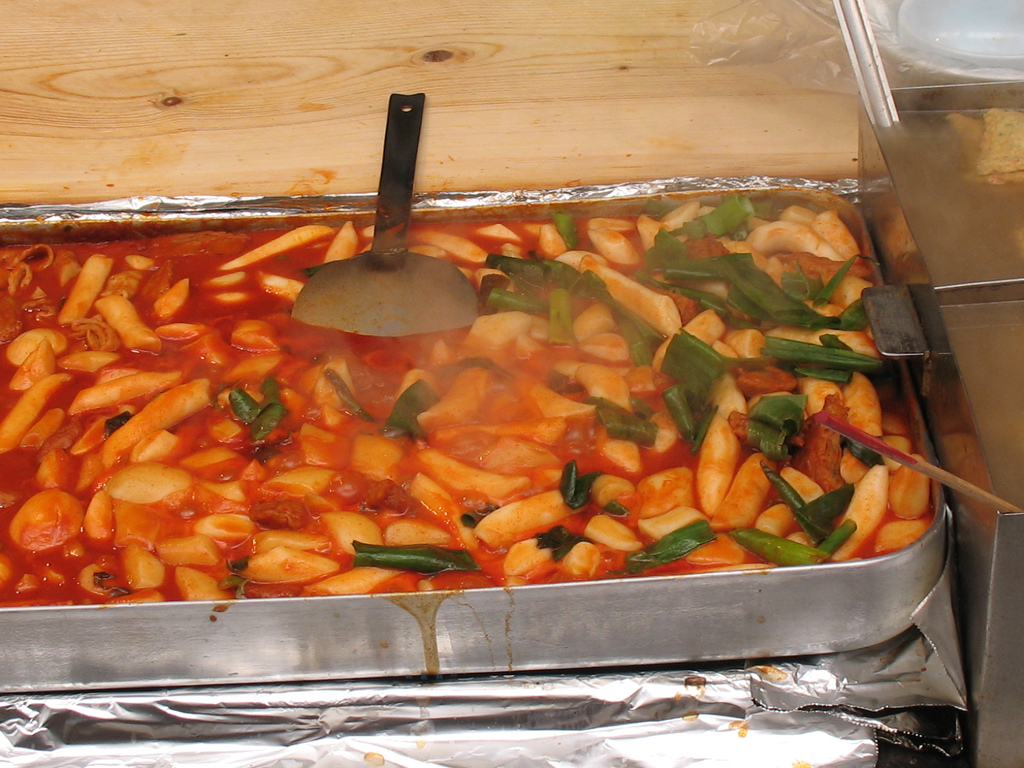
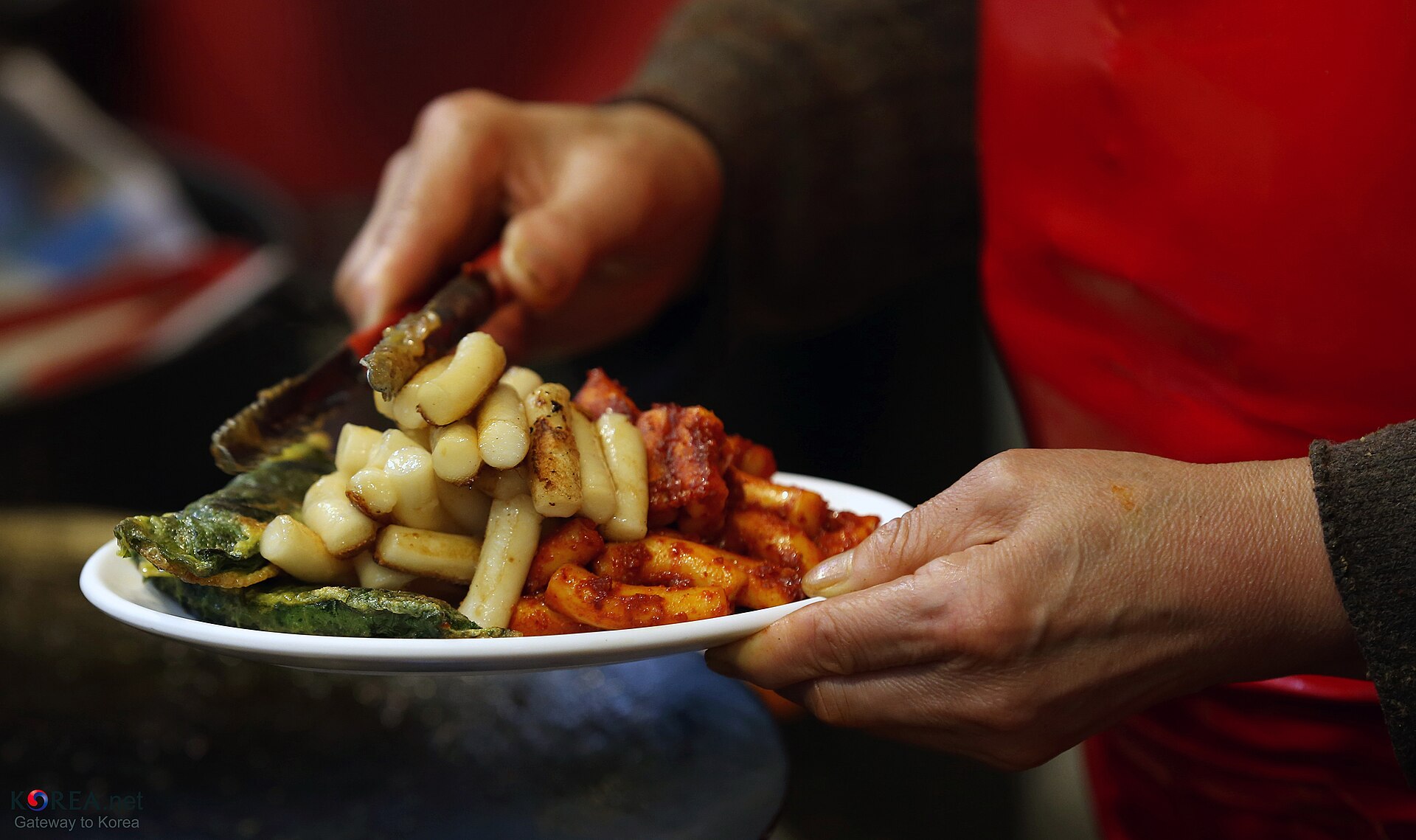
- Tteokbokki: chewy rice cakes in gochujang, often with fish cake and egg. Our tteokbokki guide covers where to eat it.
- Eomuk (fish cake): pounded white fish fillet, fried, skewered and boiled in anchovy and radish broth. The hot broth cup is part of the snack.
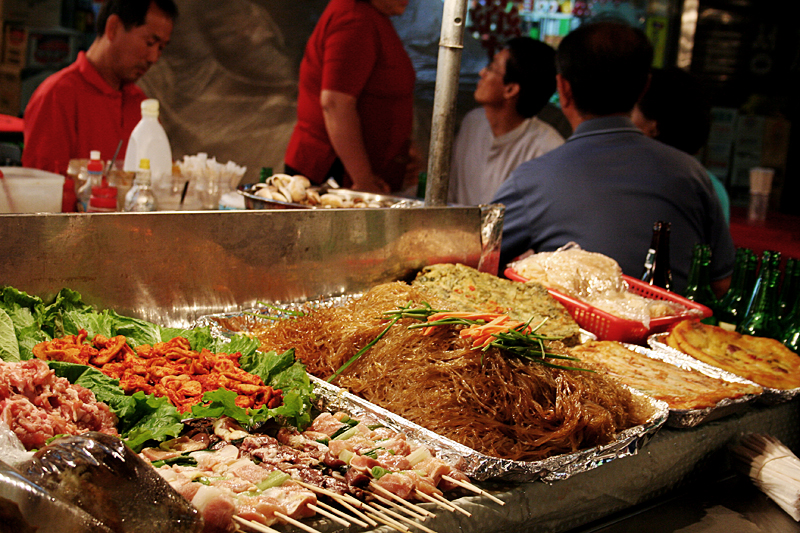
- Twigim and skewers: fried vegetables and seafood, grilled chicken skewers and fried rice cake skewers with sweet and spicy sauce.
- Sundae: a sausage of pig intestines and blood with glass noodles, sticky rice and vegetables (KTO).
- Gimbap: rolled rice sold from bunsik shops to convenience stores. See the kimbap guide.
Winter snacks: hotteok, bungeoppang and gyeran-bbang
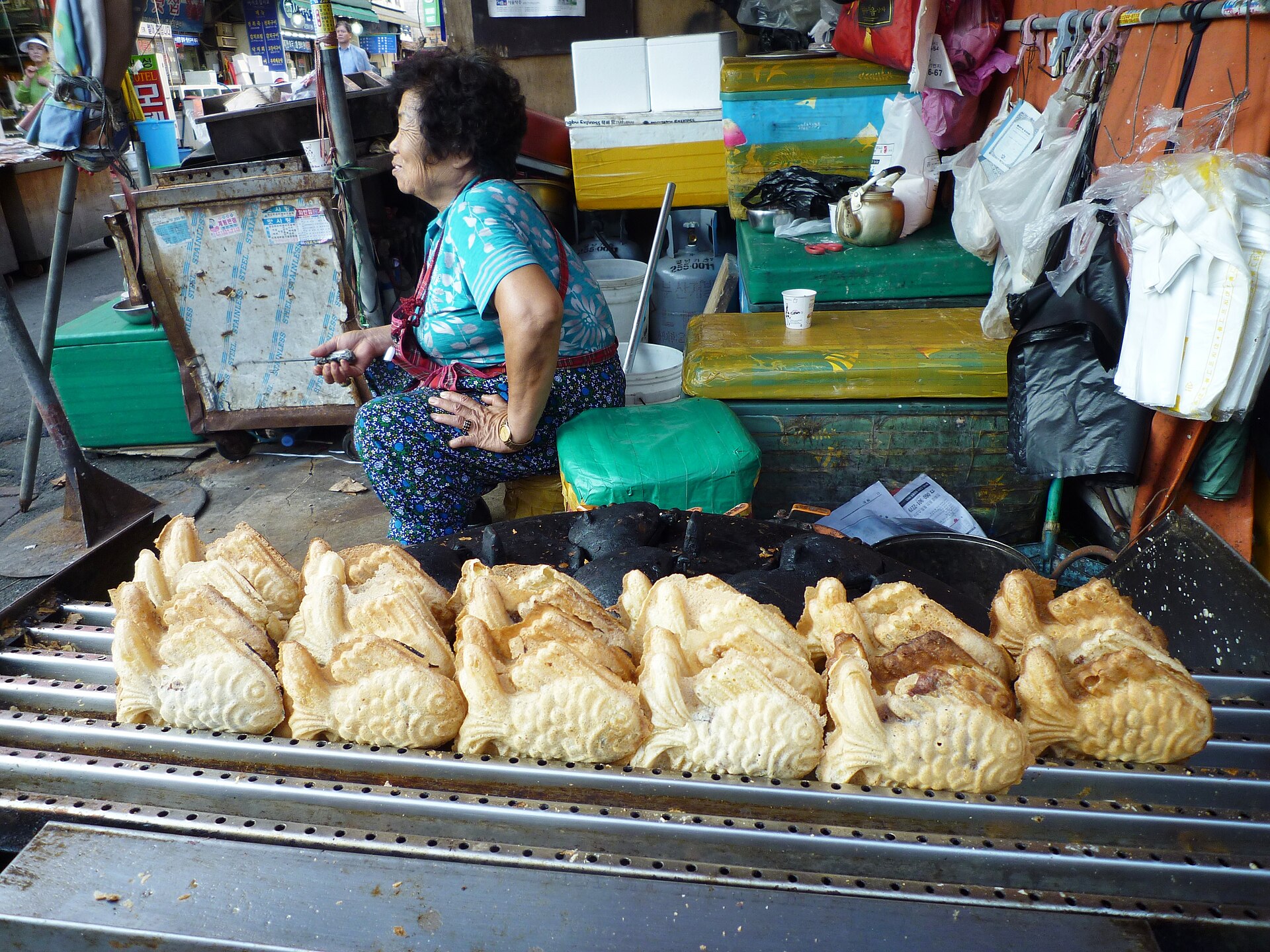
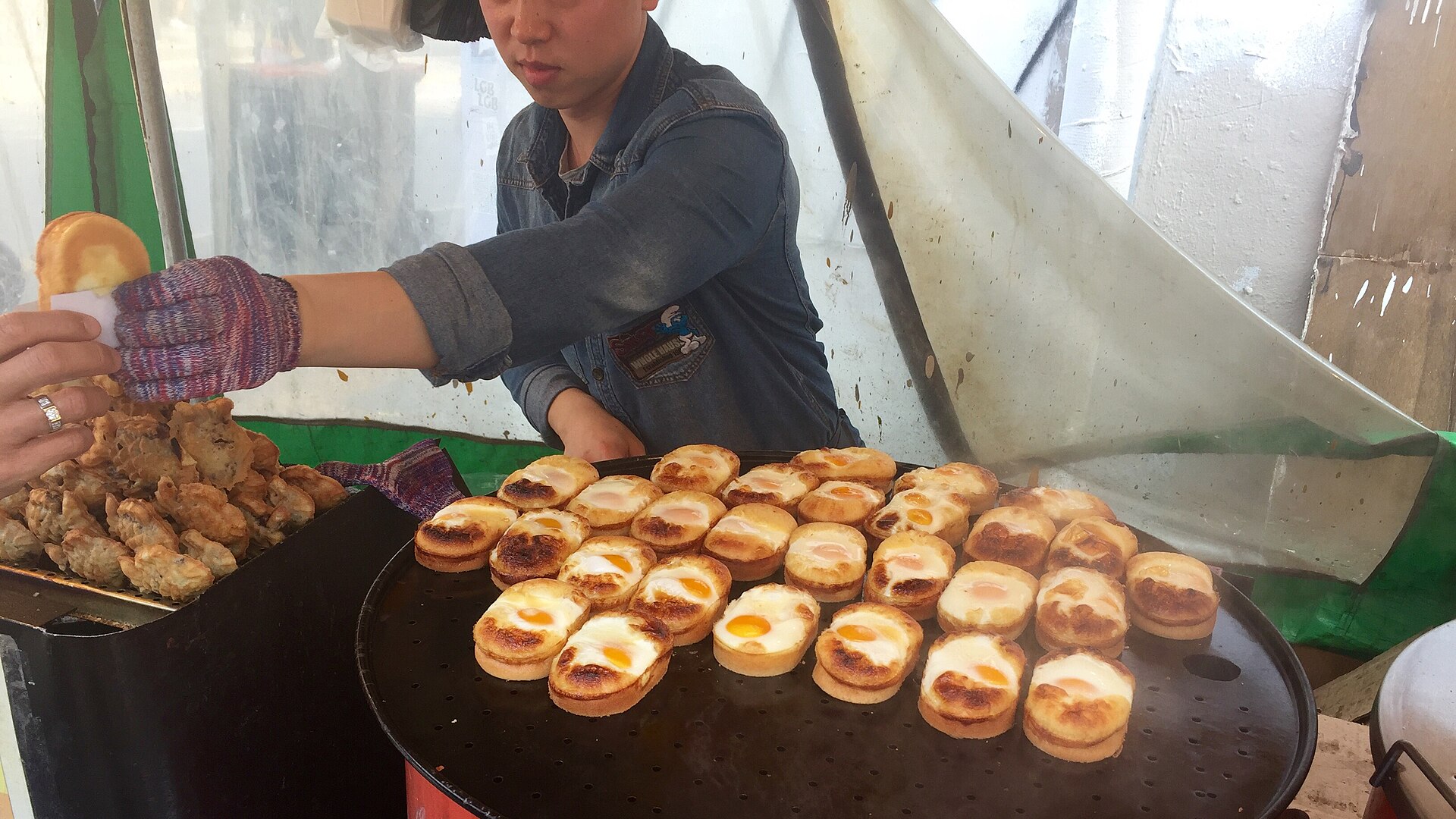
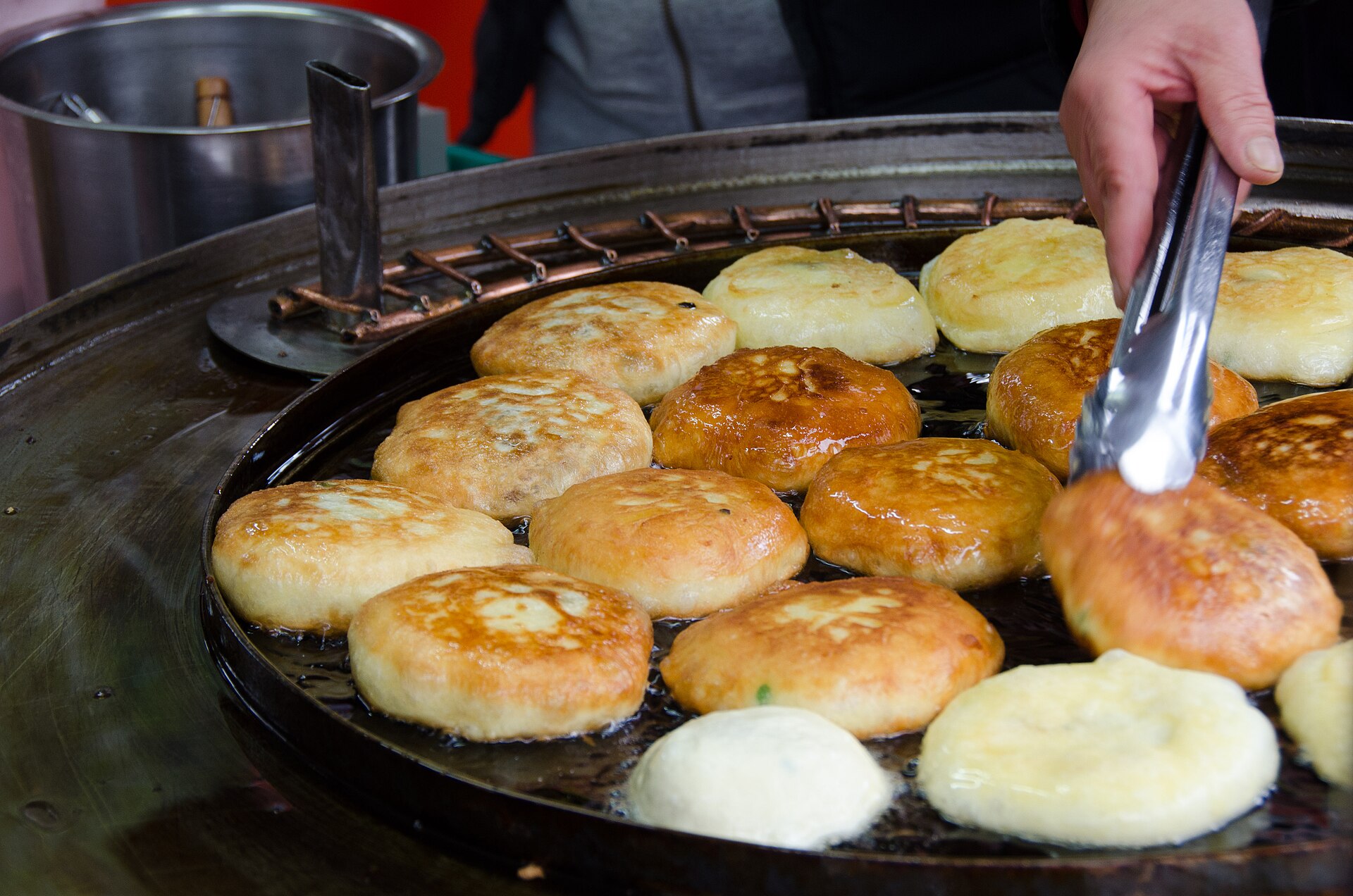
KTO lists these as seasonal snacks. Hotteok is sugar-filled dough pressed and fried in oil, with vegetable and cheese versions. Bungeoppang is a fish-shaped red bean bun that KTO says is crispiest straight from the cart. Gyeran-bbang is batter baked with a whole egg, and KTO notes it made CNN’s top 50 breads list. Baked sweet potatoes and chestnuts round out winter.
Summer and trending snacks
In summer look for bingsu shaved ice and cold soybean noodles, which KTO recommends for vegetarians. Trend snacks include jjondeugi and grilled marshmallow ice cream. For packaged treats see the best Korean snacks, Korean ice cream shops and the convenience store guide.
2. Korean Street Food by Area
The key rules at a glance
| Area | Best for | Hours as published |
|---|---|---|
| Myeongdong, Seoul | Skewers, pork belly rolls, hotteok | Stalls roughly mid-afternoon to 22:00 or 23:00 (2026 guides) |
| Gwangjang Market, Seoul | Bindae-tteok, mandu, mayak gimbap | Food alley 09:00 to 23:00; market 09:00 to 18:00, closed Sundays |
| Namdaemun Market, Seoul | Galchi jorim, kalguksu, savoury hotteok | Varies by arcade; closed Sundays |
| Tongin Market, Seoul | Coin lunchbox, oil tteokbokki | Lunchbox cafe 11:00 to 15:00 weekdays, to 16:00 weekends |
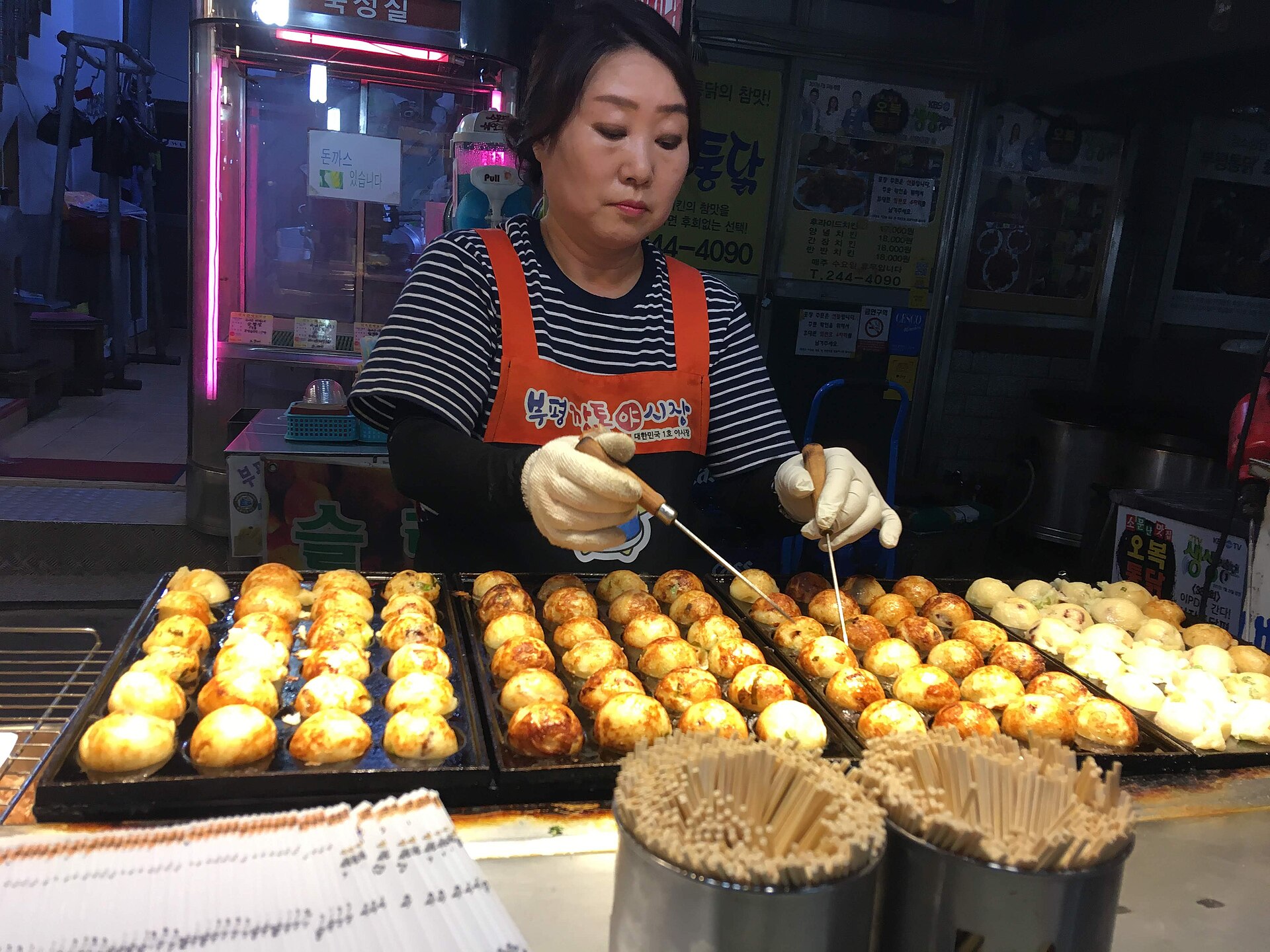
| Bupyeong Kkangtong, Busan | Night market carts, fish cakes | 19:30 to 24:00, open all year |
| Gukje Market food street, Busan | Chungmu gimbap, bibim dangmyeon | 09:00 to 20:00, varies by shop |
Myeongdong: the densest street food lane
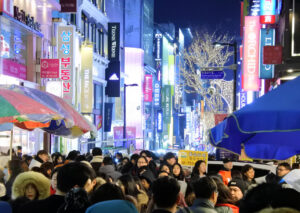
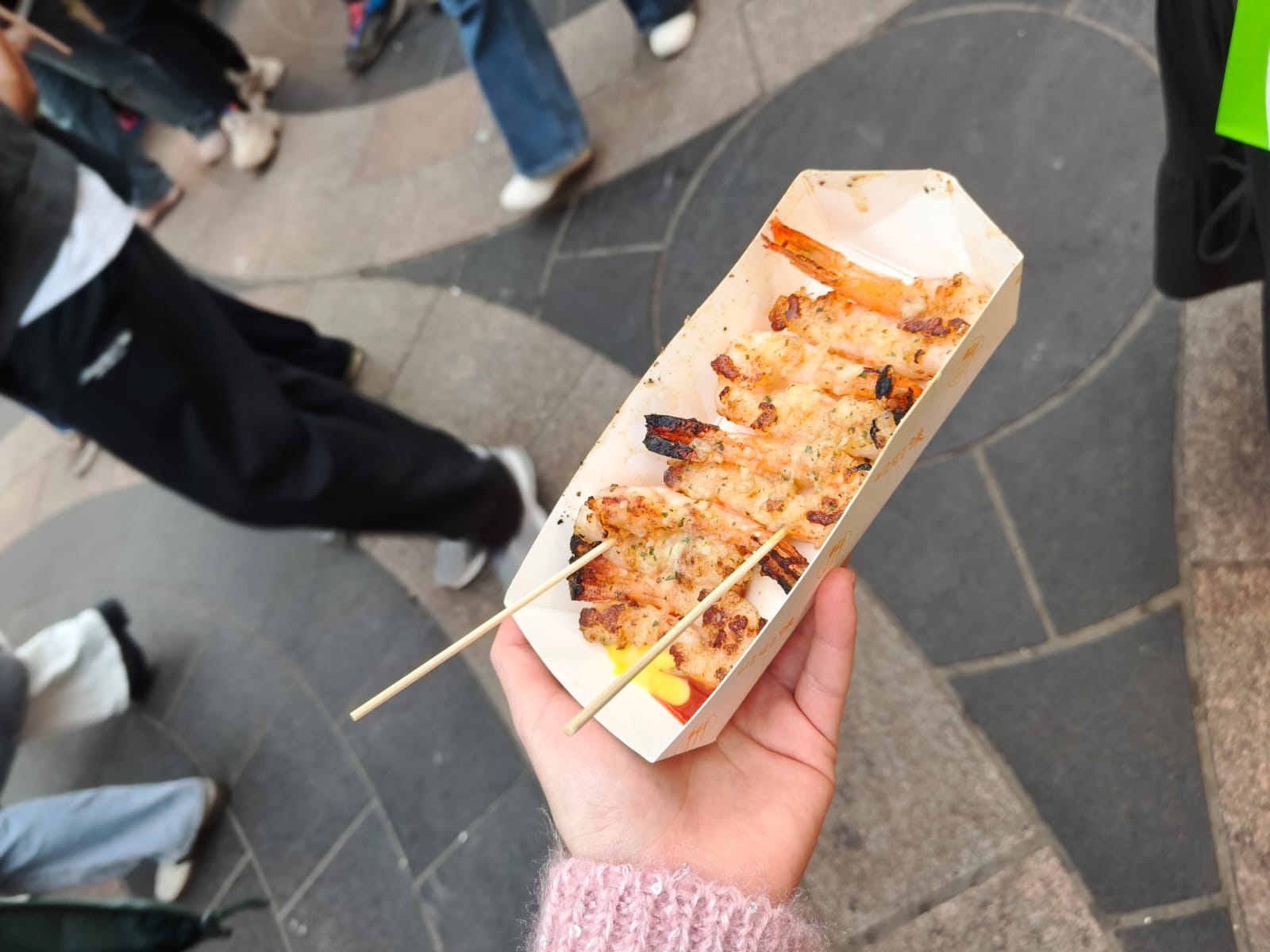
KTO describes the Myeong-dong Station Food Street as a gourmet street with Korean and international food, reached by turning left from Exit 6 (Line 4). Expect skewers, pork belly rolls, hotteok and torched cheese lobster. It is a tourist street, so prices run high and seafood is often sold at market price. In February 2024 the Jung-gu office announced a card payment option, price monitoring for the ten most popular items and tighter hygiene checks (Korea Herald). More in Myeongdong Is Not Seoul.
Guided tour · Seoullo 7017, Namdaemun and Myeongdong · via GetYourGuide
Seoul: Food Tour with 11+ Tastings in the Heart of the City
⭐ 5.0/5 from 9 GetYourGuide reviews · 3 hours · live guide in English · tastes include tteokbokki, fish cake, savoury hotteok and dumplings · from ₩172,035 per person · free cancellation up to 24 hours before (as of 24 Oct 2026)
Gwangjang Market: the street food alley
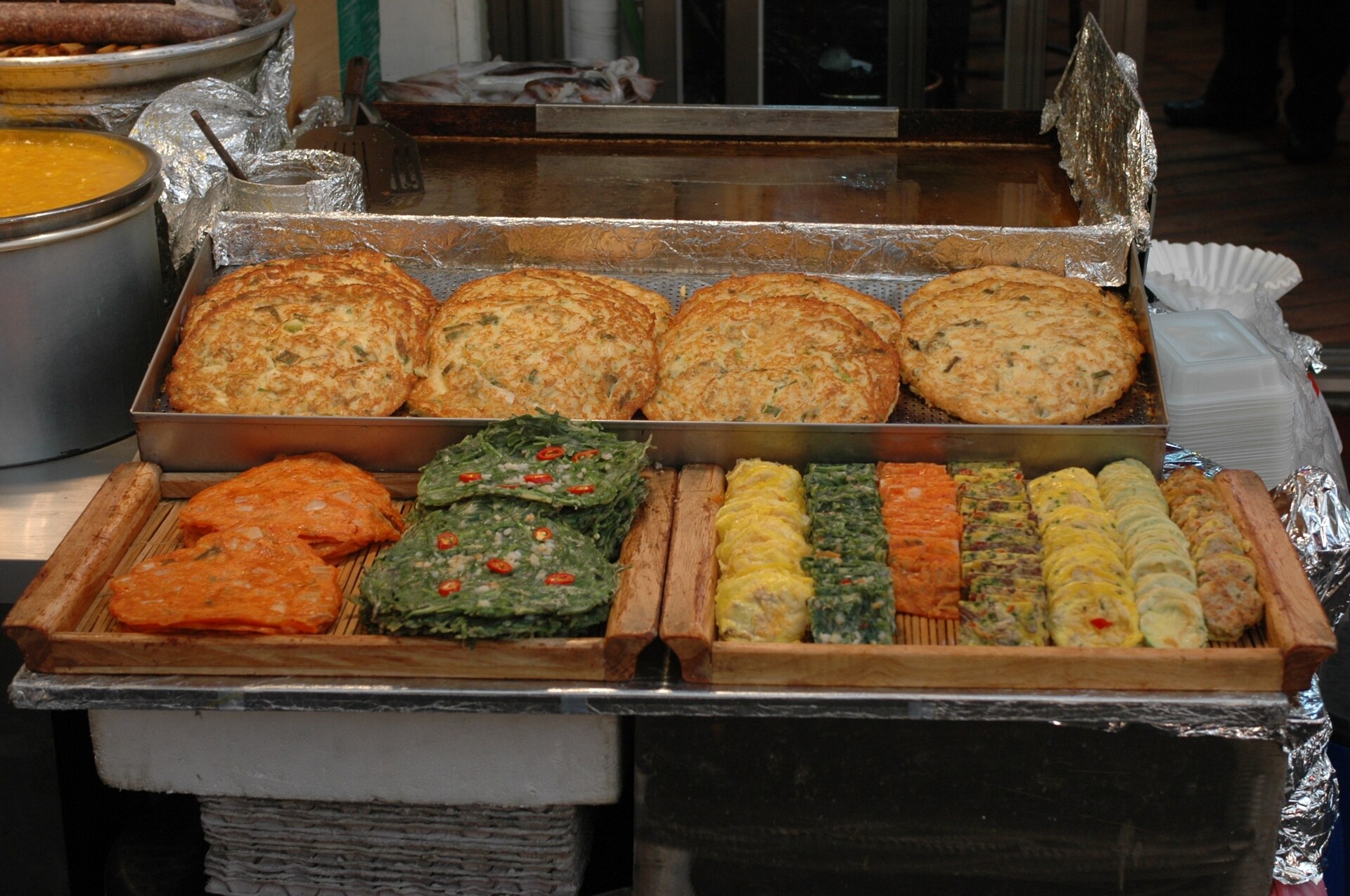
Visit Seoul lists the street food at 09:00 to 23:00 all year, while the general market closes on Sundays. Stalls fry mung bean pancakes and meatballs, and the centre sells gimbap and juice. Share plates and carry cash. The full breakdown is in our Gwangjang Market guide.
Namdaemun Market: old-school stalls and hotteok
Namdaemun, Korea’s largest traditional market, closes on Sundays. Its alleys serve braised hairtail and knife-cut noodles, and Visit Seoul lists Namdaemun Yachae Hotteok, a savoury vegetable version. Use Hoehyeon Station (Line 4) Exits 5 to 7. See the Namdaemun Market guide.
Tongin Market: the coin lunchbox
At Tongin Market in Seochon you buy brass yeopjeon coins at ₩500 each, minimum 10 coins (₩5,000), fill a lunchbox at participating stalls and eat at the Dosirak Cafe, per Visit Seoul. Rice and soup cost two coins each. Check the market’s Instagram for closing days. Gyeongbokgung Station (Line 3) Exit 2 is about 10 minutes away.
Busan: Bupyeong Kkangtong and Gukje Market
The Busan Jung-gu office says Bupyeong Kkangtong opened in October 2013 as Korea’s first permanent night market, with night hours of 19:30 to 24:00 all year. Visit Busan describes a fish cake road and cart bars after 7 pm, nine minutes from Jagalchi Station Exit 3 (Line 1). Next door, Gukje Market Food Street serves chungmu gimbap, tteokbokki and sundae on small stools. Its Sunday closing differs by source, so go on a weekday. Plan the day with the Busan itinerary and where to stay in Busan.
3. Korean Street Food Prices: What to Budget
No agency publishes a stall price list, so these are rough bands from dated 2026 guides and a Visit Seoul listing. Tourist streets cost more than local markets.
- Tteokbokki: about ₩3,000 to ₩5,000 a portion; Visit Seoul lists ₩3,000 at Mangwon Market.
- Fried items: about ₩1,000 to ₩2,000 per piece.
- Hotteok: about ₩3,000 to ₩4,000 in Myeongdong (hotteok guide).
- Myeongdong: chicken skewer about ₩5,000 to ₩6,000, pork belly roll about ₩10,000, cheese lobster about ₩15,000 to ₩20,000.
- Tongin coins: ₩500 each, most dishes two to four coins.
- A whole crawl: about ₩10,000 to ₩20,000 per person for four to six items.
Many stalls post no price board, so ask “얼마예요?” (olmaeyo?, how much?). For a trip budget see how much cash to bring to Korea.
4. How to Pay for Korean Street Food: Cash, Cards and T-money
- Cash first. Bring ₩1,000 and ₩5,000 notes, plus ₩20,000 to ₩30,000 for a Myeongdong crawl.
- Cards are mixed. 2026 guides disagree on Myeongdong, and some Gwangjang stalls refuse cards despite KTO’s listing. Ask “카드 돼요?” (kadeu dwaeyo?) before ordering.
- T-money: it pays for transit and works at convenience stores, where top-ups are cash only (convenience store guide). Do not plan to pay a stall with it.
- Phone pay: check Apple Pay in Korea first.
5. Ordering and Eating Etiquette
- Walk the lane once before buying; prices and quality vary between stalls selling the same item.
- Eat beside the stall. Many Myeongdong vendors ask you not to eat while walking.
- Let hot fillings cool. Visit Seoul warns hotteok sugar melts into scalding syrup.
- Share and mix. KTO recommends ordering several bunsik dishes at once.
- Go early or midweek. Guides report short Myeongdong queues around 16:00 and roughly double crowds on Friday and Saturday nights.
6. Korean Street Food for Vegetarians, Halal and Allergies
- Fish stock is everywhere. Eomuk broth is anchovy and radish, and tteokbokki usually has fish cake. Ask before assuming anything is vegetarian.
- Easier picks: baked sweet potatoes, meat-free gimbap (check fillings) and cold soybean noodles in summer. Start with the vegan Korean food guide and vegan restaurants in Seoul.
- Pork and blood: sundae contains pig intestines and blood. Halal travellers should read halal Korean food in Seoul.
- Wheat and nuts: bunsik means food made of flour, and hotteok often contains nuts or seeds. The GetYourGuide street tour lists vegans, gluten intolerance and pregnancy as not suitable.
7. Is a Korean Street Food Tour Worth It?
A guide orders, translates and picks stalls, useful if you are short on time or have allergies to explain. Prices below were read on each booking page on 24 October 2026 and change daily; see Seoul food tours compared for more.
Food tours at a glance
| Tour | Route | Length | Rating | Price | Book |
|---|---|---|---|---|---|
| Seoul Street Food Market Tour | Gwangjang, from Jongno 5-ga Exit 7 | 2 hr | 4.9 (1,609) | ₩104,544 | GetYourGuide |
| Guided Food and Market Tour, 8+ Tastings | Gwangjang and nearby | 3 hr | 4.9 (518) | ₩127,396 | GetYourGuide |
| Seoul Night Market Food Tour | Jongno 5-ga, 18:00 start | 2 hr | 5.0 (67) | US$89.55 | Klook |
| Gwangjang Market Unique Food Tour | Gwangjang | 2 hr | 5.0 (196) | US$92.69 | Klook |
| Gwangjang Market Culinary Adventure | Gwangjang | 2 hr | 5.0 | KRW 96,385 | KKday |
| Food Tour, 11+ Tastings | Seoullo 7017, Namdaemun, Myeongdong | 3 hr | 5.0 (9) | ₩172,035 | GetYourGuide |
Evening tour · Jongno · via Klook
Seoul Night Market Food Tour with Guided Experience
⭐ 5.0/5 from 67 Klook reviews · 2 hours, 18:00 to 20:00 · small group of 3 to 10 · English guide · free cancellation with 24 hours notice · US$89.55 (as of 24 Oct 2026)
Mistakes to Avoid with Korean Street Food
- Arriving without cash. A card-only plan fails at many stalls.
- Skipping the price check. Seafood and premium items are often market price.
- Visiting a market on Sunday. Gwangjang’s general market and Namdaemun close.
- Walking while eating in Myeongdong. Finish beside the cart.
- Biting into hot hotteok. The syrup burns.
- Assuming it is vegetarian. Fish broth and fish cake are standard.
- Filling up at the first stall. Share small portions and keep room for four or five stops.
Frequently Asked Questions
What is the most popular Korean street food?
Tteokbokki, chewy rice cakes in gochujang sauce. KTO places it at the centre of bunsik, alongside fried foods, sundae, gimbap and fish cakes.
How much does Korean street food cost?
Roughly ₩10,000 to ₩20,000 per person for four to six items, based on 2026 guides. Single items run about ₩1,000 to ₩6,000.
Is Korean street food cash only?
Not always, but carry cash. Guides disagree about Myeongdong, Jung-gu announced a card option in February 2024, and some Gwangjang stalls refuse cards.
What time does Myeongdong street food open?
Most stalls open in the mid-afternoon, around 14:00 to 16:00, and run until about 22:00 or 23:00. Hours vary by stall and weather.
Is Korean street food safe to eat?
Choose busy stalls that cook to order. In February 2024 the Jung-gu office said Myeongdong vendors would wear gloves, masks and caps and face regular hygiene checks.
Is there vegetarian Korean street food?
Some, but fish stock is common. Eomuk broth uses anchovy, and tteokbokki often has fish cake. Baked sweet potatoes and meat-free gimbap are easier picks.
Which is better, Gwangjang or Myeongdong?
Gwangjang suits market classics such as mung bean pancakes, with a food alley open 09:00 to 23:00. Myeongdong packs more variety into one lane at tourist prices.
When is bungeoppang season in Korea?
Winter. KTO lists bungeoppang, hotteok and gyeran-bbang as winter street snacks.
What Should You Eat After Korean Street Food?
Move to sit-down food next: Korean fried chicken, Korean BBQ for first-timers or a late walk through Seoul nightlife. For winter dates see Korea in December and Christmas in Seoul, and compare cities in Busan vs Seoul.
Sources (official pages checked)
- KTO, Bunsik and Street Food
- KTO, Winter Street Food Battle
- KTO, Fishcake (Eomuk)
- KTO, Bungeoppang
- KTO, Gyeranppang
- Visit Seoul, traditional markets
- Korea Herald, Myeong-dong stalls (Feb 2024)
- Busan Jung-gu, Bupyeong Kkangtong
- Visit Busan, Bupyeong Kkangtong
- Visit Busan, Gukje Market
- VisitKorea, Gukje Market Food Street
- Seoul Knows, Myeongdong (Jul 2026)
- Seoulscope, Myeongdong (Jun 2026)
- Yeppuriko, Myeongdong payment (Aug 2026)
- GetYourGuide, Street Food Market Tour (24 Oct 2026)
- GetYourGuide, 11+ Tastings Tour (24 Oct 2026)
- GetYourGuide, 8+ Tastings Tour (24 Oct 2026)
- Klook, Night Market Tour (24 Oct 2026)
- Klook, Gwangjang Tour (24 Oct 2026)
- KKday, Gwangjang Tour (24 Oct 2026)
Book the basics for your Korea trip
Affiliate links: we may earn a small commission at no extra cost to you.
Related Guides
- Korea Travel Toolkit
- Seoul Food Tour
- Gwangjang Market
- Namdaemun Market
- Myeongdong Is Not Seoul
- Tteokbokki Seoul
- Hotteok Seoul
- Kimbap Seoul
- Best Korean Snacks
- Halal Food in Seoul
- Vegan Korean Food
- Busan Itinerary
- Korean Pancake Guide: Pajeon, Jeon and Makgeolli
- Korea Tipping: Best No-Tip Rules and Etiquette (2026)
Korean street food facts last checked 24 October 2026 against KTO, Visit Seoul, Visit Busan and the booking pages. Stall prices, hours and card acceptance change by vendor, and tour prices move daily; confirm both before you go.