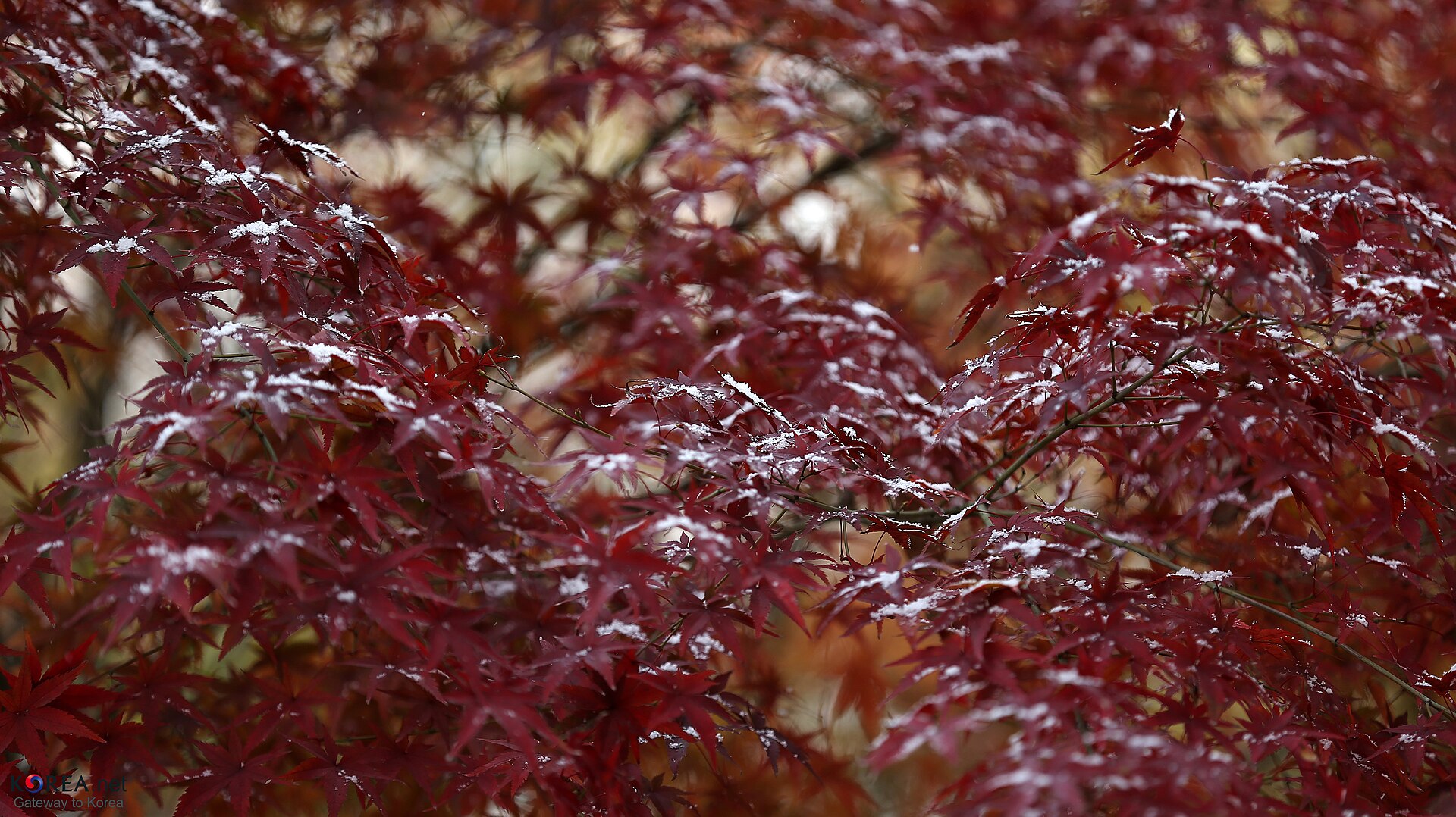
Bottom line: the first snow in Korea usually reaches Seoul around 20 November, the Korea Meteorological Administration (KMA) average for 1991 to 2020, but the last six winters ran from 10 November to 10 December, so plan for a window from mid-November to early December (as of November 2026).
Quick Korea Travel Guide
Getting in: File the free e-Arrival Card unless you hold a valid K-ETA, and check the K-ETA exemption dates.
Stay in touch: A Korea eSIM from Airalo keeps maps, weather alerts and taxi apps working when the snow starts.
Where to book: Elysian ski, Eobi Ice Valley and Nami Island day tour on GetYourGuide or ski and snowboard tours from Seoul. Hotels by area are in Where to Stay in Seoul.
Getting around: T-money vs Climate Card, how to use the Seoul subway, the Kakao T taxi guide and the Korea Travel Toolkit.
Plan more: Korea in November, Korea in December and a ski trip from Seoul.
Disclosure: Some links above are affiliate links. If you book through them I may earn a commission at no extra cost to you.
This first snow in Korea guide gives the KMA dates for Seoul, explains why Koreans treat the first snowfall as a small holiday, and lists where to see snow in and around Seoul with fees and hours as of November 2026. It also covers what to wear, how the subway and taxis behave on snow days and where to go if Seoul stays dry. Planning a December trip? Read Korea in December and Christmas in Seoul next.
Quick answer
- Average date: 20 November for Seoul, from the KMA 1991 to 2020 climate normals.
- Recent Seoul dates: 10 Dec 2020, 10 Nov 2021, 29 Nov 2022, 17 Nov 2023, 26 Nov 2024, 4 Dec 2025 and 8 Nov 2026.
- What counts: an observer at the Songwol-dong station in Jongno-gu sees snow falling; it does not have to settle.
- 2026 so far: Seoul recorded its first snow of 2026 on 8 November, 26 days earlier than in 2025 and 12 days earlier than the average (the sixth-earliest since 1973, per the KMA). The upper slopes of Seoraksan saw snow on 29 October 2026, and KMA expects a warmer than usual winter.
- Culture: 첫눈 (cheotnun) is linked to romance, promises and wishes, and K-dramas use it often.
- Best snow spots: Gyeongbokgung (closed Tuesdays), Changdeokgung (closed Mondays), Namsan, Nami Island and Seoraksan.
- Pack: a padded coat, waterproof shoes with grip, gloves and a hat; allow extra time on snow days.
What this guide covers
When Is the First Snow in Korea?
The first snow in Korea arrives on the high peaks of Gangwon Province first and reaches Seoul about a month later. On 29 October 2026 snow fell on the upper slopes of Seoraksan near Daecheongbong, nine days later than in 2025, according to the Korea Herald. Seoul followed on 8 November 2026: the KMA recorded graupel at the Seoul Weather Observatory between 09:20 and 10:40 that morning, with no accumulation, which made it 26 days earlier than in 2025 and 12 days earlier than the 20 November average, according to Yonhap and the Kyeonggi Ilbo.
For Seoul, the KMA records the first snow when an observer at the Seoul Meteorological Observatory in Songwol-dong, Jongno-gu, sees snow falling. Accumulation does not matter, so a few flakes that melt on the pavement count as the official date. The KMA 1991 to 2020 average is 20 November, as stated in its press release of 10 November 2021 and in Yonhap and Korea Herald reports of later years.
Seoul first snow dates, 2020 to 2026
| Winter | Seoul first snow | Versus 20 Nov average | Source |
|---|---|---|---|
| 2020 | 10 December | 20 days late | KMA press release, 10 Nov 2021 |
| 2021 | 10 November | 10 days early | KMA press release, 10 Nov 2021 |
| 2022 | 29 November (22:20) | 9 days late | Korea Herald citing KMA, 30 Nov 2022 |
| 2023 | 17 November (11:20) | 3 days early | Korea Herald citing KMA, 17 Nov 2023 |
| 2024 | 26 November | 6 days late | Yonhap citing KMA, 26 Nov 2024 |
| 2025 | 4 December | 14 days late | Korea Herald citing KMA, 4 Dec 2025 |
| 2026 | 8 November | 12 days early | KMA via Yonhap, 8 Nov 2026 |
Averaged over those six winters, the date falls on about 27 November (calculated from the table). The spread is the useful part: a first snow in Korea can come as early as 10 November or as late as 10 December. In 2024 the first snow on 26 November was followed by a record: Seoul had 16.5 cm of snow by 7 a.m. on 27 November, the biggest November snowfall since observations began in 1907, Yonhap reported. On 4 December 2025 the first snow fell at up to 5 cm an hour during the evening commute, and the government activated its level 1 snow response, as the Korea Herald and JoongAng Daily reported.
What to expect in 2026: the KMA outlook points to higher than average temperatures and more precipitation in November and December, a pattern linked to a strong El Niño, according to Seoul Economic Daily on 7 November 2026. Warm air tends to push the date later, but the first snow in Korea is a one-day event that no outlook can pin down. Watch the KMA forecast a few days ahead. Winter basics for the month are in Korea in November and Korea in January.
1. What Does First Snow in Korea Mean?
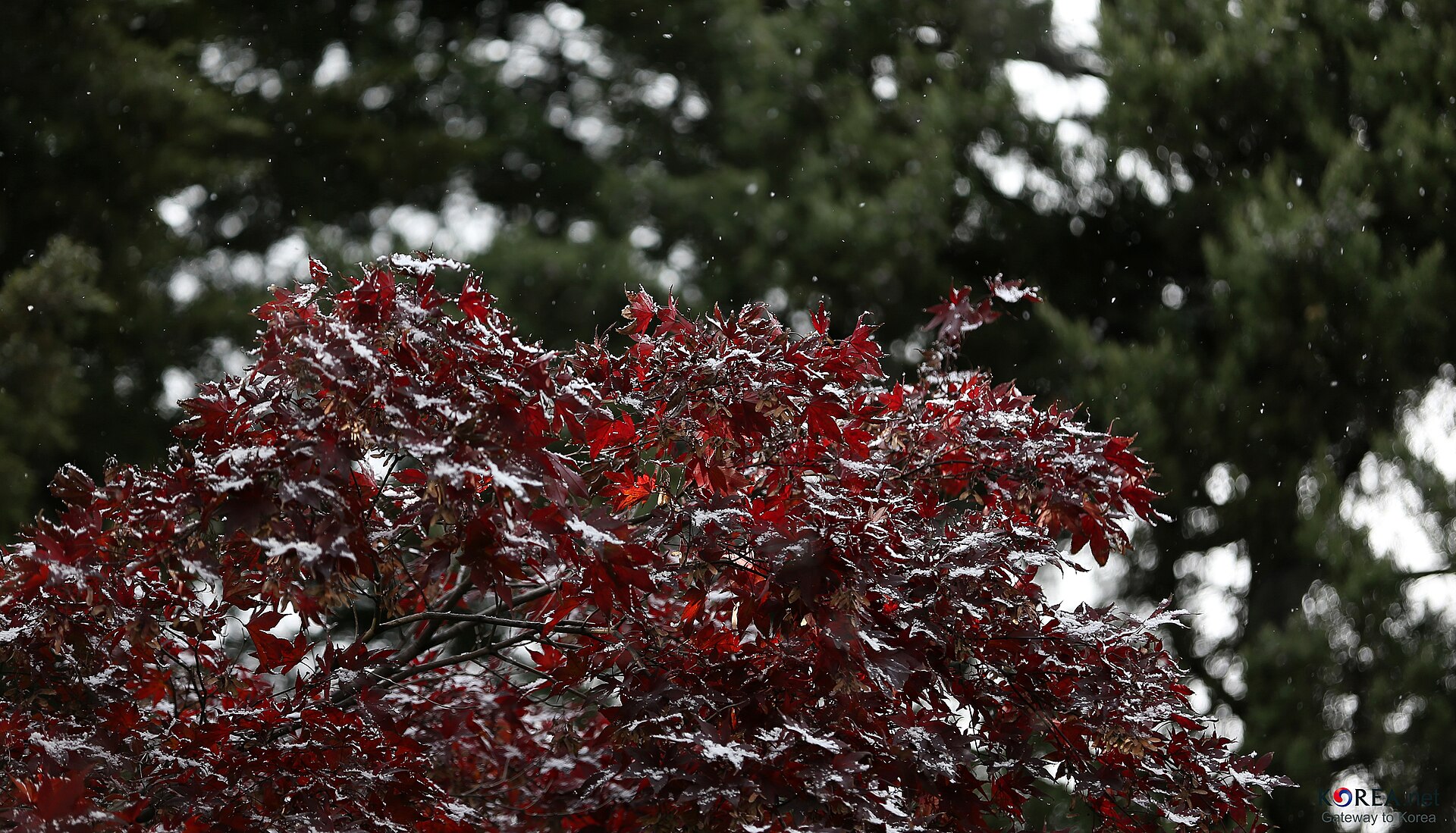
Koreans call it 첫눈 (cheotnun), and the day gets its own news coverage. The Korea Times described the 2025 first snow as a symbol of both romance and hardship, noting a widely cited saying that if you see the first snow of the season with someone you like, your love will come true (Korea Times, 5 December 2025).
- Couples: people arrange to meet on the day of the first snow, a promise that appears in poems and songs, and some confess feelings on that day.
- Wishes: a popular folk belief says a wish made while the first snow falls will come true.
- Old custom: the Korea Herald cites the Veritable Records of the Joseon Dynasty for a Goryeo-era custom of wrapping up the first snow and sending it to friends, who were expected to treat the sender to a meal (Korea Herald, 4 December 2025).
- K-dramas: the first snow works as a plot device in series such as Crash Landing on You, where a character explains the first-snow belief to another, so the scene feels familiar to fans.
These are traditions and popular beliefs, not rules, and nobody will mind if you simply enjoy the weather. If the first snow lands while you are in town, expect cafes, palace grounds and riverside paths to fill with people taking photos.
2. Where Can You See First Snow in Korea in Seoul?
Seoul has several places where snow looks best, and most are easy to reach by subway. Fees and hours below are as of October to November 2026 from the operators cited in our linked guides; confirm on the day because winter hours and weather closures change.
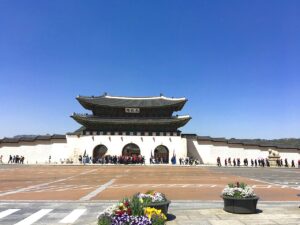
- Gyeongbokgung: adults pay ₩3,000, hanbok wearers enter free and the palace is closed on Tuesdays. Hours run 09:00 to 17:00, 18:00 or 18:30 by season, with last admission one hour earlier. See Gyeongbokgung hanbok rules.
- Changdeokgung: closed on Mondays; the palace costs ₩3,000 and the Secret Garden is a separate timed ₩5,000 ticket. From November to January the palace is open 09:00 to 17:30 with last entry at 16:30, and there is no 15:30 English garden session from December to February. See the Changdeokgung guide.
- Bukchon Hanok Village: free, and tourists may be in the red zone only from 10:00 to 17:00, so go in the morning. See Bukchon Hanok Village.
- Namsan and N Seoul Tower: the observatory costs ₩29,000 for adults and the cable car ₩15,000 round trip; the observatory is open 10:00 to 22:30 on weekdays and 10:00 to 23:00 at weekends, and the cable car pauses in high wind. See N Seoul Tower.
- Seoullo 7017: the elevated walkway beside Seoul Station is a short snow walk; check the Seoullo 7017 official page for closures after heavy snow.
- Ice skating: snow weeks are rink weeks, with options in Ice Skating in Seoul.
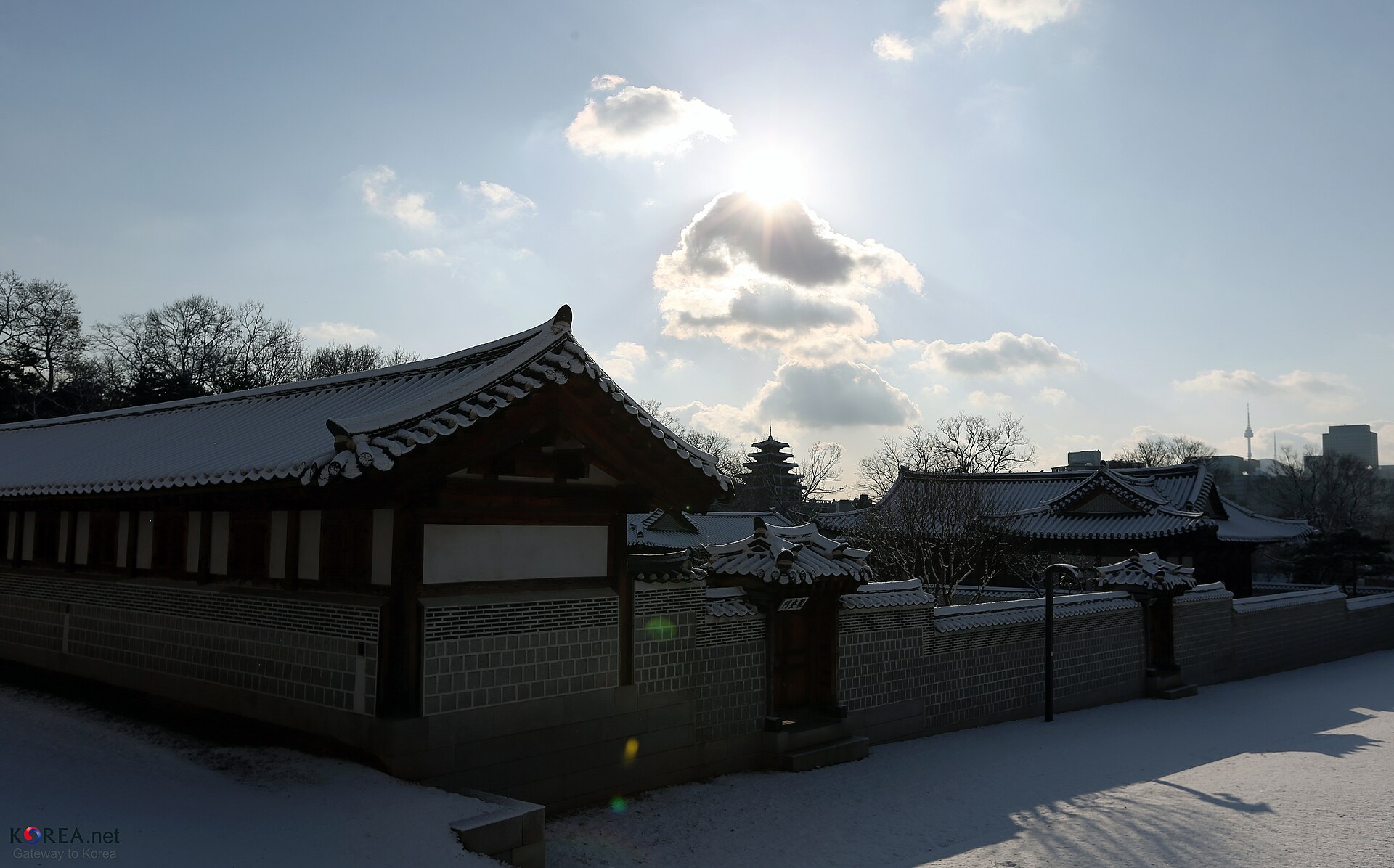
Palace closing days matter on a snow morning. The Royal Palaces and Tombs Center closes Gyeongbokgung on Tuesdays and Changdeokgung, Changgyeonggung and Deoksugung on Mondays, so a Tuesday snowfall points you to Changdeokgung and a Monday one to Gyeongbokgung.
Planning the whole week? Seoul Christmas Lights and Markets and the 2026 Christmas markets calendar cover evening snow scenes, and Christmas theme parks in Korea cover Lotte World and Everland.
3. Where Can You See Snow Outside Seoul?
If Seoul stays dry in late November, head to places that get snow earlier. Gangwon Province and Jeju’s mountain are the usual answers.
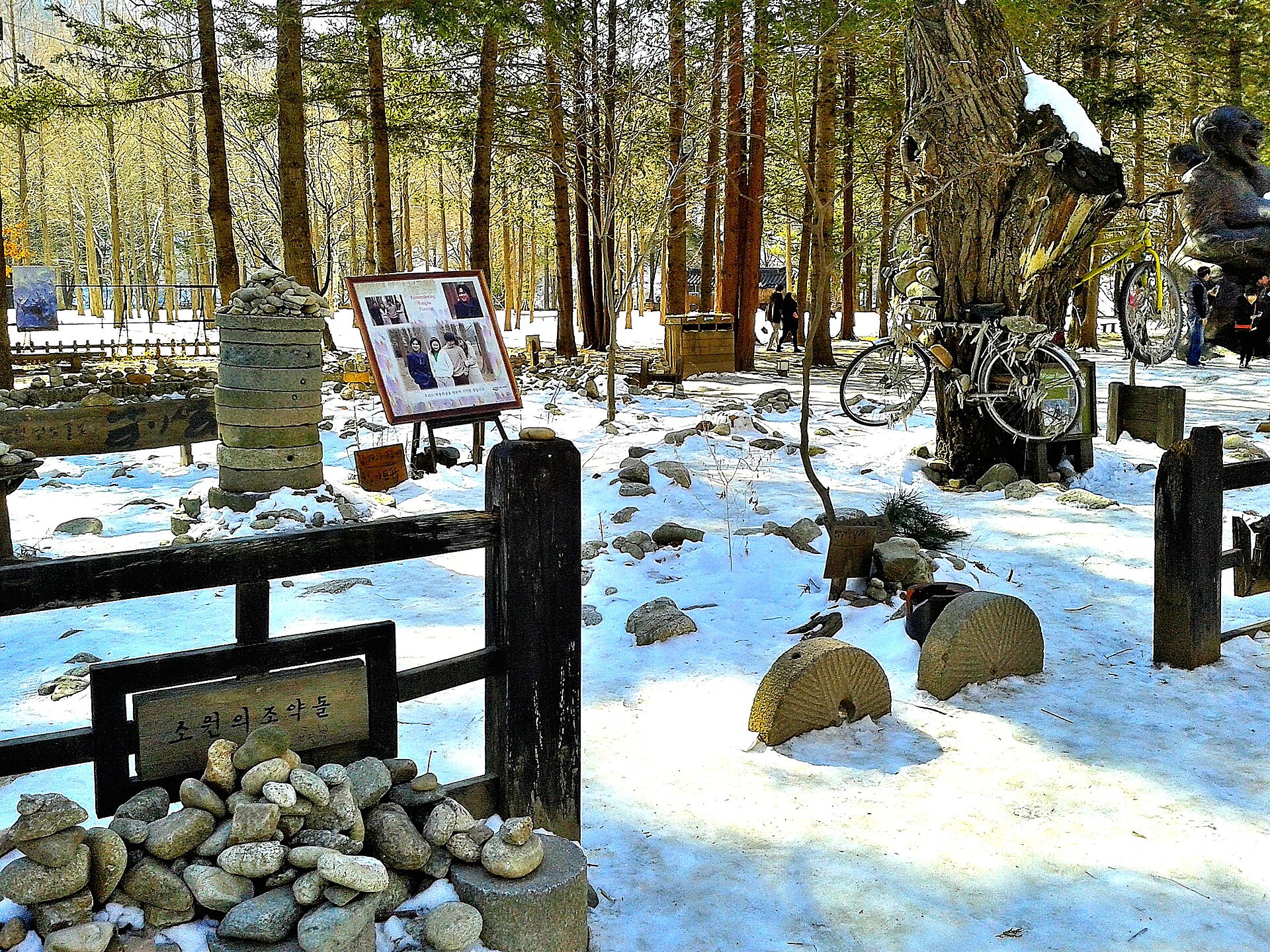
- Nami Island, Gapyeong: adults pay ₩19,000, which includes the round-trip ferry; ferries run every 10 to 20 minutes from 09:00 to 18:00, the last boat back is at 21:05 and the island opens every day (operator information as of November 2026). Details are in Nami Island and Petite France and the Gapyeong and Chuncheon day trip.
- Seoraksan, Sokcho: the peaks saw the first snow on 29 October 2026. The cable car costs ₩16,000 round trip for adults and stops in strong wind, and the Seoul to Sokcho express bus is ₩17,200 to ₩28,900. Carry crampons for upper trails and read the Seoraksan day trip guide and the Gangneung and Sokcho day trip.
- Hallasan, Jeju: summit trails (Seongpanak and Gwaneumsa) need an advance reservation. For October to March the official Visit Halla page sets trail entry from 05:00 with cut-offs at 11:30 on Seongpanak and Gwaneumsa and 12:00 on Eorimok and Yeongsil, and visits are restricted when heavy snow advisories or warnings are issued (checked 8 November 2026). See the Jeju itinerary.
- Bukhansan and Seoul hills: trails inside the city turn white soon after the first cold wave; bring crampons and read Bukhansan hiking or hiking in Seoul.
Snow day tour · Seoul pickup · via GetYourGuide
Seoul: Elysian Ski, Eobi Ice Valley and Nami Island Day Tour
⭐ 5/5 from 14 GetYourGuide reviews · 12 hours · listed from about ₩65,000 (as of November 2026)
What about ski resorts?
Resorts near Seoul make their own snow, so skiing does not wait for the first snow in Korea. In 2025 a Hongcheon resort began full winter operations on 4 December after making snow on its slopes, JoongAng Daily reported. Opening dates for the 2026 to 2027 season are set by each resort, so check its site before booking. For lift, rental and suit prices at Konjiam, Yongpyong, Elysian Gangchon and Vivaldi Park, use our ski trip from Seoul guide; it lists a day at Konjiam at about ₩158,000 to ₩179,000 in 2025 to 2026 prices. Tours with transport are on GetYourGuide.
4. What Should You Wear for First Snow in Korea?
Layers work best, because heated subways and cafes are warm and the street is not. Pack a padded or down coat, a thermal base layer, gloves, a hat and a scarf. Waterproof shoes with a grippy sole matter more than style, since melted snow and slush soak canvas sneakers quickly. The full month-by-month list is in our Korea packing list.
- Footwear: boots or waterproof trainers with deep tread; slip-on ice grips help on mountain trails and steep palace paths.
- Sidewalks: the first snow often melts by day and refreezes overnight, so black ice is most likely on early mornings and shaded slopes such as Bukchon and Namsan.
- Walking style: take short steps, keep your hands out of your pockets and avoid stairs of polished stone.
- Phone and power: cold drains batteries fast, so carry a power bank and keep data on with an Airalo Korea eSIM.
Stay connected · eSIM · via Airalo
Airalo Korea eSIM
Install before you fly · plan sizes and prices change, so check the live listing (as of November 2026)
5. How Do Subway, Taxis and Trains Work on Snow Days?
On 4 December 2025 the first snow arrived during the evening rush, and officials warned that roads could freeze overnight in subzero temperatures through the next morning. That pattern repeats: the first snow in Korea often causes the worst commute of the month because drivers and city crews have not yet shifted to winter mode.
- Subway: trains run underground and are the most reliable choice; allow extra time at stations because stairs and platforms get slippery. Use the Seoul subway guide and T-money vs Climate Card to sort out fares.
- Taxis: demand spikes at the start of snowfall and around 18:00. Book through Kakao T rather than hailing, and see late-night taxi tips for after-dark rides.
- Buses and cars: hilly routes can be slow or diverted, so leave extra time for Namsan, Bukhansan and mountain passes.
- KTX and flights: heavy snow advisories can slow roads and rail and delay flights. Check your airline, Incheon Airport flight status and Korail notices before you leave, and keep a buffer day if you have an international flight; backup options are in KTX backup routes.
The KMA publishes advisories and warnings in English on its official weather site; Hallasan and Seoraksan add their own trail closures when heavy snow arrives.
Mistakes to Avoid
- Booking a fixed snow day weeks ahead. The first snow in Korea cannot be scheduled, so keep palace and day-trip plans flexible.
- Expecting snow on the ground in Seoul on 20 November. The date is an average of the first flakes, and settled snow often arrives weeks later.
- Visiting a palace on its closing day: Gyeongbokgung closes on Tuesdays and Changdeokgung on Mondays.
- Wearing smooth-soled shoes to Bukchon, Namsan or a mountain trail.
- Planning a Hallasan summit without a reservation or past the winter entry cut-off.
- Going to Busan for snow; the south coast gets snow late and rarely.
- Leaving the airport run until the last moment on a heavy-snow forecast day.
Frequently Asked Questions
When is the first snow in Korea?
Seoul averages its first snow on 20 November (KMA, 1991 to 2020). From 2020 to 2026 the actual dates ran from 8 November (2026) to 10 December (2020). Snow reaches the Seoraksan peaks earlier; in 2026 it fell there on 29 October.
When is the first snow in Seoul in 2026?
Seoul’s first snow of 2026 was recorded on 8 November at the Songwol-dong observatory, 26 days earlier than in 2025 and 12 days earlier than the 20 November average. It was light graupel with no accumulation, so the city was not yet covered in snow. As of November 2026 the KMA expects a warmer than usual winter, and settled snow in Seoul may still be weeks away. Watch the forecast a few days ahead.
What does first snow mean in Korea?
Called 첫눈 (cheotnun), it is tied to romance, promises and wishes. A saying holds that seeing the first snow with someone you like means your love will come true, and many couples set a meeting plan for that day. These are popular beliefs rather than rules.
Where is the best place to see first snow in Korea?
Palaces such as Gyeongbokgung and Changdeokgung are the classic Seoul choice, with Namsan and Bukchon close behind. For earlier and deeper snow, take a day trip to Nami Island or Seoraksan. Check closing days first: Gyeongbokgung is closed on Tuesdays and Changdeokgung on Mondays.
What should I wear for the first snow in Korea?
Wear a padded coat, a thermal layer, gloves, a hat and waterproof shoes with good grip. Carry a power bank because cold drains phone batteries, and allow extra time for icy pavements and steps.
Does snow disrupt transport in Seoul?
It can. The first snow on 4 December 2025 fell at up to 5 cm an hour during the evening commute and roads were expected to freeze overnight. The subway is the steadiest option, taxis get scarce, and heavy snow advisories can delay flights and trains, so check airline and Korail notices.
Can I ski in Korea in November or December?
Resorts near Seoul make artificial snow, so some open for the season in early winter; a Hongcheon resort began full operations on 4 December in 2025. Each resort sets its own 2026 to 2027 opening date, so check before booking and see our ski trip guide for prices.
Is Hallasan open for hiking when it snows?
Summit trails need an advance reservation, and the official Visit Halla page sets winter entry cut-offs of 11:30 at Seongpanak and Gwaneumsa. Visits are restricted when heavy snow advisories or warnings are issued, and crampons are advised on icy sections.
What Should You Plan Next?
Pick your base first with Where to Stay in Seoul, then lay out the month with Korea in November or Korea in December. If the trip stretches into the new year, read Korea in January and day trips from Seoul.
Sources (checked 8 November 2026)
- KMA press release, Seoul first snow, 10 Nov 2021 (Korean)
- Korea Herald, first snowfall of 2025 (4 Dec 2025)
- Korea Herald, first snow of winter in Seoul (17 Nov 2023)
- Korea Herald, first snow and cold wave (30 Nov 2022)
- Yonhap, first snow in Seoul (26 Nov 2024)
- Yonhap, record November snowfall (27 Nov 2024)
- Korea Herald, Seoraksan first snow (29 Oct 2026)
- Seoul Economic Daily, El Niño and KMA winter outlook (7 Nov 2026)
- Korea Times, first snow in Korean culture (5 Dec 2025)
- Korea Herald, how Koreans once celebrated snow (4 Dec 2025)
- Visit Halla, Hallasan reservation and entry times (checked 8 Nov 2026)
- Nami Island official site
- KMA English weather site
Book the basics for your Korea trip
Affiliate links: we may earn a small commission at no extra cost to you.
Related Guides
- Korea Travel Toolkit
- Korea in November
- Korea in December
- Korea in January
- Ski Trip from Seoul
- Nami Island and Petite France
- Seoraksan Day Trip
- Bukhansan Hiking
- Christmas in Seoul
- Christmas Theme Parks in Korea
- Ice Skating in Seoul
- Korea Packing List
- Things to Do in Korea in Winter: Best Indoor Picks and Late Autumn Spots (2026)
Dates, fees and hours last checked 8 November 2026 against the KMA, Yonhap, Korea Herald, Visit Halla and operator information cited in our linked guides. Schedules and winter hours can change; confirm on the official page before you go. Featured photo: Korea.net / KOCIS, Wikimedia Commons (CC BY-SA 2.0).