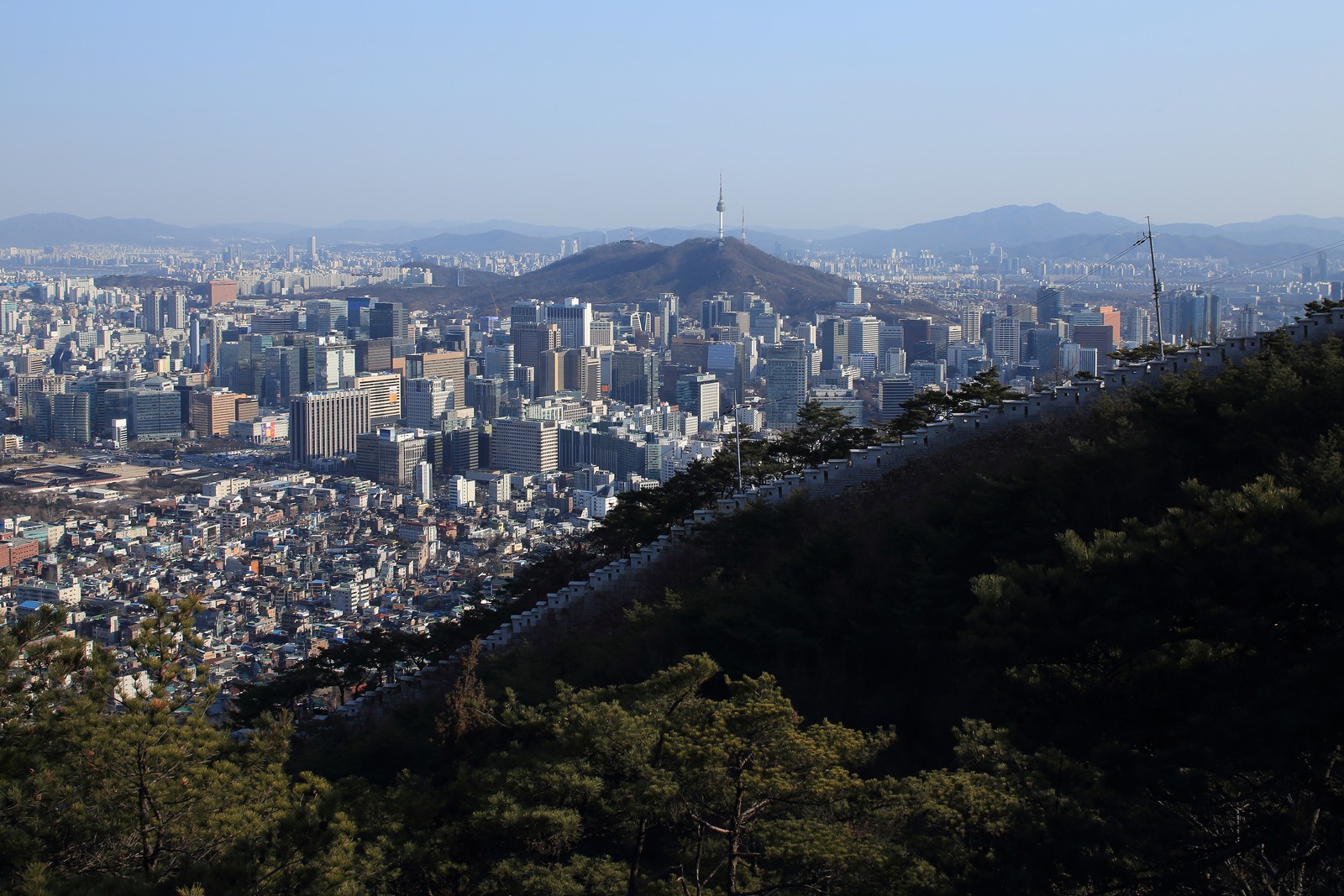
Bottom line: hiking in Seoul starts at a subway exit: Namsan and Inwangsan are the gentle walks, Bugaksan and Achasan sit in the middle, and Bukhansan’s Baegundae is the serious summit. The Seoul Hiking Tourism Center rents boots and clothing to visitors, and Klook lists the Bukhansan rental from US$2.49 (as of October 2026).
Quick Korea Travel Guide
Getting in: Landing at Incheon? See every airport-to-Seoul option.
Stay in touch: Get a Korea eSIM from Airalo before you fly (from $4.00, as of October 2026). Mountain trails can have weak signal, so download maps first.
Download first: Naver Map for routes to trailheads and Kakao T for taxis; see the full Korea travel apps list.
Where to book: Inwangsan and Bugaksan guided hike on Klook, Seoul hiking tours on GetYourGuide or the Bukak Mountain hike with a Gyeongbokgung ceremony on KKday.
Getting around: Every trailhead below is on the Seoul subway or a short bus ride; a T-money card covers both.
For more planning: Korea Travel Toolkit.
Disclosure: Some links are affiliate links. If you book through them I may earn a commission at no extra cost to you.
Seoul is ringed by granite mountains, and most trailheads are a subway ride from your hotel. The numbers show visitors have noticed: the Seoul AI Foundation counted 4,015 foreign visitors a day on Bukhansan in 2025, 2,169 on Bugaksan, 1,192 on Gwanaksan and 729 on Achasan, and Achasan (up 11.8%) and Gwanaksan (up 10.0%) grew fastest. This guide to hiking in Seoul compares six mountains by effort, subway access, season and rules, using the Seoul city hiking guide and Korea National Park Service pages, and shows where gear rental and guided hikes fit. For a bigger mountain, jump to Bukhansan hiking or the Seoraksan day trip.
Quick answer
- Easiest hike in Seoul: Namsan (270 m), open 24 hours, with the Dongguk University Station Exit 6 entrance.
- Best city views for effort: Inwangsan’s Seonbawi trail (1.84 km, about 1 hour 8 minutes) from Dongnimmun Station Exit 2.
- Serious summit: Bukhansan’s Baegundae (836.5 m), a 9.98 km loop of about 4 hours 20 minutes rated advanced by the city.
- Sunrise pick: Achasan (Line 5), a low ridge with an easy start; Dobongsan’s Sinseondae is the classic sunrise summit but queues on weekends.
- Gear: the Seoul Hiking Tourism Centers at Bukhansan, Bugaksan and Gwanaksan rent hiking wear and boots to foreign visitors; book on Klook.
- Rules: Bugaksan has seasonal last-entry times (3, 4 or 5 p.m.), national park trails close for fire prevention each spring, and smoking or cooking on the trail is fined.
- Emergency: call 119 for rescue and 1330 for the multilingual tourist line (see Korea emergency numbers).
What this guide covers
Hiking in Seoul at a Glance: Which Mountain Should You Pick?
The city’s own hiking guide rates each course from “very easy” to “expert”, and the table below uses those ratings where available. Times are for the walk itself, without breaks. Check each trail’s closures on the day you go.
| Mountain | Effort | Typical time | Subway start | Best for |
|---|---|---|---|---|
| Bukhansan (Baegundae) | Advanced | 9.98 km loop, 4 h 20 min | Bukhansan Ui Station, Exit 2 (Ui-Sinseol Line) | The big summit view |
| Inwangsan (Seonbawi trail) | Average | 1.84 km, about 1 h 8 min | Dongnimmun Station, Exit 2 (Line 3) | Rocks and city views near the palaces |
| Bugaksan (Changuimun to Baegakmaru) | Average | 3.32 km, about 1 h 30 min | Bus 1020 from Gyeongbokgung Exit 3 to Jahamun Pass | City Wall and palace views |
| Namsan | Easy | Loop paths, open 24 hours | Dongguk Univ. Station, Exit 6 (Line 3) | A first easy walk to N Seoul Tower |
| Achasan | Easy to average | About 45 min to the main viewpoint | Achasan Station, Exit 2 (Line 5) | Sunrise over eastern Seoul |
| Gwanaksan | Average to advanced | About 2 h one way to the summit area | Gwanaksan Station, Exit 1 (Sillim Line) | A rocky ridge away from the tourist core |
Effort ratings for Bukhansan, Inwangsan and Bugaksan come from the Seoul Hiking Tourism Guide; Namsan, Achasan and Gwanaksan times are typical for the main routes, so allow extra for breaks and photos.
1. Bukhansan: The Big Summit of Hiking in Seoul
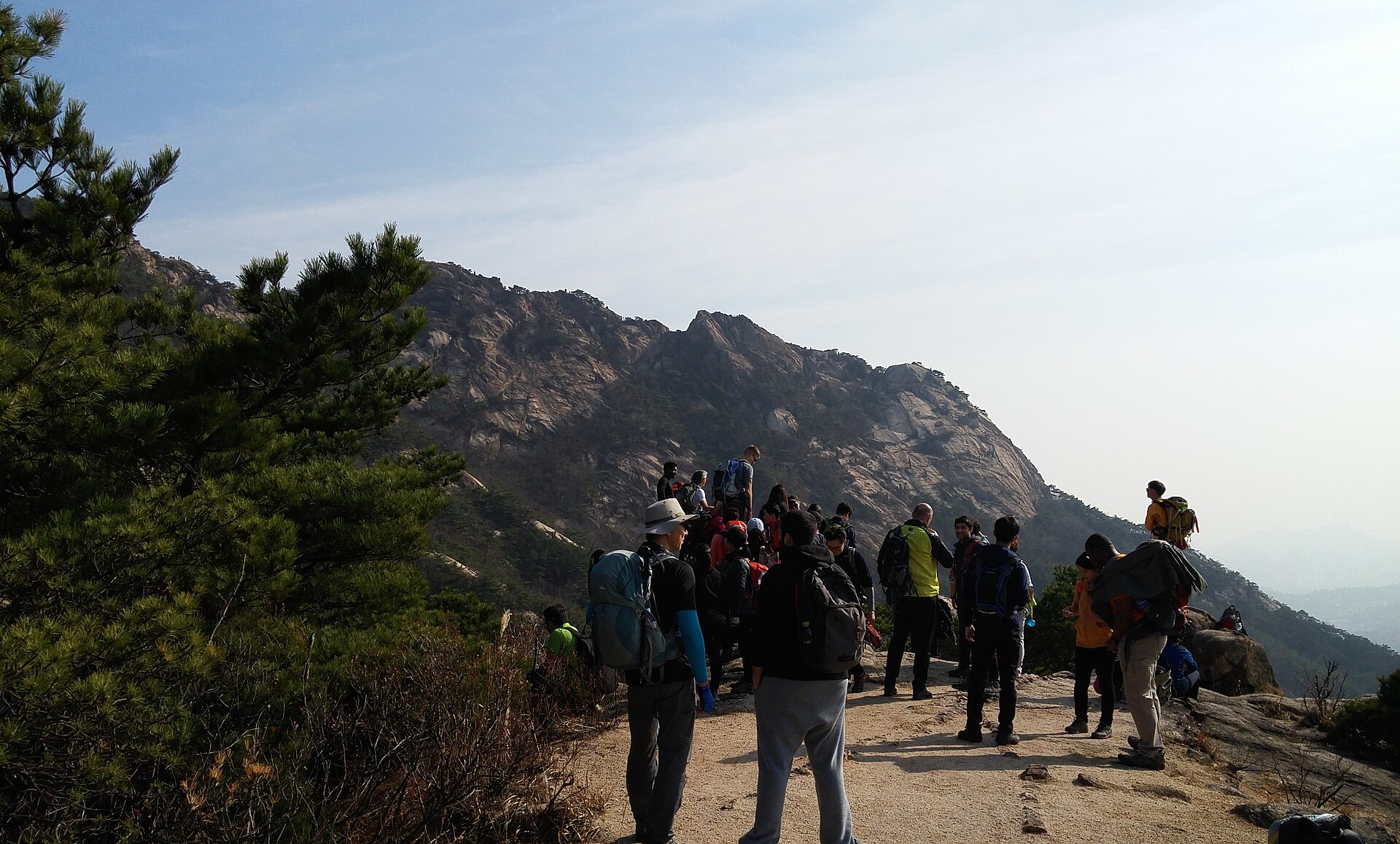
Bukhansan National Park tops the city’s foreign-visitor count among its hiking spots, and its granite summit Baegundae reaches 836.5 m. The shortest route is the Baegundae-Ui Gugok trail: from Bukhansan Ui Station Exit 2 you walk about five minutes to the Seoul Hiking Tourism Center, then climb past Haroojae Pass and Yeongbong Peak. The city rates it advanced and warns that the stretch from Haroojae Pass to Yeongbong is steep and slippery, so poles and gloves are recommended.
Two other routes fit different moods. The Samcheonsa trail (7.33 km, about 2 hours 40 minutes, average) links two temples more than 1,000 years old, and the Dobongsan-Sinseondae trail (6.3 km, about 2 hours 25 minutes) is the city’s pick for sunrise. The guide notes that the line to climb Sinseondae can stretch to 50 meters on weekends and holidays, so go on a weekday. The full route breakdown, trailheads and safety notes are in our Bukhansan hiking guide.
Guided hike · Bukhansan · via Klook
Bukhansan National Park: The Summit Course
⭐ 4.9/5 from 40 Klook reviews · 200+ booked · Free cancellation · Climb Baegundae (836 m) with a guide (as of Oct 2026)
2. Inwangsan and the Seoul City Wall: Rocks Near the Palaces
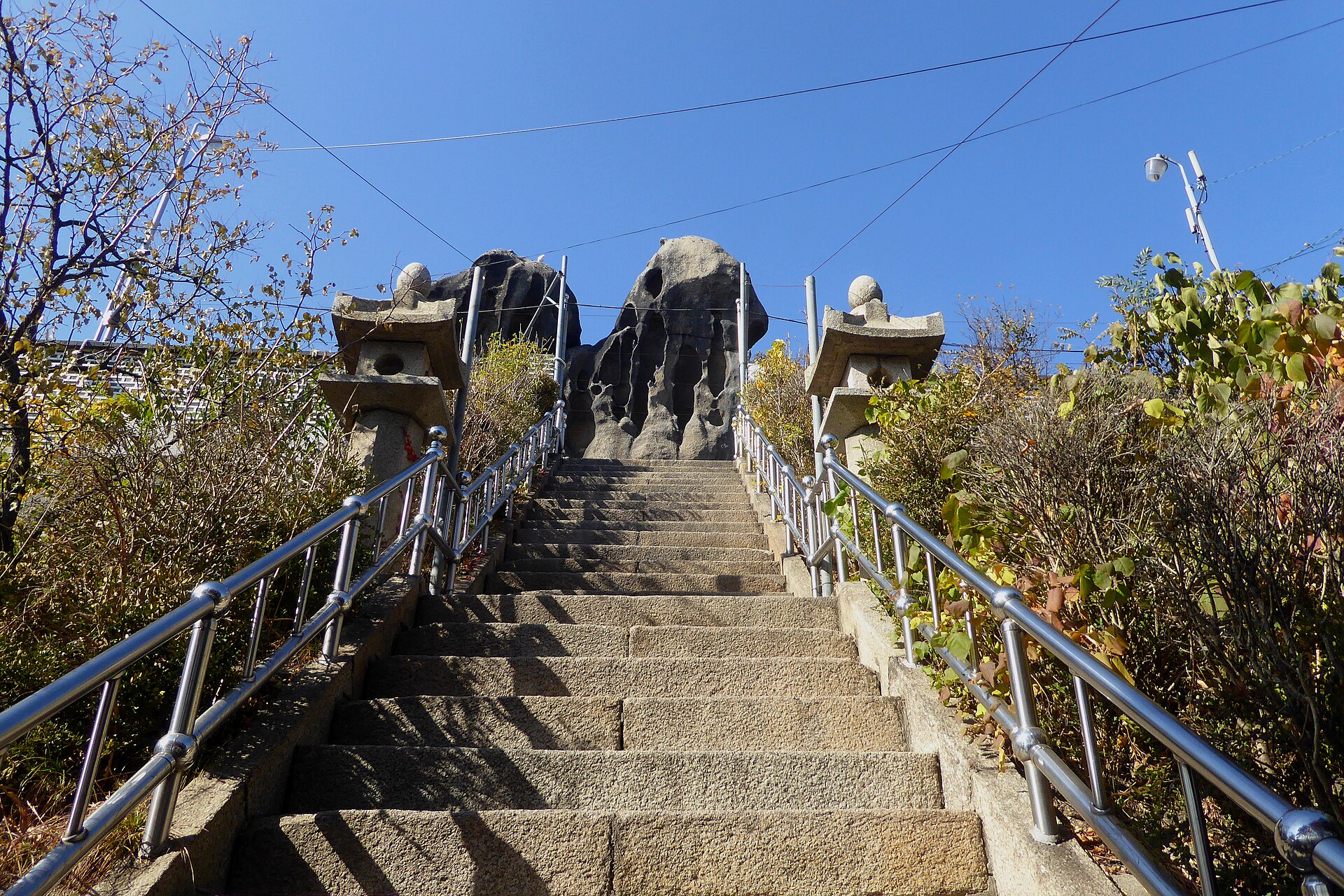
Inwangsan is the quickest escape from central Seoul. The Seonbawi trail (1.84 km, about 1 hour 8 minutes, average) starts at Dongnimmun Station Exit 2, passes Inwangsa Temple and Seonbawi Rock, and reaches Beombawi, which the city says is a better sunrise and sunset spot than the summit. A longer option follows the Seoul City Wall from the former Seodaemun Gate site to Changuimun (4.1 km, about 2 hours 11 minutes), starting at Donuimun Museum Village, a five-minute walk from Seodaemun Station Exit 4.
For an easy evening, the Inwangsan Jarak-gil trail (2.73 km, about 1 hour 4 minutes, easy) runs along the foothills to a night-view deck and starts near Gyeongbokgung Station Exit 1. The city notes the mountain has no restrooms after the ones beside Inwangsa Temple, so use them before you climb. Klook lists a 4.5-hour Inwangsan and Bugaksan guided hike with a lunch box and a café stop, plus a separate 3-hour Inwangsan half-day tour.
Guided hike · Inwangsan and Bugaksan · via Klook
Seoul Inwangsan & Bugaksan Mountain Hiking Tour
4 hr 30 min · English and Korean guide · Lunch box and café stop included in the description · Photos by the guide (as of Oct 2026)
3. Bugaksan: Palace Views, a Photo ID and Last-Entry Times
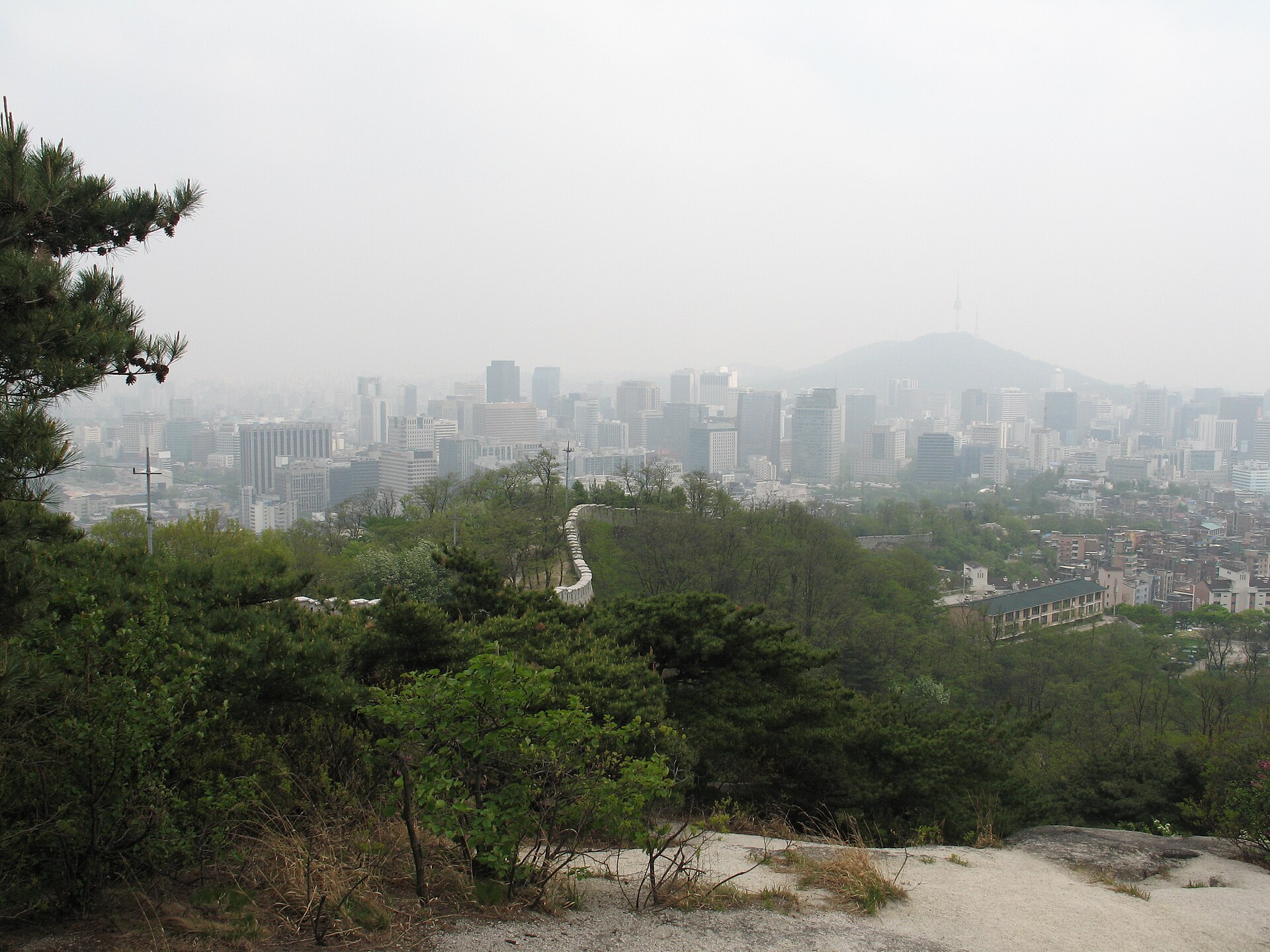
Bugaksan rises behind Gyeongbokgung and Samcheong-dong, and it is the Seoul City Wall hike for travelers who want skyline views without the Bukhansan climb. The Changuimun-Baegakmaru trail (3.32 km, about 1 hour 30 minutes, average) has a grueling start, so grip the handrails; the Cheong Wa Dae Observatory-Chunchugwan route (2.18 km, about 50 minutes) is the easy one.
Entry through the Cheongundae information center is limited by season. The last entry is 3 p.m. from November to February, 4 p.m. in March-April and September-October, and 5 p.m. from May to August. Bring your passport or another photo ID, because guided-tour operators list it as an entry requirement. The Seoul Hiking Tourism Center (Bugaksan) at 88 Samcheong-ro is open 09:00 to 18:00 and closed on Tuesdays and holidays.
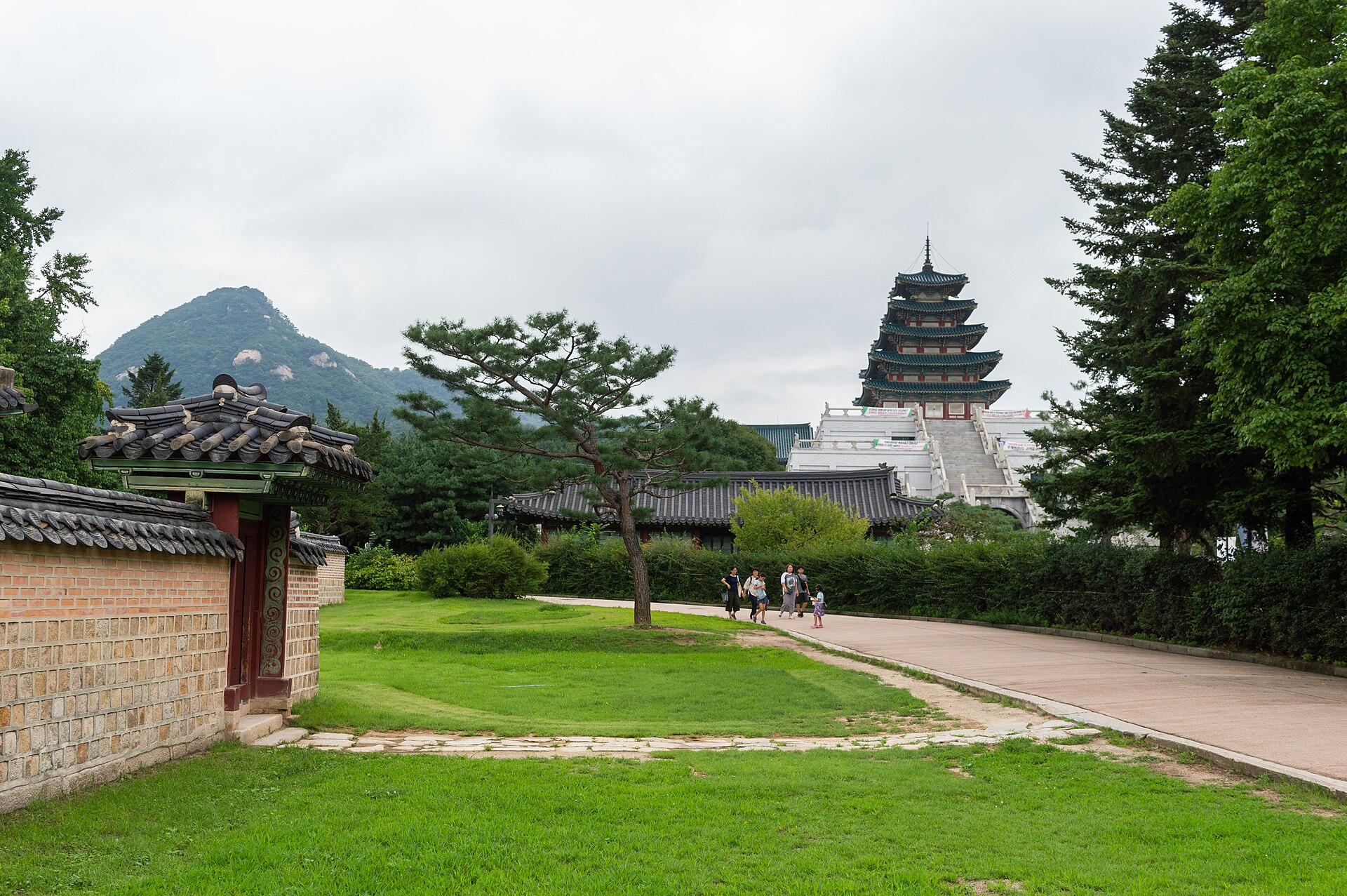
4. Namsan: The Easy Walk to N Seoul Tower
Namsan (270 m) is open 24 hours, according to the Seoul City Wall site, and the mountain also sits on the city wall route. The Dongguk University Station Exit 6 entrance leads up beside the old wall, and Namsan shuttle buses 02, 03 and 05 run to the park. Seoul’s data puts 57,370 foreign visitors a day around N Seoul Tower, 55.7% of all visitors there, so expect crowds, queues and, in reviews, complaints about waiting times.
Treat Namsan as a warm-up for hiking in Seoul rather than a wilderness walk. It pairs with the N Seoul Tower guide, and the Seoul City Wall trail (18.6 km) links it with Ansan, Inwangsan and Bugaksan if you want to spread a longer route over several days.
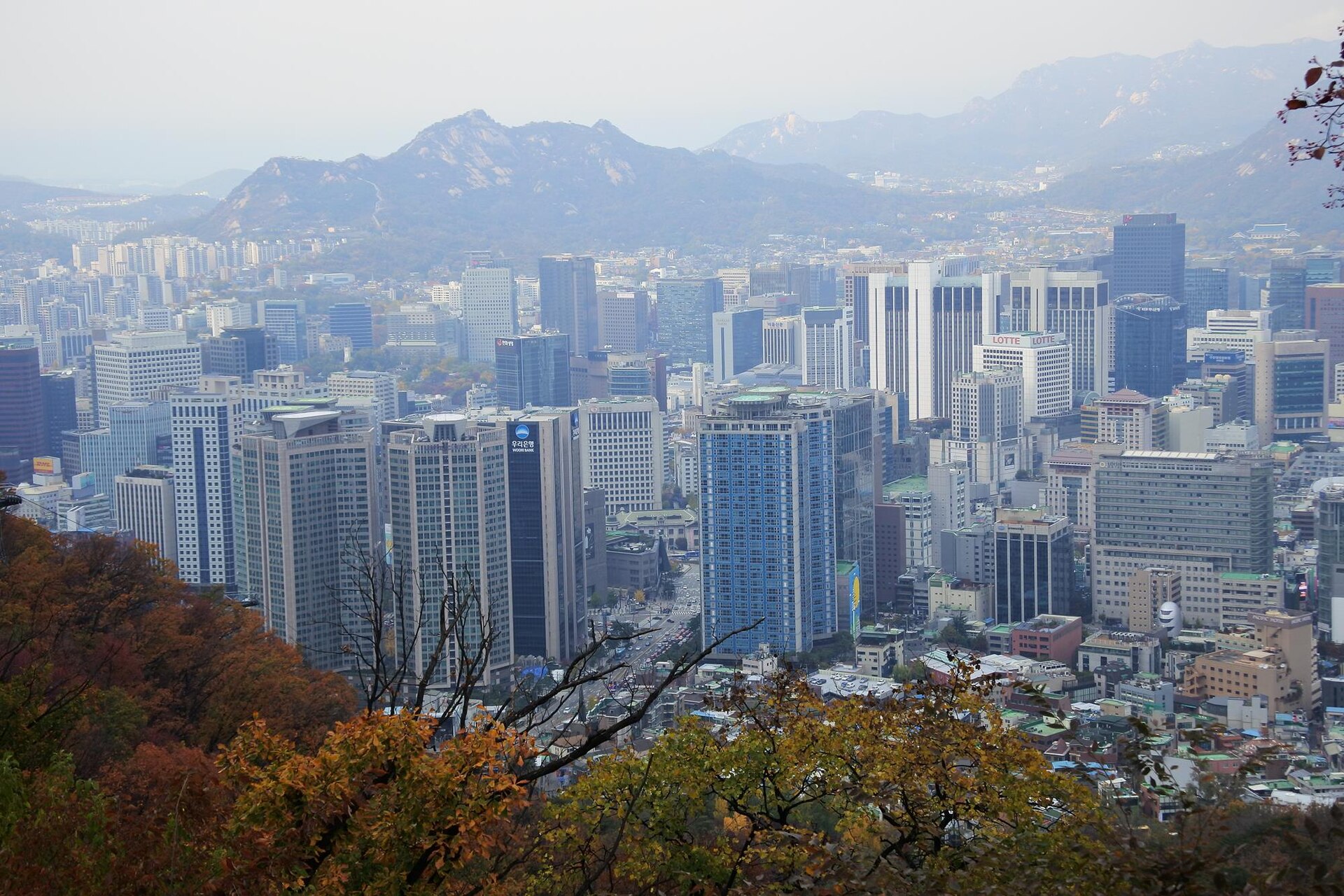
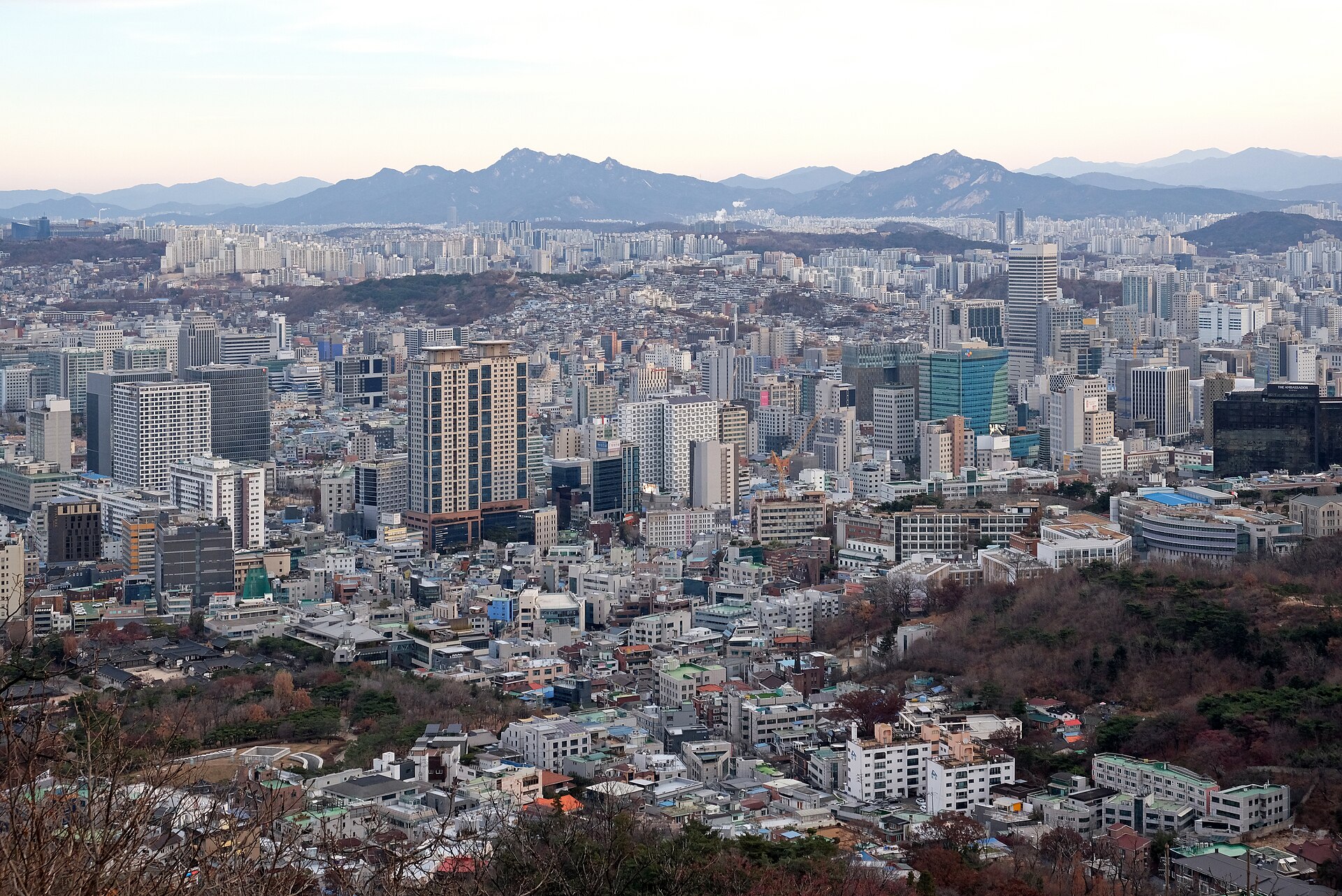
5. Achasan: Sunrise Over Eastern Seoul
Achasan is a low ridge on Seoul’s eastern edge (about 287 m) with big river-and-skyline views for little effort. The main viewpoint is about 45 minutes above Achasan Station (Line 5, Exit 2). Seoul’s 2025 data shows 729 foreign visitors a day, a 5.9% share of total foot traffic there, mostly from China, Japan and the rest of non-Muslim Asia, with visible seasonal swings among Japanese visitors.
For a sunrise start, check the sunrise time the night before (Seoul sees roughly 05:10 in June and about 07:45 in late December), carry a headlamp, and leave 60 to 90 minutes earlier than the climb time. Subway service starts around 05:30, so a pre-dawn start may need a Kakao T taxi to the trailhead.

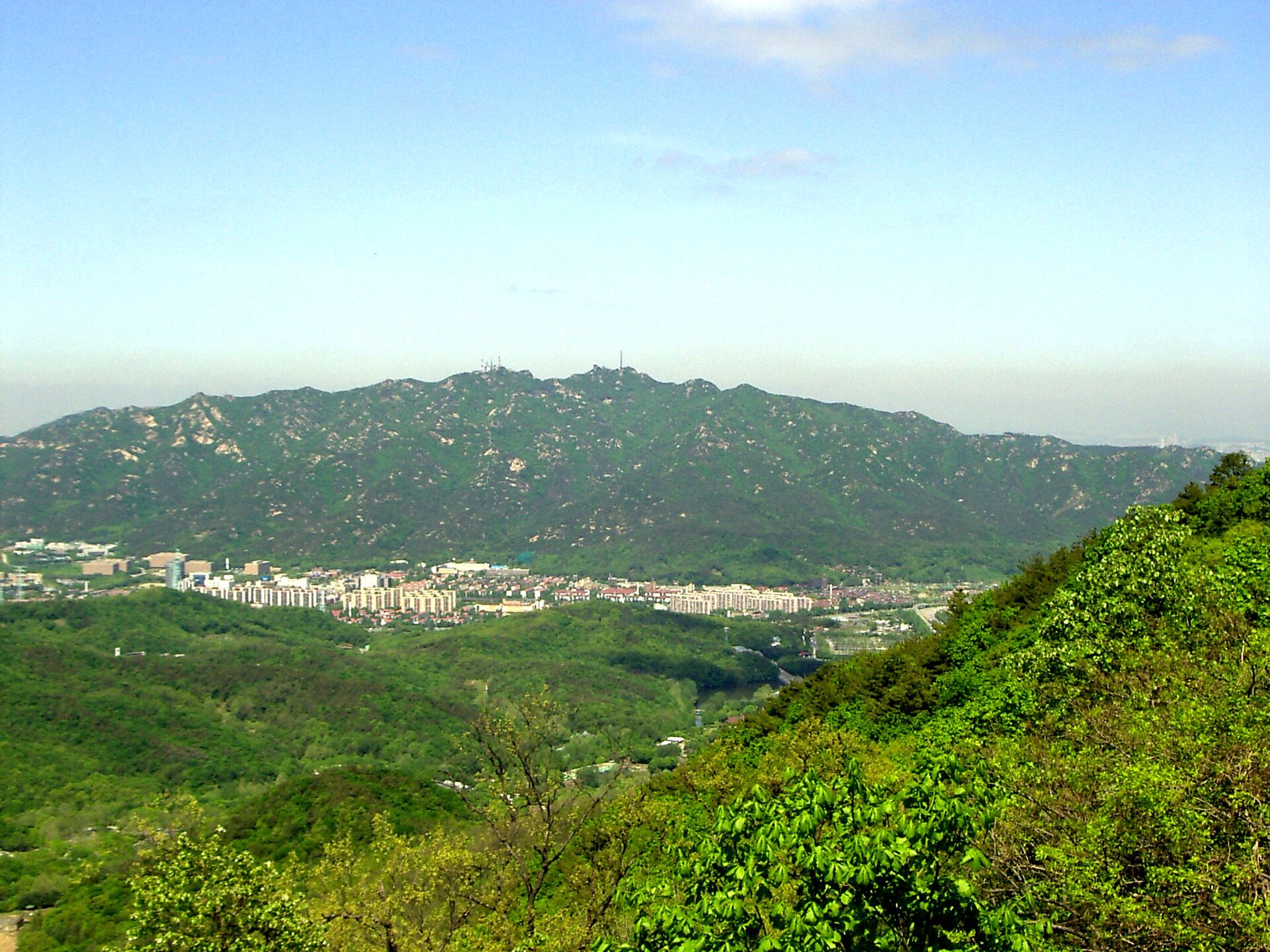
6. Gwanaksan: The Rocky Southern Ridge
Gwanaksan draws the most foreign visitors in July and August, with a relatively large share from the Americas. Take the Sillim Line to Gwanaksan Station (Seoul National University), where the Seoul Hiking Tourism Center (Gwanaksan) sits at B1 inside the station and the trail gate is about 50 meters outside Exit 1. Expect roughly 2 hours to the summit area on the main routes. The center is closed on Wednesdays.
When Is the Best Season for Hiking in Seoul?
- Spring (April-May): cherry blossoms along Inwangsan paths, and Bugaksan visitor numbers peak in March-April. Spring fire-prevention closures hit national park trails until mid-May, so confirm Bukhansan routes first. See cherry blossom timing for 2027.
- Summer (June-August): hot and humid; start at dawn. Gwanaksan and Bukhansan see their busiest foreign-visitor months.
- Autumn (October to early November): the most comfortable weather, and Naksan Park visitor numbers peak in October. The days shorten, so the city advises finishing your descent before sundown.
- Winter (December-February): the city lists crampons, spats, a hat, gloves and a windbreaker for icy trails, and advises hiking with a partner. Best time to visit Korea covers temperatures by month.
Etiquette and Park Rules for Hiking in Seoul
- Greet people you pass with a nod or a quiet “annyeonghaseyo”; it is the normal trail courtesy.
- Let uphill hikers pass on narrow rock steps and keep speakers off: Seoul’s trails are shared with locals who hike for exercise.
- No smoking, cooking or lighting fires on mountain trails. At Seoraksan the park office fines carrying flammables or smoking up to ₩2 million, and entering a closed trail up to ₩500,000.
- Carry your rubbish down; bins are scarce on summits.
- Stay on marked paths and respect closures: the Korea National Park Service posts live trail control information on its Korean site.
- Locals end a hike with pajeon (scallion pancake) and makgeolli. Read Korean BBQ for first-timers for the meal and jjimjilbang etiquette for a soak afterwards.
Gear Rental and Guided Hikes for Hiking in Seoul
The Seoul Hiking Tourism Centers rent hiking wear and boots to foreign tourists and to Koreans who come with global friends, and they offer lockers, a changing room and showers. The centers are at Bukhansan (Gangbuk-gu, closed Mondays), Bugaksan (Jongno-gu, closed Tuesdays) and Gwanaksan (inside Gwanaksan Station, closed Wednesdays), each open 09:00 to 18:00. Book through Klook: Bukhansan gear rental (US$2.49, rated 5.0 from 104 reviews, 5K+ booked, return before 16:30), Bugaksan rental and Gwanaksan rental. Klook’s page lists free on-site rentals during Seoul Hiking Week, 25 October to 15 November.
Gear rental · Bukhansan · via Klook
Bukhansan Hiking Gear Rental Service in Seoul
⭐ 5.0/5 from 104 Klook reviews · 5K+ booked · From US$2.49 · Open 09:00-18:00, closed Mondays (as of Oct 2026)
If you prefer a guide, GetYourGuide lists Seoul hiking tours from the Bukhansan Summit Course (about $69, rated 5.0 from 45 reviews) to a City Wall sunset hike with a Korean dinner (3 hours, from $70, 4.8 from 284 reviews). KKday’s Bukak Mountain hike with a Gyeongbokgung ceremony starts from US$46.99. A guide is worth it for Bukhansan’s rope sections and for first-time hikers who want local context.
Guided hikes · Seoul · via GetYourGuide
Seoul hiking tours: Bukhansan, City Wall and more
⭐ City Wall Sunset Hike with Korean Dinner 4.8/5 from 284 reviews · Bukhansan Summit Course from about $69 (as of Oct 2026)
Guided hike · Bugaksan · via KKday
Seoul Bukak Mountain Hiking and Gyeongbokgung Palace Ceremony Tour
From US$46.99 · Combines a Bugaksan hike with a Gyeongbokgung ceremony (as of Oct 2026)
Pack water, a layer and a rain shell; the Korea packing list has the details, and convenience stores near most stations sell snacks and drinks.
Mistakes to Avoid When Hiking in Seoul
- Starting Bugaksan after the last-entry time (3, 4 or 5 p.m. depending on the month) and being turned away.
- Hiking Bugaksan without your passport or other photo ID.
- Assuming a mountain is open: spring and autumn fire closures can shut national park trails, and the park service posts partial closures live.
- Wearing sneakers on wet granite; rented boots or trail shoes grip far better, as Klook reviewers note.
- Climbing Sinseondae or Baegundae on a weekend and losing an hour in the queue.
- Starting a long route in the afternoon: autumn and winter sunsets are early, and the city advises finishing the descent before dark.
- Ignoring the weather: ice or fog make rope sections dangerous; turn back if conditions change.
Frequently Asked Questions
What is the easiest hike in Seoul?
Namsan is the easiest: it is open 24 hours, starts at Dongguk University Station Exit 6 and leads to N Seoul Tower. Inwangsan’s Jarak-gil trail (2.73 km, about 1 hour 4 minutes) is the easiest rated route in the city’s hiking guide.
Is hiking in Seoul safe for beginners?
Yes if you choose an easy trail. The city advises beginners to pick a trail with a slope of no more than 500 m that takes under three hours round trip, to carry water and to descend before sundown. Save Baegundae for later.
Can you hike in Seoul in winter?
Yes, but the city recommends crampons, spats, a hat, gloves and a windbreaker, hiking with a partner and extra caution on frozen snow. Low trails such as Namsan stay the simplest option.
Do I need a guide for hiking in Seoul?
No for Namsan, Inwangsan and Achasan. A guide helps on Bukhansan’s rope sections and for tours that handle transport, such as the Klook and GetYourGuide listings in this guide.
Where can I rent hiking gear in Seoul?
The Seoul Hiking Tourism Centers at Bukhansan, Bugaksan and Gwanaksan rent hiking wear and boots to foreign visitors. Book on Klook; the Bukhansan rental is listed from US$2.49 and must be returned before 16:30.
What is the best time of year for hiking in Seoul?
April-May and October to early November are the most comfortable. Summer is hot and humid, and winter needs traction gear. Check closures for national park trails in spring and autumn.
Do I need ID to hike Bugaksan?
Bring your passport or another photo ID. Tour operators list photo ID as an entry requirement for Bugaksan, and entry through the information center ends at 3, 4 or 5 p.m. depending on the season.
What number do I call if I get lost on a Seoul trail?
Call 119 for rescue and use the trail signs and markers to give your location. The 1330 Korea Travel Helpline offers interpretation in several languages.
Ready for a Bigger Mountain Than Seoul Offers?
Yes: Bukhansan is the next step inside the city, covered in the Bukhansan hiking guide, and Seoraksan is the headline day trip, covered in the Seoraksan day trip guide. Add either to the 7-day Korea itinerary and check where to stay in Seoul for hotels near the trailheads.
Sources (official pages checked)
- Seoul Metropolitan Government: From K-Culture to K-Hiking (foreign visitor data)
- Seoul Hiking Tourism Guide leaflet (trail distances, times, ratings)
- Seoul Hiking Tourism Center: opening hours and gear rental
- Seoul City Wall: Namsan trail
- Korea National Park Service: Bukhansan courses and real-time closures
- Korea National Park Service (English portal)
- VisitKorea (Korea Tourism Organization)
- Kyunghyang Shinmun: Seoraksan spring trail closures and fines (13 February 2026)
Book the basics for your Korea trip
Affiliate links: we may earn a small commission at no extra cost to you.
Related Guides
- Korea Travel Toolkit: what to book before you fly
- Bukhansan Hiking – the Baegundae routes in detail
- Seoraksan Day Trip from Seoul – bus, tour and cable car
- Korea Packing List – layers and footwear
- Korea Travel Apps – maps and translation
- Seoul Subway Guide – exits, lines and transfers
- Korea Emergency Numbers – 119 and 1330
- Best Time to Visit Korea – weather by month
- N Seoul Tower – the Namsan summit
- Han River Parks – an easy flat walk instead
- T-money vs Climate Card – transit cards
- Korea Itinerary 7 Days – where hiking fits
- Jjimjilbang Etiquette – soaking after a hike
Information as of 16 October 2026. Trail times and closures change, so confirm on the Korea National Park Service and Seoul Hiking Tourism Center pages before you go.