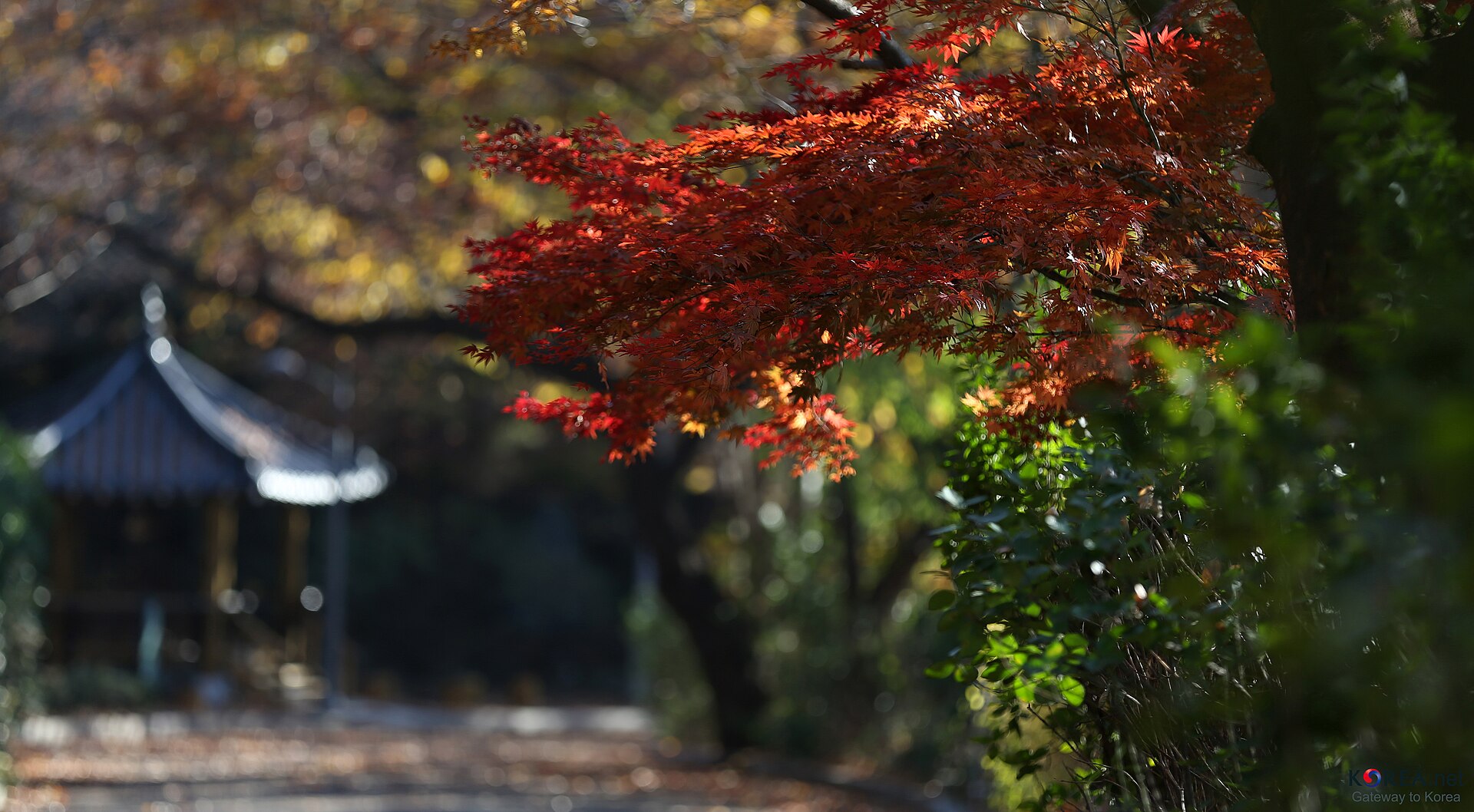
Bottom line: Korea autumn foliage 2026 is arriving on time or early in the north, and earlier than every published forecast date checked so far. As of 22 October the Korea Meteorological Administration (KMA) reports Seoraksan (16 October), Odaesan (14 October) and Chiaksan (19 October) at peak, and Bukhansan at first colour since 14 October. For Seoul and Bukhansan plan for 29 October to 4 November: the Korea Tourism Organization (KTO) and National Arboretum map puts the capital-region peak on 29 October, a 28 September forecast gave Bukhansan 1 November, and Weather i and the Korea National Park Service (KNPS) give 4 November. Naejangsan follows around 4 to 11 November and Hallasan around 6 to 13 November.
Updated 22 October 2026. Every reported status below is read from the KMA foliage page on 22 October 2026; each forecast date is quoted from the page named beside it, with that page’s publication date.
Quick Korea Travel Guide
Getting in: Landing at Incheon? See every airport-to-Seoul option.
Stay in touch: Mountain valleys have weak signal, so get a Korea eSIM from Airalo before you fly and download offline maps first. Not sure which data option fits? See eSIM vs SIM vs pocket Wi-Fi.
Download first: Naver Map for park buses and Kakao T for taxis; see the full Korea travel apps list.
Where to book: the Mt. Seorak and Naksan Temple day trip on GetYourGuide or the Nami Island and Garden of Morning Calm tour on GetYourGuide.
Getting around: The Seoul subway reaches Bukhansan, Seoul Forest and the palaces; load a T-money card first.
For more planning: Korea Travel Toolkit.
Disclosure: Some links are affiliate links. If you book through them I may earn a commission at no extra cost to you.
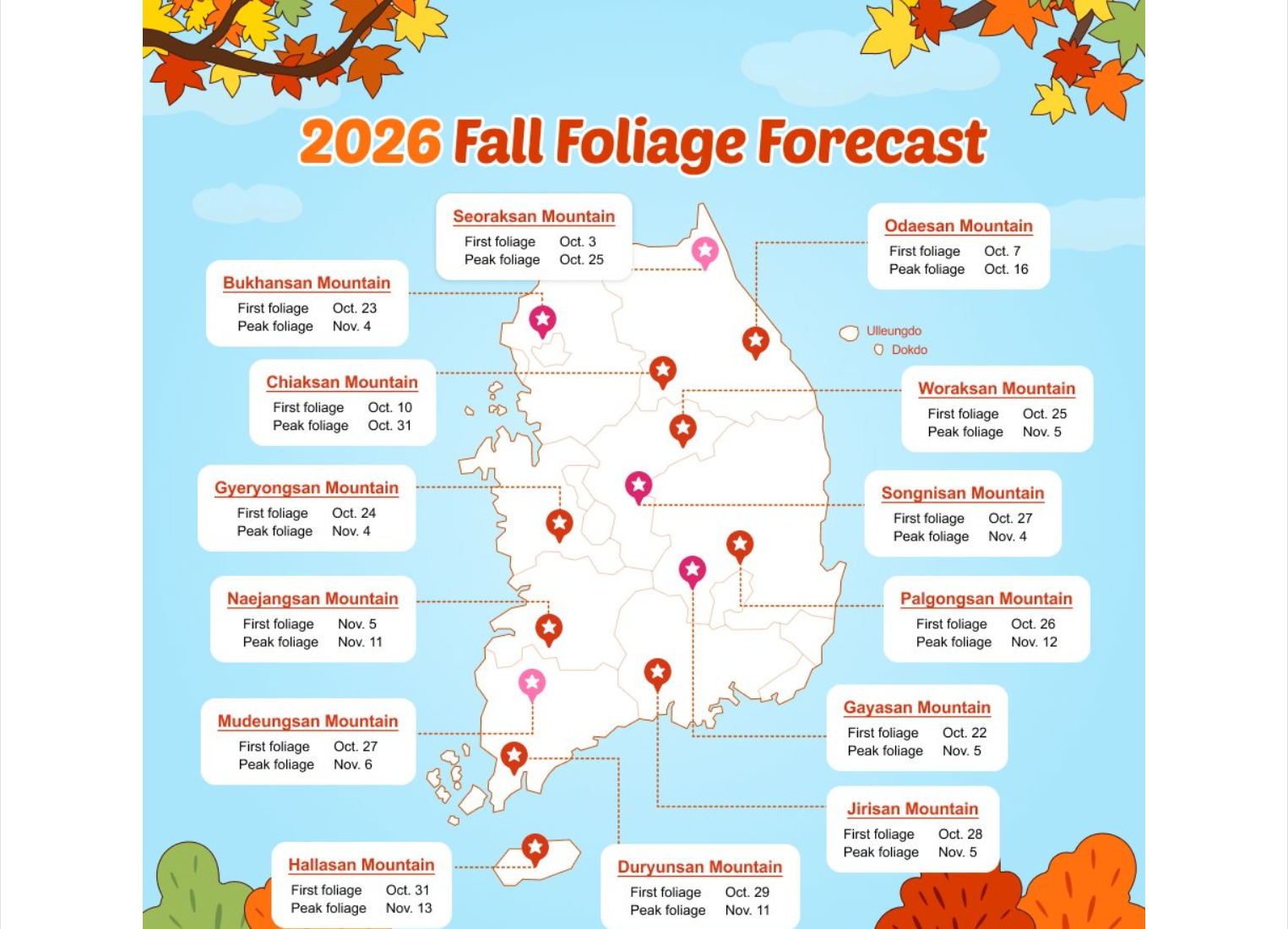
Korea autumn foliage 2026 has three official voices and they do not agree. The Korea Forest Service (KFS) published a peak map on 22 September and counts a peak at 50% colour. The KMA publishes observations and counts a peak at about 80% of a mountain. The KNPS and the private forecaster Weather i, quoted on the VisitKorea English page, publish later forecast dates. This page puts them side by side, row by row, and marks each date as forecast or reported.
Each reported date comes from the KMA foliage page, each forecast date from a named official or press source, and where a mountain has no reported peak the table says not reported yet. For the month view see Korea in November and the best time to visit Korea; for spots and itineraries see our Korea autumn foliage guide.
What this guide covers
Forecast vs Actual by Mountain
Read across a row for one mountain: the forecasts first, then what KMA has reported. Dates are shown as D Month; all are 2026.
| Mountain / area | Forecast first colour | Forecast peak | Reported first colour (KMA) | Reported peak (KMA) | Status, 22 October | Source |
|---|---|---|---|---|---|---|
| Seoraksan | 3 October (Weather i) | 19 October (Yonhap TV); 20 October (KFS); 25 October (Weather i, KNPS) | 28 September | 16 October | At peak per KMA; reported 6 days ago | KMA, KFS, VisitKorea, KNPS, Yonhap TV |
| Odaesan | 5 October (Yonhap TV) | 16 October (Weather i, KNPS) | 1 October | 14 October | Peak reported; first of the 21 KMA mountains to peak in 2026 | KMA, Yonhap TV, KNPS, Segye Ilbo |
| Chiaksan | not published | 31 October (KNPS) | 6 October | 19 October | Peak reported | KMA, KNPS |
| Bukhansan (Seoul) | 18 October (Yonhap TV); 23 October (Weather i) | 1 November (Yonhap TV); 4 November (Weather i, KNPS) | 14 October | not reported yet | First colour (about 20%); peak pending | KMA, VisitKorea, KNPS, Yonhap TV |
| Seoul city (palaces, Namsan, Seoul Forest) | not published | 29 October for the capital region (KTO and National Arboretum map); 30 October ginkgo and 31 October maple, nationwide (KFS) | not reported yet | not reported yet | No official city reading; capital-region peak forecast 29 October | KTO map via Seoul Shinmun, KFS |
| Gyeryongsan | not published | 1 November (KFS); 4 November (KNPS) | 16 October | not reported yet | First colour; peak pending | KMA, KFS, KNPS |
| Songnisan | not published | 28 October (KFS); 4 November (KNPS) | 19 October | not reported yet | First colour; peak pending | KMA, KFS, KNPS |
| Juwangsan | not published | not published | 16 October | not reported yet | First colour; peak pending | KMA |
| Naejangsan | 27 October (Yonhap TV) | 4 November (KFS); 10 November (Yonhap TV); 11 November (Weather i, KNPS) | not reported yet | not reported yet | Before first colour | KMA, KFS, VisitKorea, Yonhap TV |
| Jirisan (KMA point: Jeongnyeongchi) | 28 October (Weather i) | 5 November (Weather i, KNPS) | 14 October | not reported yet | First colour; peak pending | KMA, VisitKorea, KNPS |
| Hallasan | 21 October (Yonhap TV); 31 October (Weather i) | 6 November (KFS); 13 November (Weather i, KNPS) | 14 October | not reported yet | First colour on the normal date; peak pending | KMA, Jeju Meteorological Office via Yonhap, KFS, VisitKorea |
- Definitions: KMA "first colour" is about 20% of the whole mountain coloured from the summit down and "peak" is about 80%. KFS and the National Arboretum count a peak at 50%, so a KFS date is not directly comparable with a KMA date.
- Reported dates are the dates of the KMA observation photos on its Famous Mountains Foliage Status page, read on 22 October 2026. "Not published" means that source gives no date for the mountain; "not reported yet" means KMA has not marked that stage.
- Forecast sources: Weather i figures are from the VisitKorea 2026 Fall Foliage Forecast (page dated 8 September, credit Weatheri Inc.); KFS peaks from the 22 September press release; KNPS dates as published by the park service and reported on 16 October; the Yonhap TV dates are from its 28 September broadcast; the capital-region date is from the KTO and National Arboretum 2026 Foliage Map of 8 October, reported by Seoul Shinmun.
- Jirisan and Piagol: KMA’s Jirisan observation point is Jeongnyeongchi, so its dates describe the high mountain, not the lower Piagol valley.
Scorecard: How Accurate Were the Forecasts?
Eleven forecast dates have now met a KMA observation, and every one of them was later than what happened. Weather i had said on 4 September that first colour would come later than normal because September and October were expected to be warmer than average; as Segye Ilbo reported on 16 October, Bukhansan turned nine days before Weather i’s 23 October forecast. The KMA chief said in the same report that a daily minimum below 5°C pulls the start of colour forward, and YTN reported on 22 October that Seoul fell to 5.3°C, its lowest this autumn, and Seoraksan to -6.6°C.
| Mountain | Stage | Forecast (source) | Reported (KMA) | Forecast was |
|---|---|---|---|---|
| Seoraksan | First colour | 3 October (Weather i) | 28 September | 5 days late |
| Odaesan | First colour | 5 October (Yonhap TV) | 1 October | 4 days late |
| Bukhansan | First colour | 18 October (Yonhap TV) | 14 October | 4 days late |
| Bukhansan | First colour | 23 October (Weather i) | 14 October | 9 days late |
| Jirisan | First colour | 28 October (Weather i) | 14 October | 14 days late |
| Hallasan | First colour | 21 October (Yonhap TV) | 14 October | 7 days late |
| Hallasan | First colour | 31 October (Weather i) | 14 October | 17 days late |
| Seoraksan | Peak | 19 October (Yonhap TV) | 16 October | 3 days late |
| Seoraksan | Peak | 20 October (KFS, 50% rule) | 16 October | 4 days late |
| Seoraksan | Peak | 25 October (Weather i, KNPS) | 16 October | 9 days late |
| Odaesan | Peak | 16 October (Weather i, KNPS) | 14 October | 2 days late |
The practical reading: treat the later dates in Table A as the cautious end of the range. The Bukhansan window of 1 to 4 November is a forecast; the KMA page is where it will be confirmed, with a dated photo.
Where to Go This Week
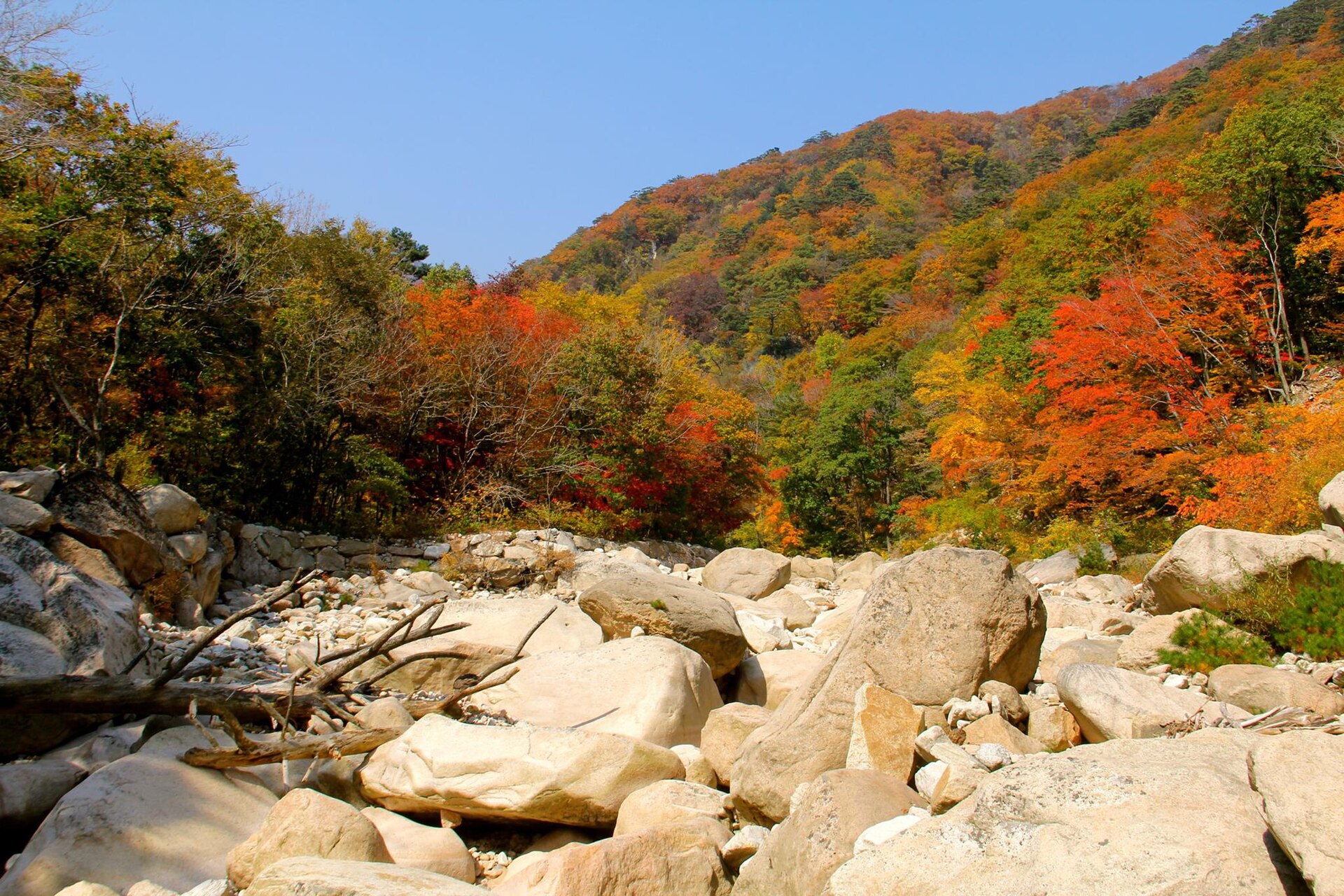
The firmest choice this weekend is Seoraksan or Odaesan, both reported at peak by KMA; the trade-off is distance. Seoraksan is a Seoul to Sokcho coach ride of about two to two and a half hours each way, so a guided day trip (see the Quick Korea Travel Guide above) is simplest if you do not want to manage the local bus. For a half-day from the city, Bukhansan is at first colour and Seoul’s palaces and parks have a 29 October forecast peak, so aim for the last week of October.
| Place | Status, 22 October | Getting there from Seoul | Hours and prices | Source |
|---|---|---|---|---|
| Bukhansan | First colour reported 14 October; peak not reported yet; forecast peak 1 to 4 November | Subway to Bukhansan Ui, Gupabal or Dobongsan, then a short bus or walk; see our Bukhansan hiking guide | KMA reads Bukhansan from the Cloud Observatory (Gureum Jeonmangdae) on Dulle-gil Section 3, a 4.1 km walk of about 2 hours that is open all year | KMA, Segye Ilbo |
| Namsan and N Seoul Tower | No official reading; capital-region peak forecast 29 October | Subway to central Seoul; see N Seoul Tower | Tower hours and tickets: confirm with the operator before you go | VisitKorea, Seoul Shinmun |
| Seoul Forest | No official reading; capital-region peak forecast 29 October | Seoul Forest Station (Bundang Line) Exit 3, 5 minutes on foot; or Ttukseom Station (Line 2) Exit 8, 15 minutes on foot | Park open 24 hours all year; some facilities closed on Mondays | Seoul Forest Park Conservancy |
| Changdeokgung Secret Garden (Huwon) | No official reading; capital-region peak forecast 29 October | Subway Line 3 to Anguk Station | Closed Mondays. Timed Huwon ticket, adult 5,000 KRW (youth 2,500 KRW), plus a separate palace ticket (adult 3,000 KRW on the Heritage Service fee table; confirm when you book). English sessions listed at 10:30, 11:30, 14:30 and 15:30 from March to November | Visit Seoul, Korea Heritage Service |
| Nami Island (Gapyeong) | No official reading; VisitKorea lists it among foliage spots outside Seoul | Train to Gapyeong, then the ferry; full route in our Nami Island guide | Admission 19,000 KRW for adults including the round-trip ferry, per the operator fee table | VisitKorea, Nami Island operator |
| Seoraksan | Peak reported 16 October | Express bus from Seoul Express Bus Terminal to Sokcho, about 2 h 10 min to 2 h 35 min, from 17,200 KRW standard; then local bus 7 or 7-1 to Seoraksan Sogongwon, about 30 minutes | Seorak cable car 16,000 KRW. KMA Gangwon service: photos from 33 national-park trail points and live video from 14 cameras | KMA; our Seoraksan day trip guide |
| Naejangsan | Before first colour; forecast peak 4 to 11 November | Plan for early November; see KTX sold-out backup routes | Check the park office for trail status the day before | KMA, KFS, Weather i |
Check live status the morning you go. KMA’s Gangwon foliage-weather service shows photos from 33 national-park trail points and 13 main mountains, plus live video from 14 camera sites.
How to Read Foliage Forecasts
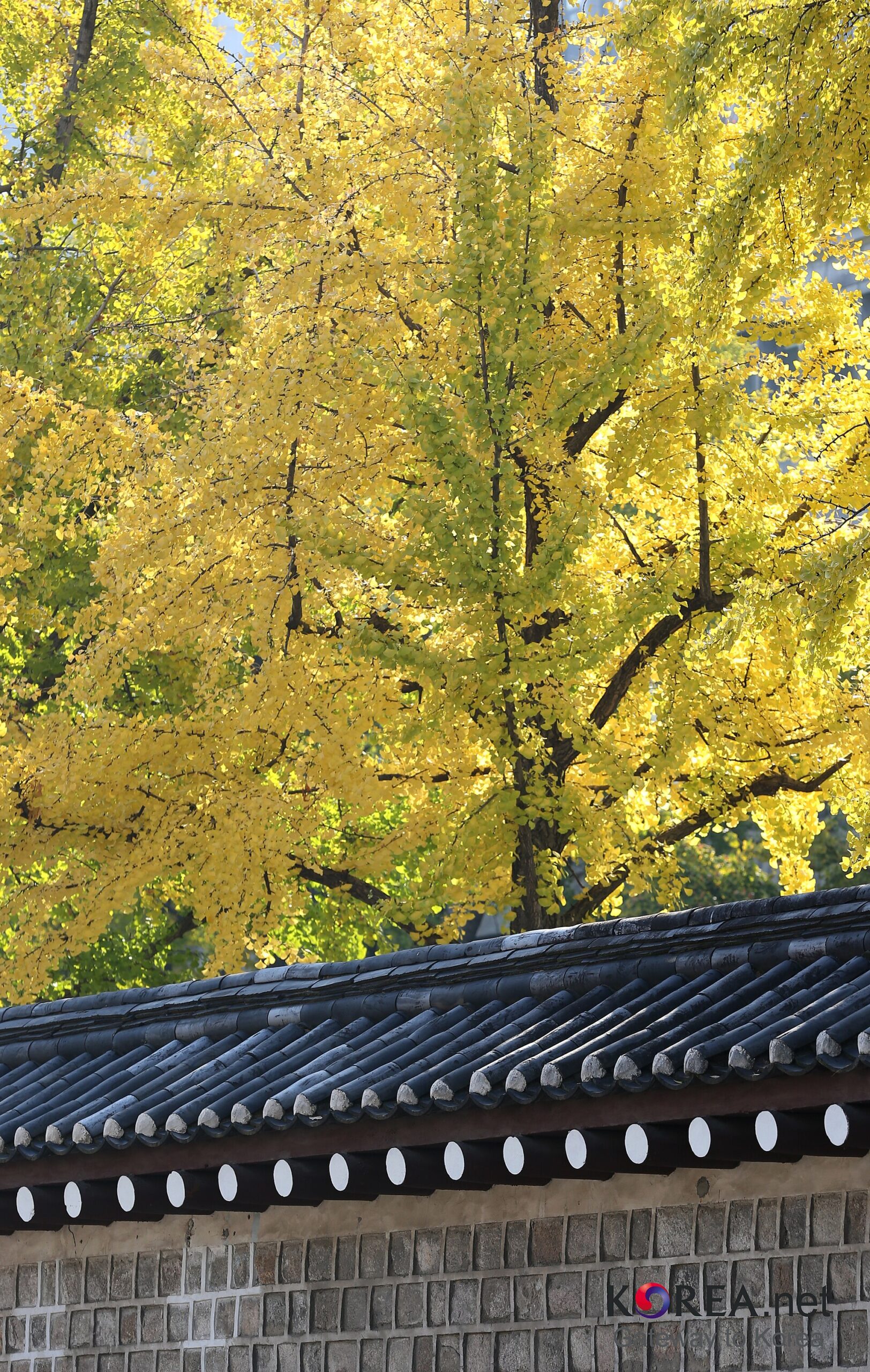
Three things change the date you see: who counts, what they count and where on the mountain.
What first colour and peak mean
- First colour (단풍 시작, 첫 단풍): the KMA marks it when about 20% of the whole mountain is coloured, counted from the summit down. The KMA’s 28 September release states the 20% and 80% definitions in its own words (KMA press release).
- Peak (절정): the KMA and KNPS use about 80% of the mountain coloured. KFS and the National Arboretum count a peak at 50%: the KFS release says "절정(단풍 50%)" (KFS release on korea.kr), and the KTO map defines a peak as the main species 50% or more coloured (Seoul Shinmun).
- The KFS record of the year: the first colour of 2026 was recorded on 14 September at the Jeombongsan forest genetic resource reserve through a citizen observation. That is a separate record from the KMA’s mountain-wide stages.
Why dates shift by elevation and region
Colour moves down a mountain and south across the country. A 28 September forecast had the colour front moving south at roughly 20 to 25 km a day, with about two weeks from first colour to peak (Yonhap TV; Yonhap, 15 October also says peak usually follows first colour by about two weeks). Segye Ilbo, 28 September notes that peak timing differs with a mountain’s altitude, region and tree species. The result is a spread this year: Seoraksan peaked on 16 October, Seoul’s capital region is forecast for 29 October and Hallasan for 6 to 13 November.
Which source to use
- What has happened: the KMA foliage page, which covers 21 mountains and runs from 21 September to 27 November 2026.
- What is coming: the KFS peak map for the government forecast, and VisitKorea or the KNPS for the later Weather i dates.
- One place: the National Arboretum Korean Peninsula foliage peak search lets you look up a named park or mountain.
Compared With Last Year
The KMA publishes last year’s dates and the long-run normal for the mountains it observes. Compared with those:
| Mountain | Stage | 2026 (reported) | 2025 | Normal (KMA) |
|---|---|---|---|---|
| Seoraksan | First colour | 28 September | 2 October | 28 September |
| Seoraksan | Peak | 16 October | 24 October | 17 October |
| Odaesan | Peak | 14 October | 16 October | 15 October |
| Bukhansan | First colour | 14 October | 22 October | 15 October |
| Hallasan | First colour | 14 October | 31 October (latest since 1991) | 14 October |
Sources: the KMA release of 28 September for Seoraksan, Segye Ilbo (16 October) for Odaesan and Bukhansan, and Yonhap (15 October) for Hallasan, which the Jeju Meteorological Office observes at Eorimok.
Short version: 2026 is 8 days ahead of 2025 on Seoraksan’s peak, 8 days ahead on Bukhansan’s first colour and 17 days ahead on Hallasan’s first colour, and within a day of the normal on every mountain in the table.
Frequently Asked Questions
What is the best week to see autumn foliage in Seoul in 2026?
The last week of October into the first days of November. The KTO and National Arboretum map puts the capital-region peak on 29 October (50% rule), KFS forecasts the national peak for ginkgo on 30 October and for maples and oaks on 31 October, and Bukhansan is forecast for 1 to 4 November (80% rule). Check the KMA page the day before.
When is the Seoraksan peak in 2026?
KMA reported the Seoraksan peak on 16 October 2026, after first colour on 28 September. Forecasts had given 19 October (Yonhap TV), 20 October (KFS) and 25 October (Weather i, KNPS).
When does the foliage season end?
No agency publishes an end date for individual mountains. The KMA foliage service runs from 21 September to 27 November 2026, and the latest regional peak on the KTO map is Jeju on 19 November.
Can I see autumn foliage in November or December?
In November, yes: Naejangsan is forecast to peak on 4 to 11 November and Hallasan on 6 to 13 November. No official foliage forecast covers December; see Korea in November and Korea in December for what else is on.
How do I get to Seoraksan from Seoul?
Take an express bus from Seoul Express Bus Terminal to Sokcho (about 2 hours 10 minutes to 2 hours 35 minutes, from 17,200 KRW standard), then local bus 7 or 7-1 to Seoraksan Sogongwon (about 30 minutes). There is no direct train. A guided day trip skips the transfer.
How do I get to Bukhansan from Seoul?
Take the subway to Bukhansan Ui, Gupabal or Dobongsan station, then a short bus or walk to the trailhead. A T-money card works for both.
Why do the forecasts disagree?
They measure different things. KFS and the National Arboretum count a peak at 50% colour, KMA and KNPS at about 80%, and Weather i is a private forecaster whose dates were published earlier in the season. Use KMA for what has already happened.
Book the basics for your Korea trip
Affiliate links: we may earn a small commission at no extra cost to you.
Related Guides
- Korea Autumn Foliage 2026: Best Spots and Peak Dates — the spots and itinerary companion to this tracker
- Best Time to Visit Korea, Month by Month — where autumn sits against the other seasons
- Korea in November — weather, foliage end dates and what to pack
- Korea in December — what is open after the foliage ends
- Day Trips From Seoul — train and tour options including Nami Island
- Bukhansan Hiking — trails, rules and access
- Seoraksan Day Trip from Seoul — bus, tour and hike
- Nami Island and Petite France — route, ferry and fees
- Hiking in Seoul — shorter mountain options inside the city
- Cherry Blossom Korea 2027 — the same forecast-vs-actual approach for spring
- Korea Packing List — layers for cold mornings
Sources (official pages checked)
- KMA, Famous Mountains Foliage Status (weather.go.kr) — reported first-colour and peak stages for 21 mountains, read 22 October 2026
- KMA press release, 28 September 2026 — Seoraksan first colour, 20% and 80% definitions, last-year and normal dates
- Korea Forest Service press release, 22 September 2026 — 2026 Korean Peninsula foliage peak forecast map: Seoraksan, Songnisan, Naejangsan, Hallasan; species dates; 50% peak rule
- Korea.kr policy briefing copy of the KFS release — same release, public-licence copy
- VisitKorea, 2026 Fall Foliage Forecast (Weatheri Inc.) — Weather i first-colour and peak forecasts for Seoraksan, Bukhansan, Jirisan, Naejangsan, Hallasan
- Korea National Park Service — park status and trail notices
- Korea Disaster Safety News, 16 October 2026 — KNPS expected peak dates by park
- Seoul Shinmun, 8 October 2026, on the KTO and National Arboretum 2026 Foliage Map — capital-region peak 29 October, Gangwon 28 October, Jeju 19 November; 50% definition
- Yonhap News TV, 28 September 2026 — forecast first-colour and peak dates, colour-front speed
- Yonhap News, 15 October 2026 — Hallasan first colour 14 October, 2025 and normal dates
- Segye Ilbo, 16 October 2026 — Bukhansan first colour, Odaesan peak, 2025 and normal dates, Weather i comparison
- Segye Ilbo, 28 September 2026 — Seoraksan first colour; peak timing varies with altitude, region and species
- YTN, 22 October 2026 — Seoul and Seoraksan morning lows
- KMA Gangwon foliage-weather service — trail-point photos and live cameras
- Seoul Forest Park Conservancy — opening hours and subway directions
- Visit Seoul, Changdeokgung Secret Garden — Huwon hours, languages, closed day and fee
- Korea Heritage Service, Changdeokgung admission information — palace ticket and online booking
- Nami Island operator site — admission, ferry and route information